
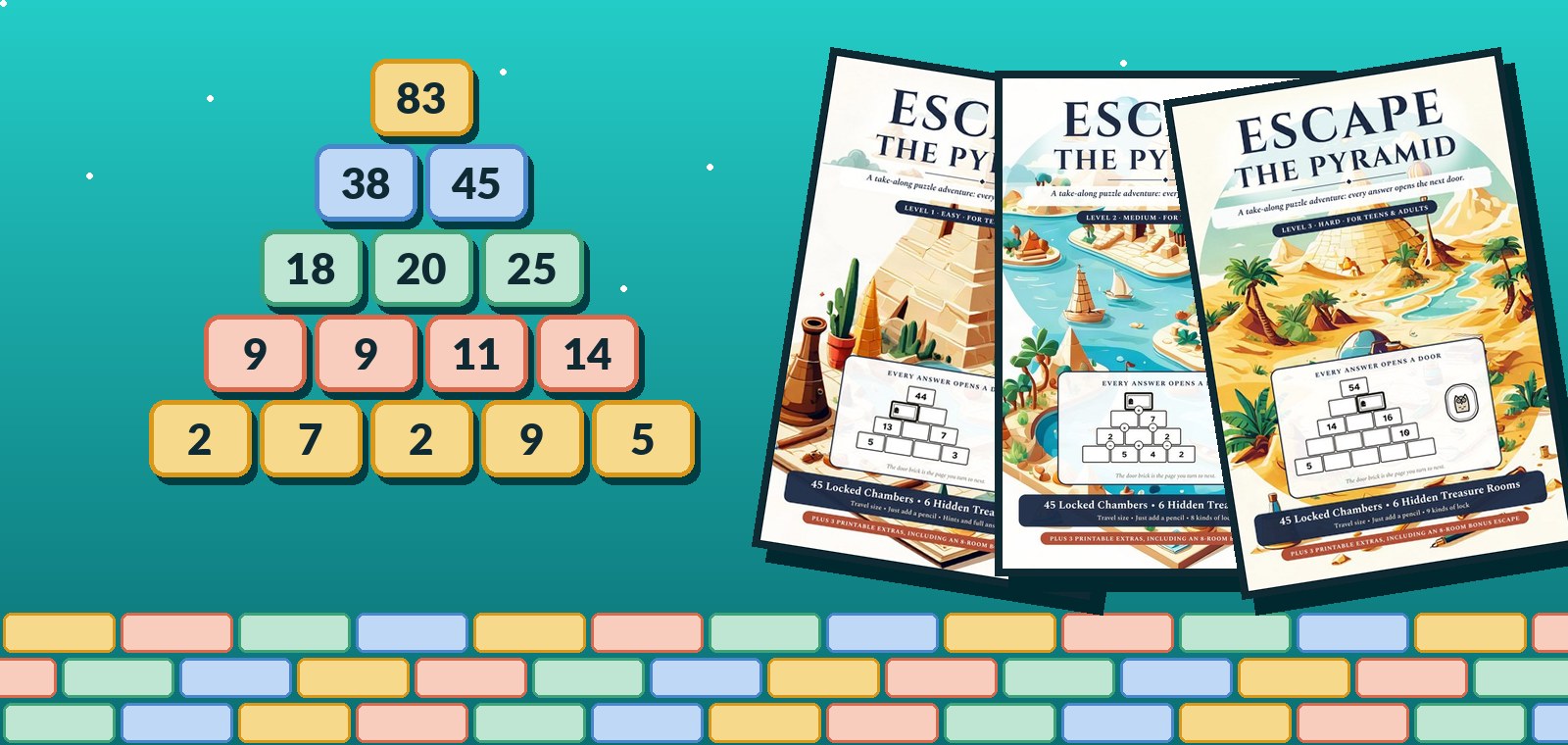
A number pyramid looks like a wall of bricks with a few bricks missing. It has one rule, and once you see it, you can solve most of these puzzles with two small moves. Let's climb one together.
The one rule
Every brick holds the sum of the two bricks directly below it. That is all. Here is the rule on its smallest wall.
3 + 5 = 8
The two bricks on the bottom add up to the brick above them. Walls can be as tall as nine rows, but every brick follows this same rule.
Our puzzle, one move at a time
Here is a five-row wall. Seven bricks are filled in. The question marks are what we need to find. Look for any row where the bricks below are already known.
The puzzle
The top brick is 83. The bottom row shows 2, 7, 2 and 9, and the last bottom brick is missing. One brick in the fourth row is given as 14.
Add up where you can
In the fourth row, three bricks sit on two known bricks. 2 + 7 = 9, then 7 + 2 = 9, then 2 + 9 = 11. These are the easy ones. Fill them in.
Subtract down when a brick is missing
The brick marked 14 sits on 9 and a missing brick. So 9 + ? = 14, which means ? = 14 − 9 = 5. Adding goes up the wall. Subtracting goes down.
Keep climbing
Now the third row is easy: 9 + 9 = 18, 9 + 11 = 20 and 11 + 14 = 25. Each finished row hands you the row above it.
Finish at the top
One brick is left in the second row: 20 + 25 = 45. Check the summit: 38 + 45 = 83, exactly the number we were given. The wall holds together.
Check your work like an explorer
Every brick you fill can be checked against the one above it, so you never have to wonder whether you are right. If a row does not add up to the brick above, one number below it is wrong. Fix that one first.
Three habits that make it faster
- Scan for rows with two known neighbours. Those bricks fill themselves in.
- Use a known brick above and one below. The missing brick is the difference between them.
- Write small, in pencil. A wall often needs a second look at a number you wrote early.
A taste of the real thing
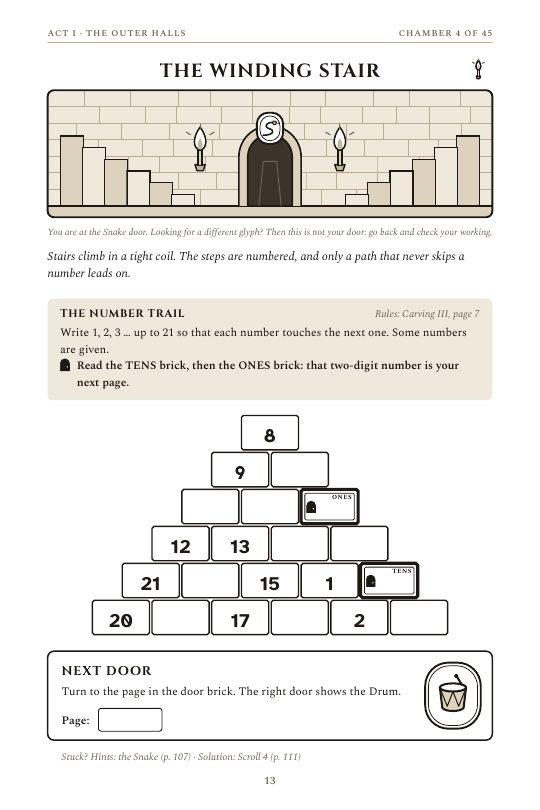
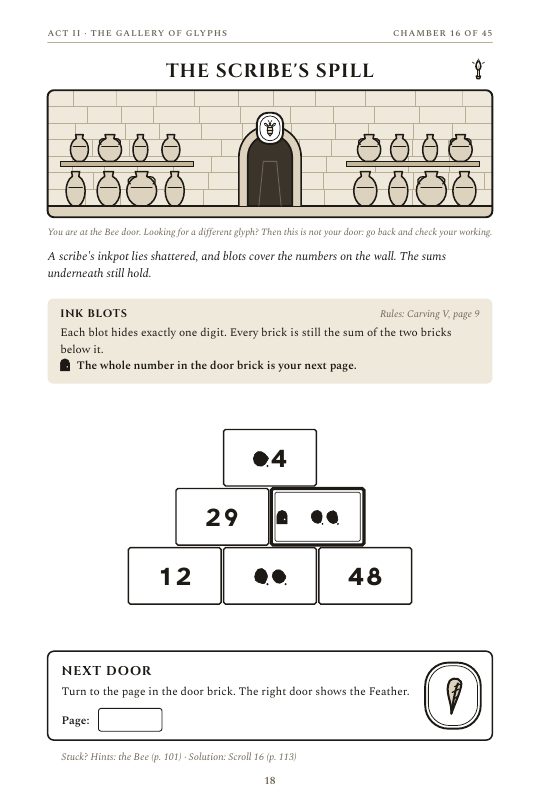
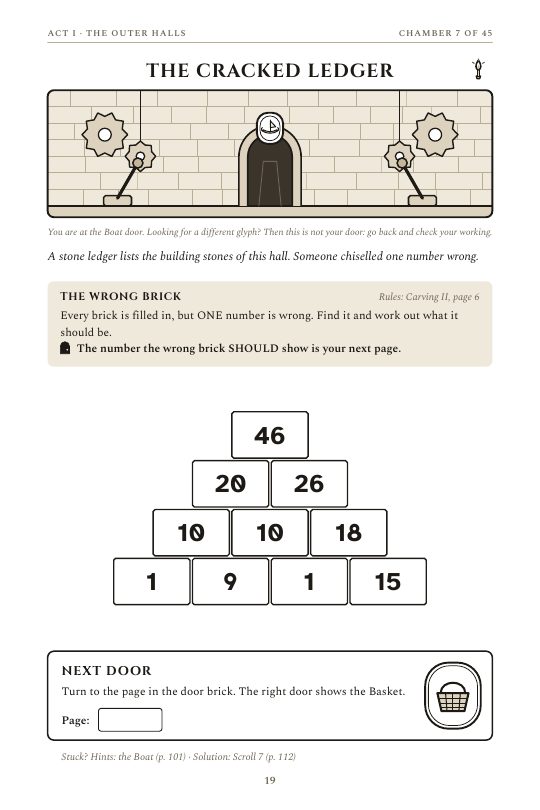
In Escape the Pyramid, every chamber is a puzzle page, and the answer in the door brick tells you which page to turn to next. Plain number pyramids are one kind of chamber. The same pages also hide other kinds, shown here from Level 1.
Books mentioned
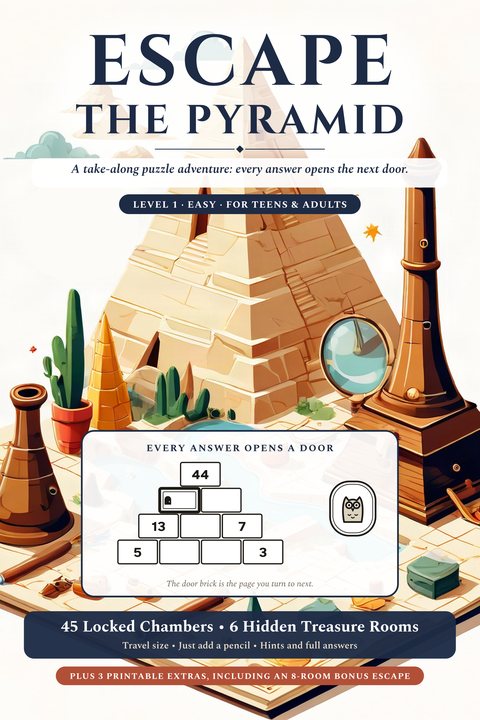
Escape the Pyramid, Level 1
A math escape book with 45 locked chambers. Number pyramids like the one above are one of its 5 puzzle kinds, so the book is not all pyramids. The other four are number trails, wrong-brick hunts, picture bricks and ink blots.
View on Amazon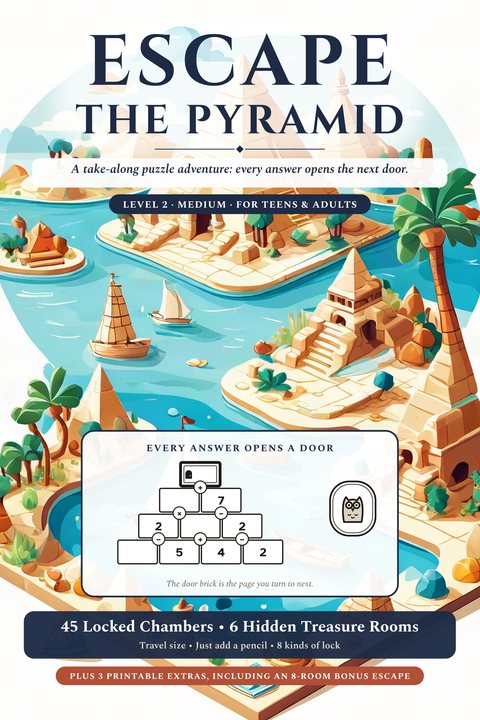
Escape the Pyramid, Level 2
The same adventure with harder chambers. Number pyramids are one of its 8 puzzle kinds, joined by mixed-sign pyramids, four-operation pyramids and match-moving puzzles.
View on AmazonAs an Amazon Associate we earn from qualifying purchases. Cover images are the ones we have on file; the book you receive may show a slightly different cover.
More field notes
Honeycomb Hive Rescue: Help the Wild Bees Remember Their Dance
A storm made the scout bees forget their waggle dance. A tour of Honeycomb Hive Rescue, a math escape room game for ages 7 to 10 that plays in your web browser and on paper, with its video.
Escape the Dwarf Halls: The Story and a Look Inside
Escape the Dwarf Halls: the story, how a chamber plays and a look at a real page.
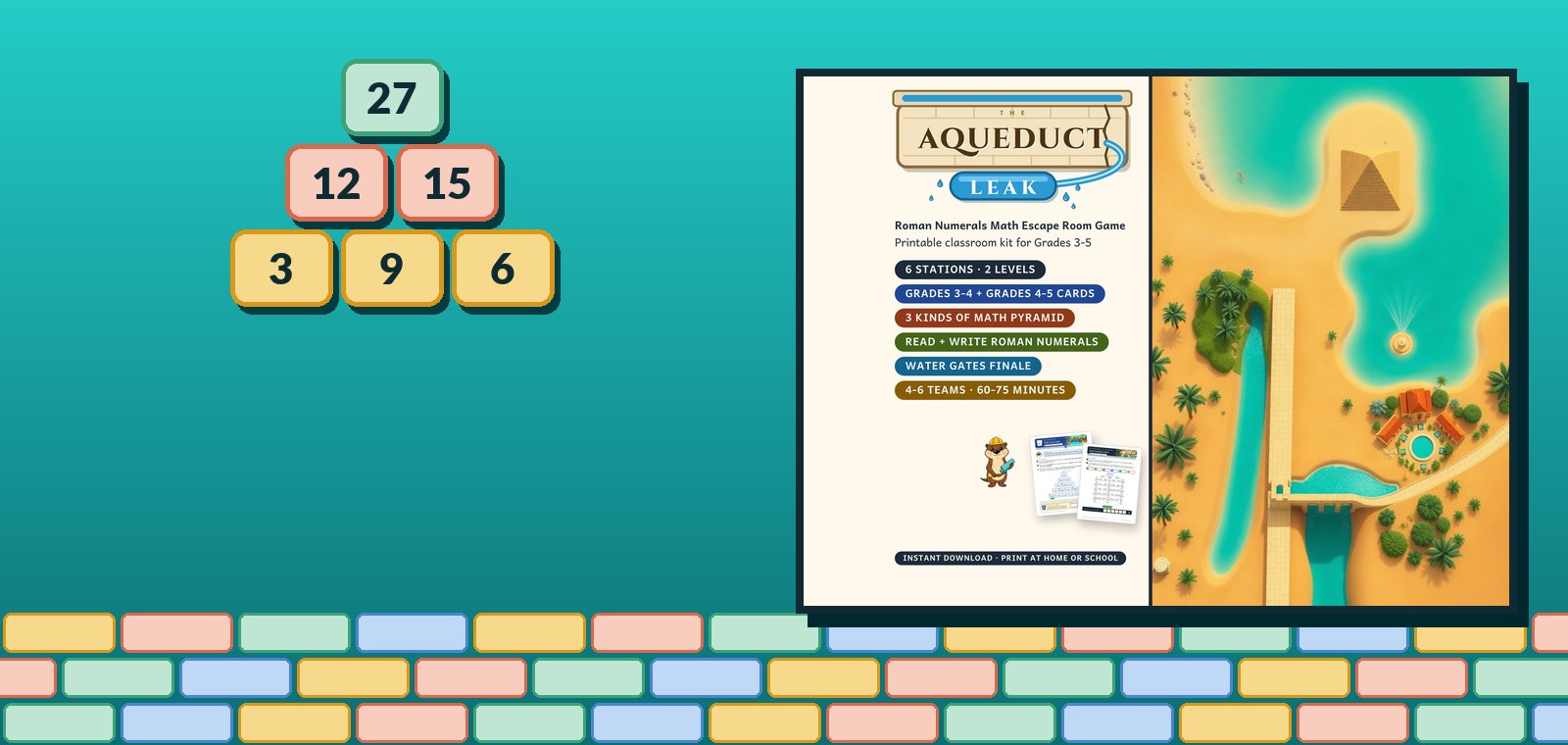
The Aqueduct Leak: What It Can Do for Players
The Aqueduct Leak (Grades 3 to 5): what is in it, what players can get out of it and how to run it.
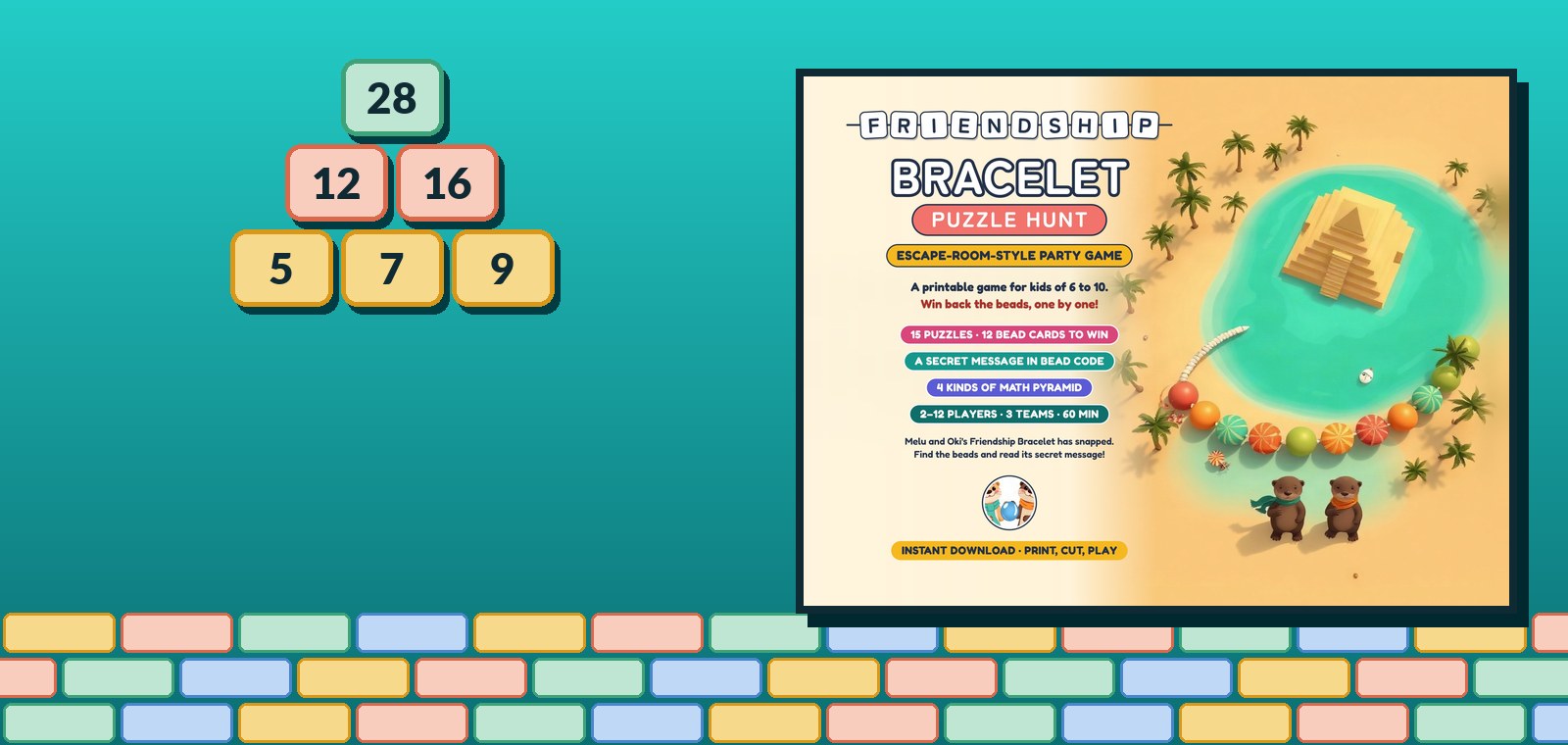
Friendship Bracelet Puzzle Hunt: Win the Beads, Read the Bead Code
Twelve puzzles, twelve bead cards and a secret message in our own Bead Code. A tour of the Friendship Bracelet Puzzle Hunt for ages 6 to 10, with its video.
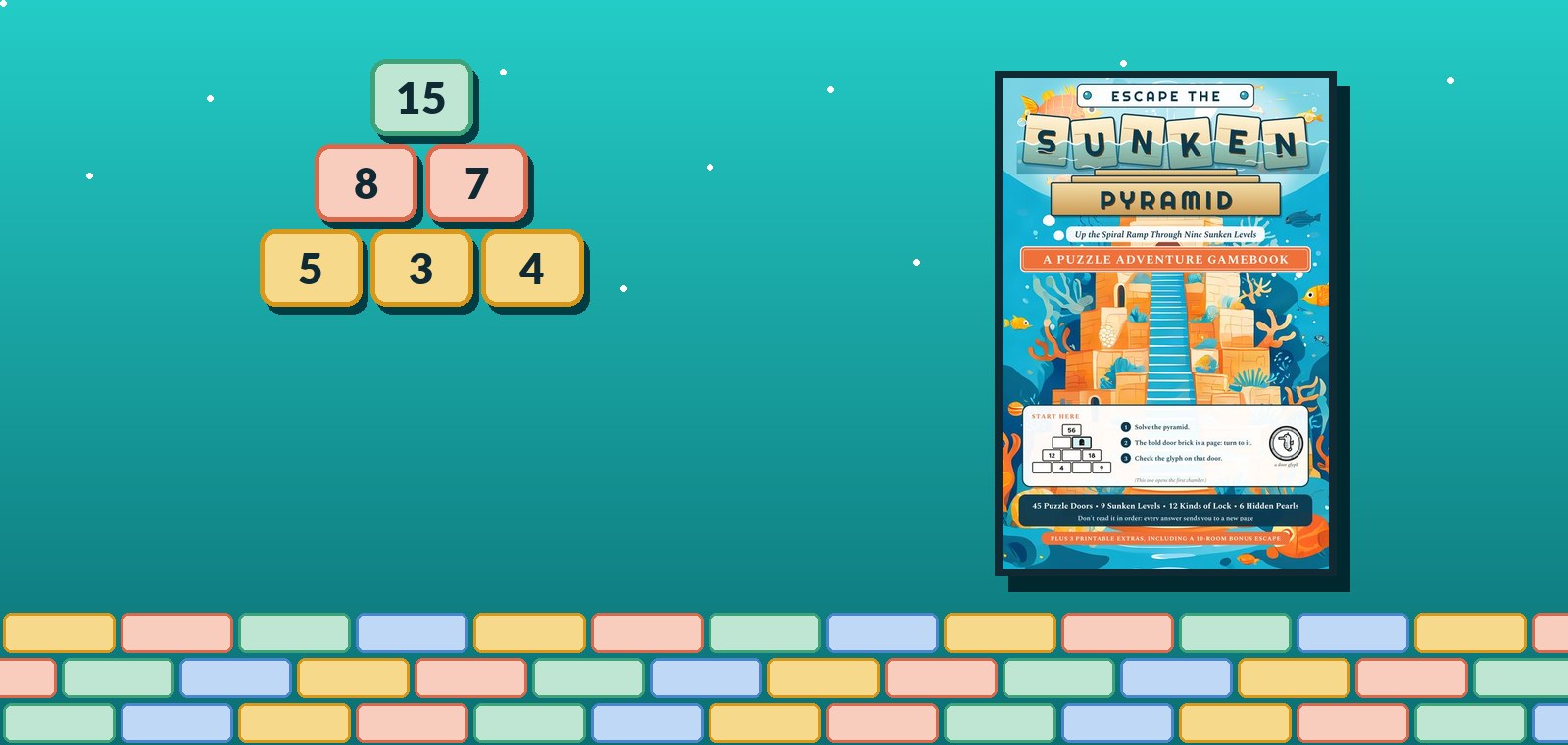
Escape the Sunken Pyramid: The Story and a Look Inside
Escape the Sunken Pyramid: the story, how a chamber plays and a look at a real page.
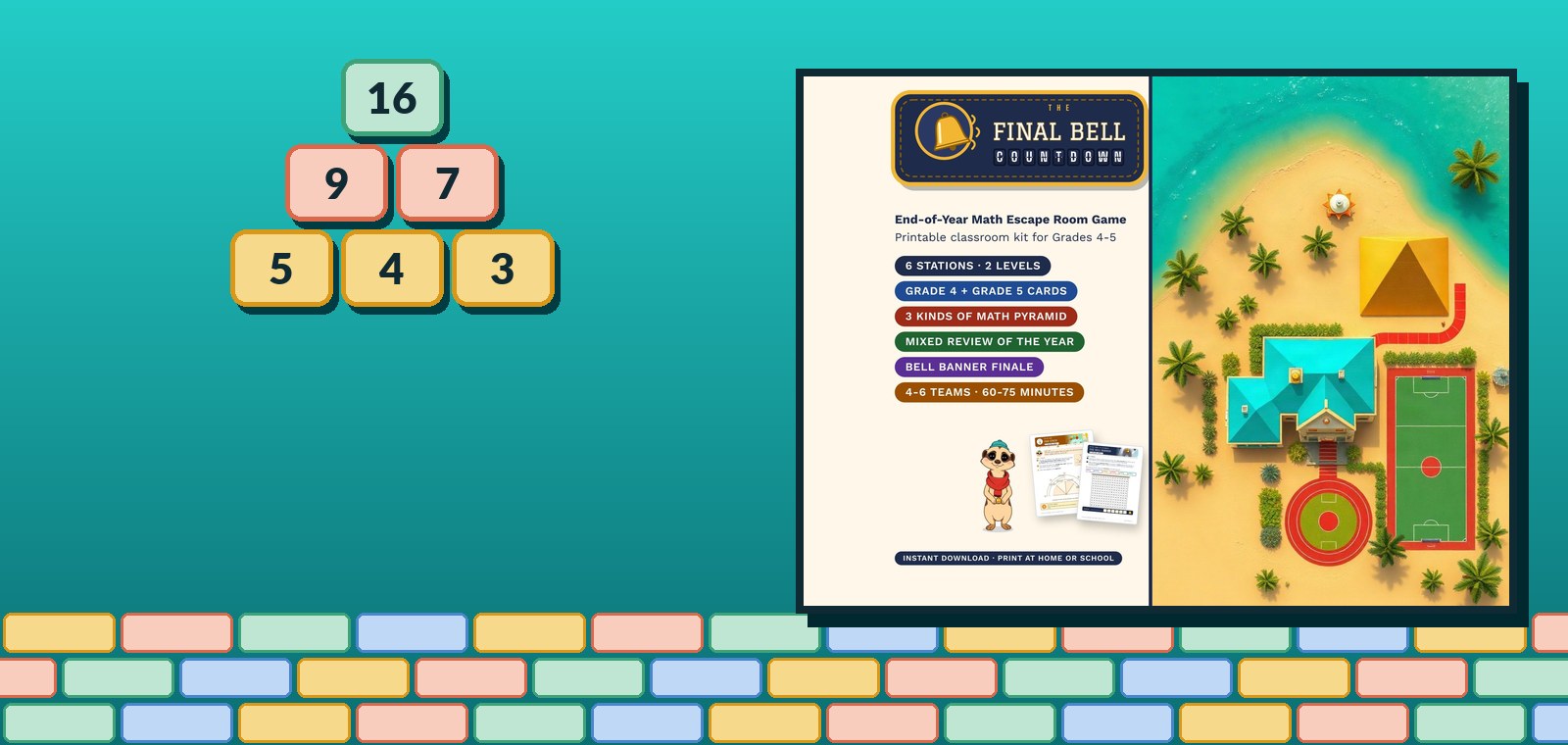
The Final Bell Countdown: What It Can Do for Players
The Final Bell Countdown (Grades 4 and 5): what is in it, what players can get out of it and how to run it.
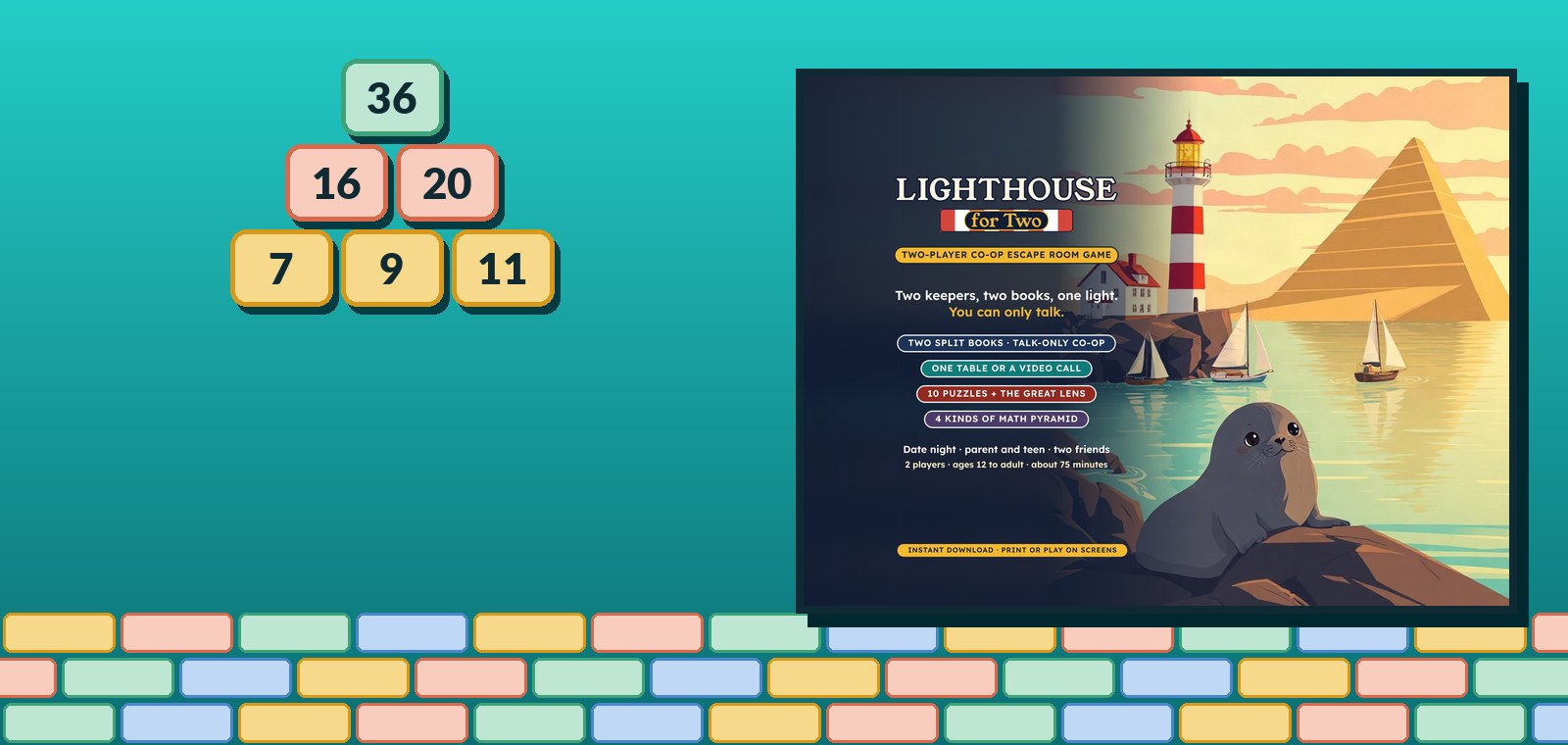
Lighthouse for Two: A Co-op Escape Room Where Each Player Holds Half
Two keepers, one lighthouse, and every puzzle split in half. A tour of Lighthouse for Two, a printable co-op escape room for two players aged 12 to adult, with its video.
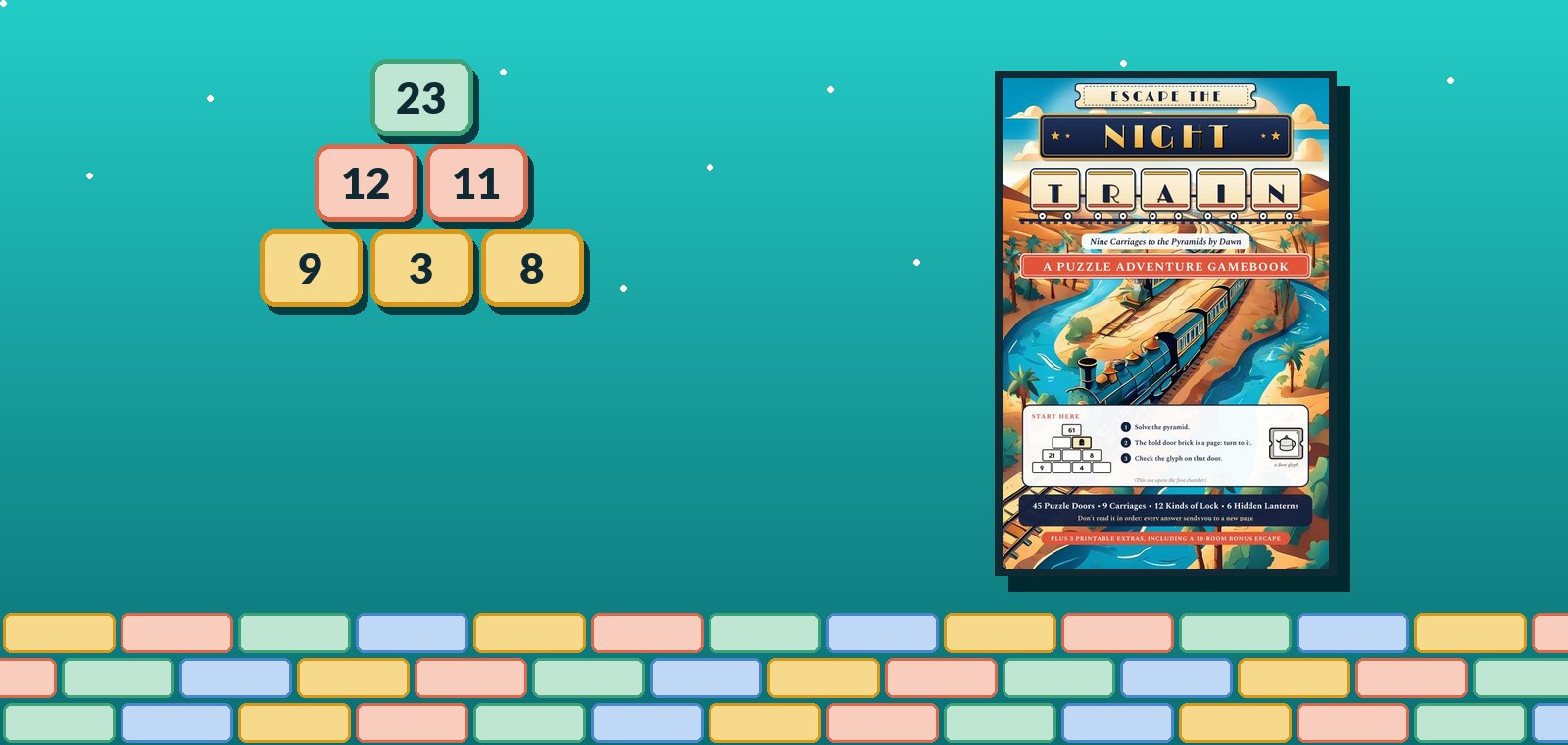
Escape the Night Train: The Story and a Look Inside
Escape the Night Train: the story, how a chamber plays and a look at a real page.
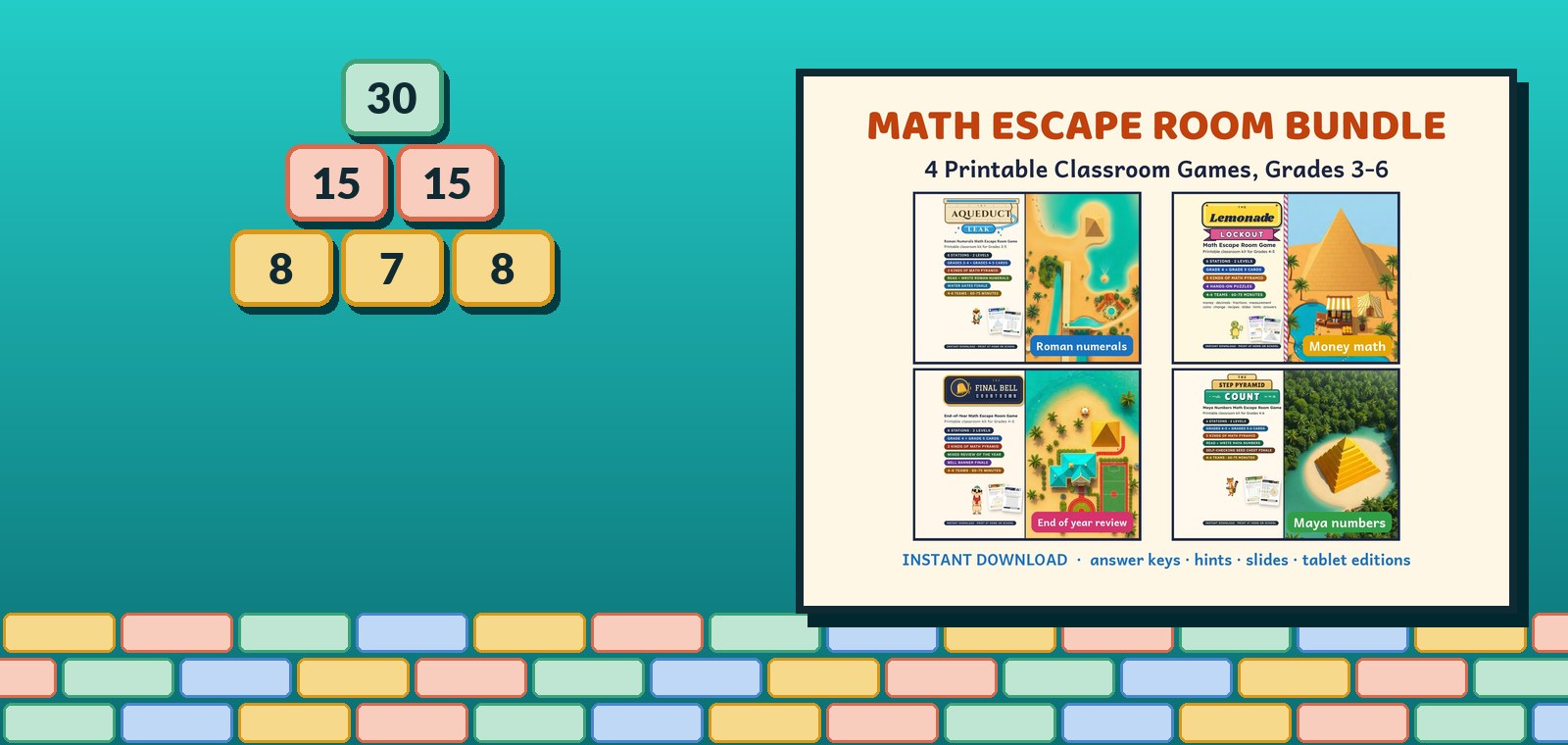
Math Escape Room Bundle, Grades 3 to 6: What It Can Do for Players
Math Escape Room Bundle, Grades 3 to 6 (Grades 3 to 6): what is in it, what players can get out of it and how to run it.
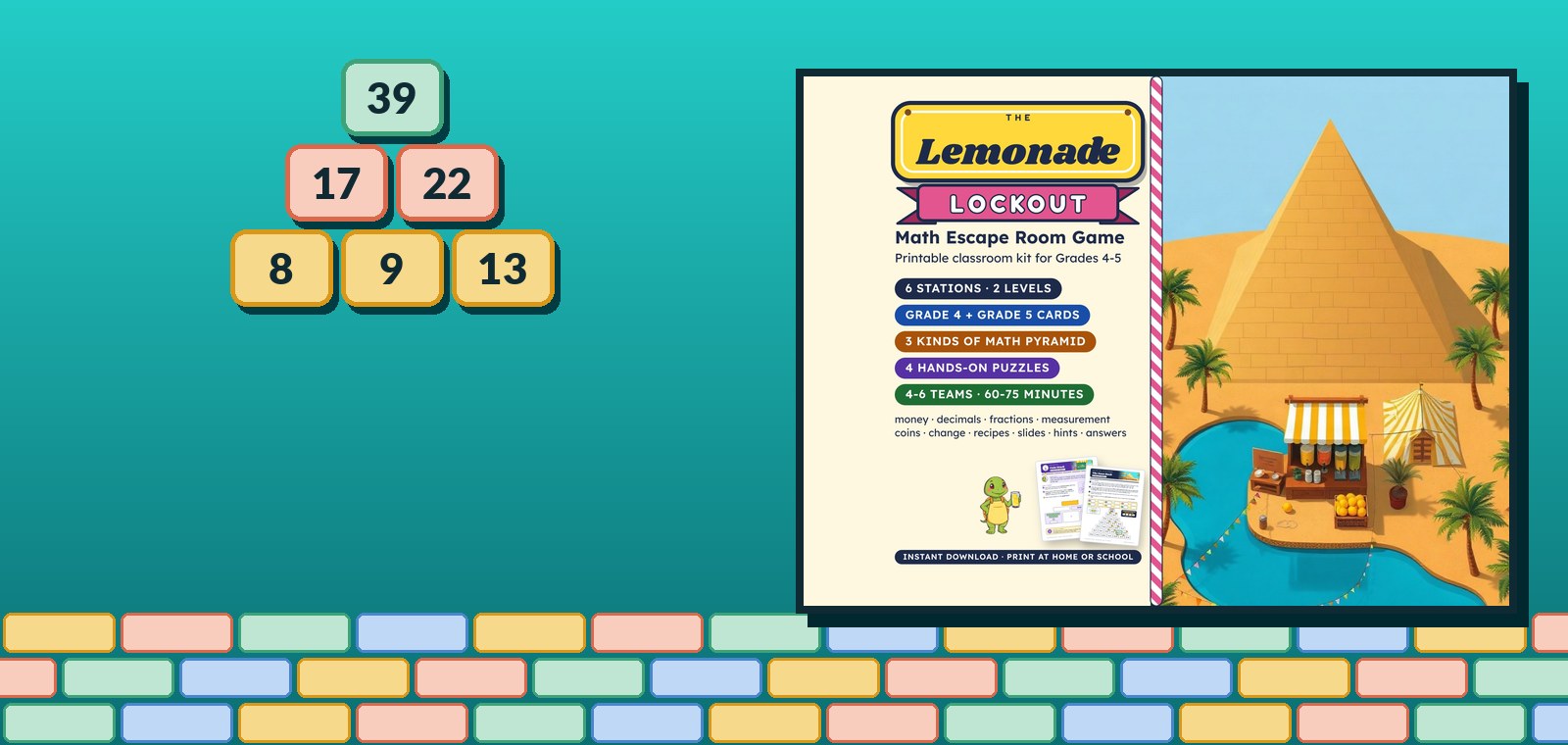
The Lemonade Lockout: Money Math That Opens a Shutter
The lemonade stand's shutter is locked and Rindle the tortoise forgot the code. A tour of The Lemonade Lockout, a money and decimals escape room for Grades 4 and 5, with its video.
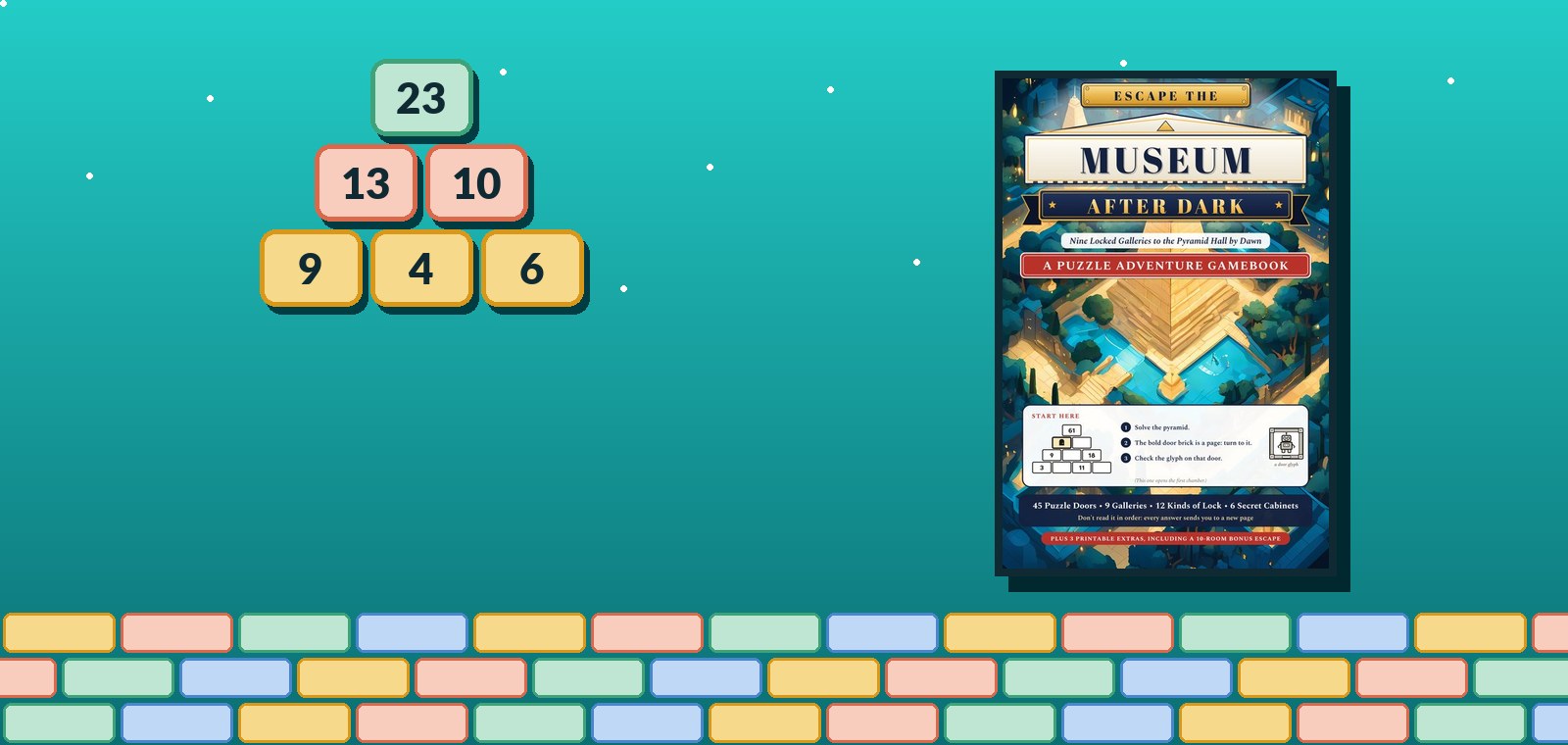
Escape the Museum After Dark: The Story and a Look Inside
Escape the Museum After Dark: the story, how a chamber plays and a look at a real page.
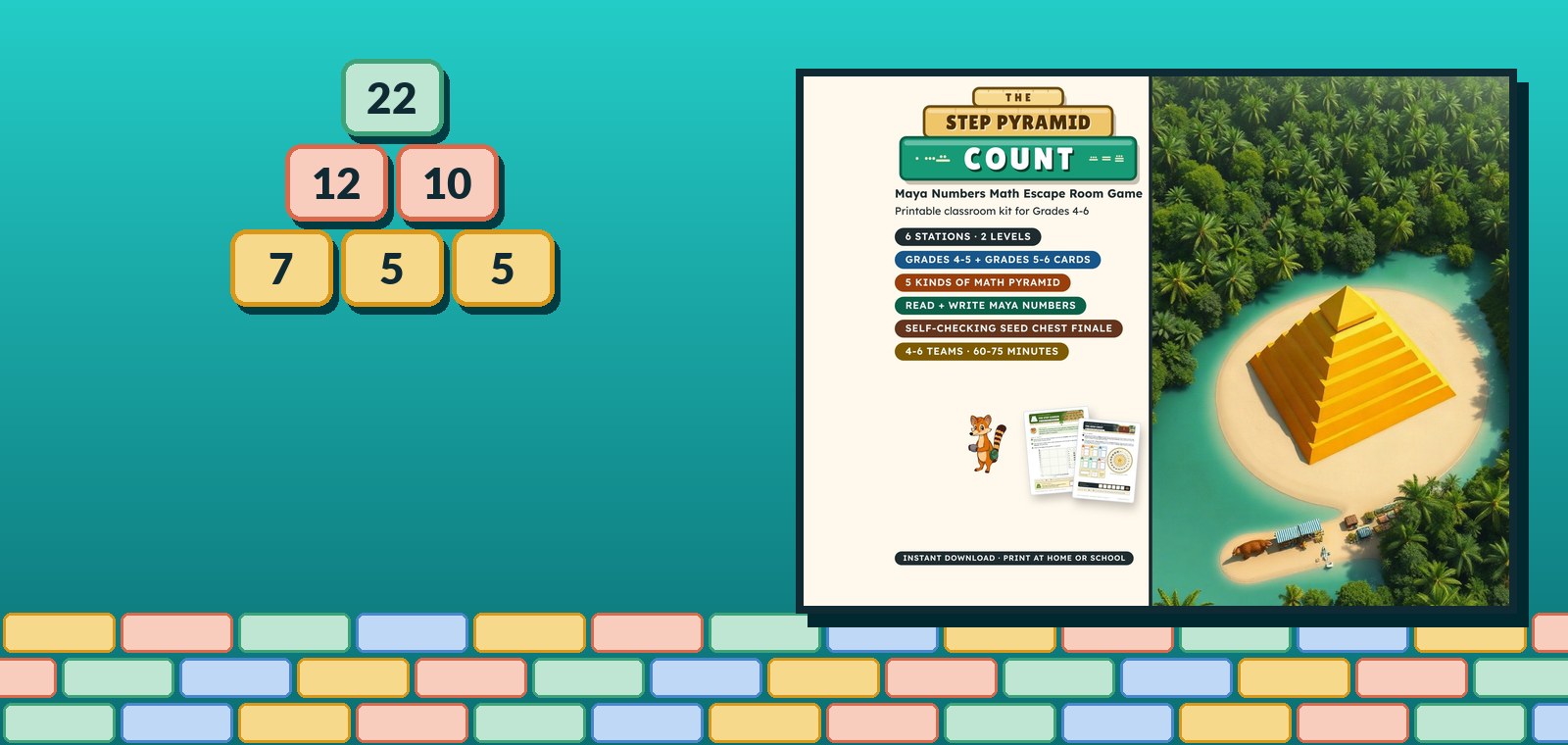
The Step Pyramid Count: What It Can Do for Players
The Step Pyramid Count (Grades 4 to 6): what is in it, what players can get out of it and how to run it.
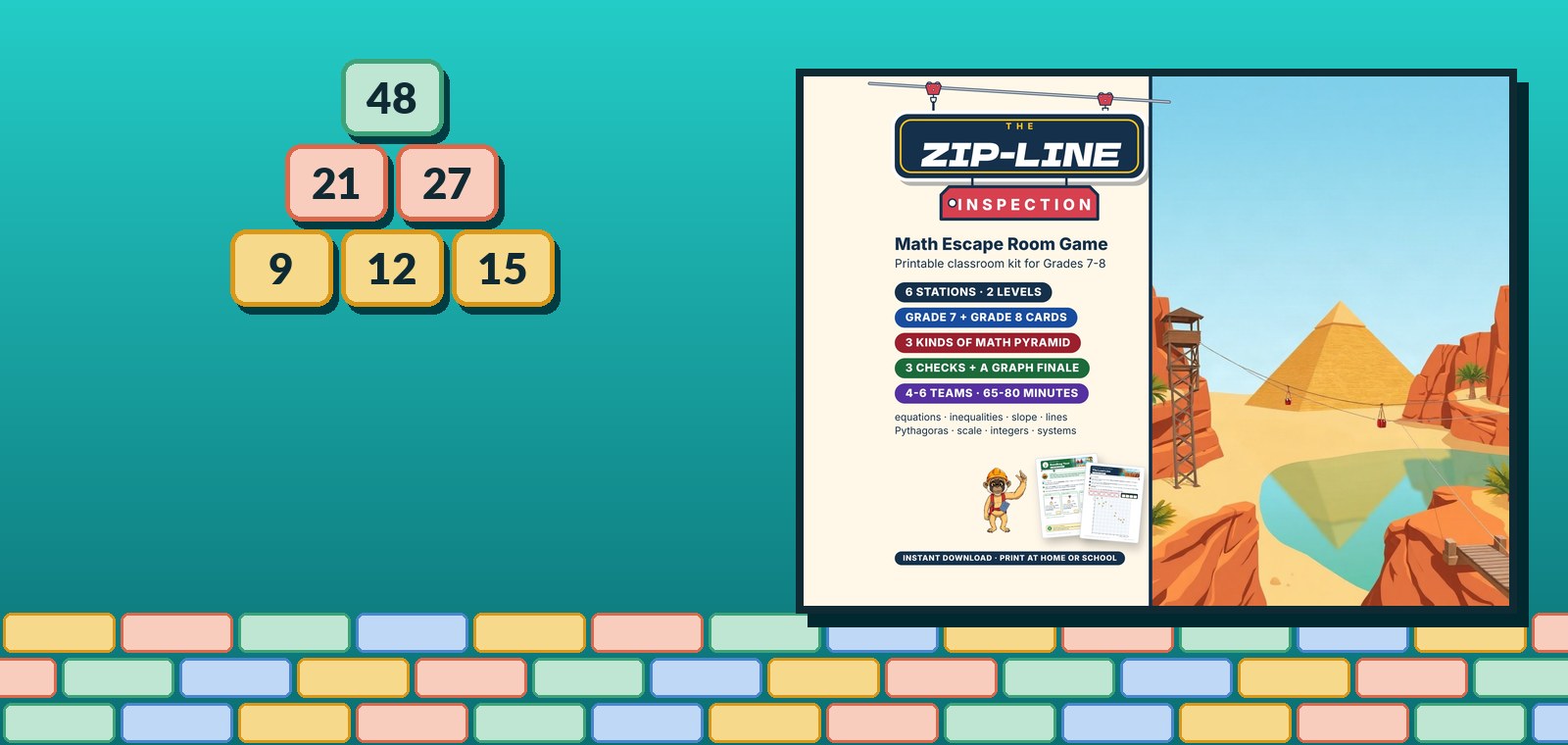
The Zip-Line Inspection: An Algebra Escape Room Where Three Points Must Line Up
No rider climbs the tower until every line passes inspection. A tour of The Zip-Line Inspection, an algebra escape room for Grades 7 and 8, with its video.