
Most of us practise maths the way we were taught: learn one method, then do a page of problems that all use it. It feels smooth. Research suggests three changes that feel a little harder and work better. Here is what each study actually found.
1. Test yourself instead of rereading
In 2013 a team led by John Dunlosky reviewed the evidence for ten popular study techniques. Two came out on top: practice testing (quizzing yourself) and distributed practice (spreading study over time). Rereading, highlighting and summarising were rated low utility (Dunlosky and colleagues, 2013).
A puzzle is a built-in quiz. You cannot reread your way to the answer; you have to pull the method out of your head and use it.
2. Space it out
In the first experiment of Rohrer and Taylor (2007), college students learned one kind of problem. Some did all their practice in one session; others spread the same practice over several sessions. When tested a week later, the spaced group did much better (Rohrer and Taylor, 2007). Same amount of work, better result.
3. Mix the kinds of problem
Most worksheets are blocked: ten problems of one kind, then ten of the next. Because you already know the method before you read each problem, you never practise the hardest part: choosing it. Interleaved practice shuffles the kinds together.
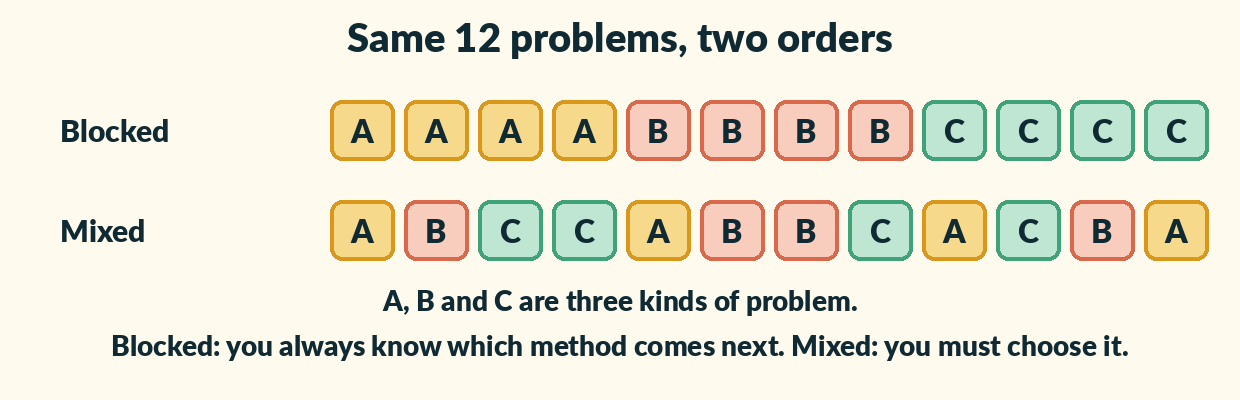
In the second experiment of Rohrer and Taylor (2007), students learned several kinds of problem, then practised them blocked or mixed. One week later, the mixed group did vastly better.
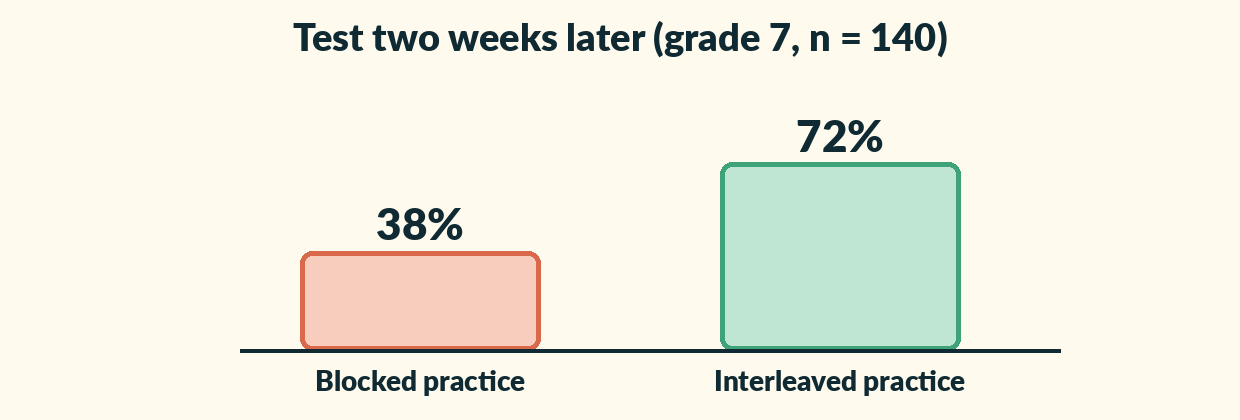
A later classroom study by Rohrer, Dedrick and Burgess followed 140 grade 7 students for nine weeks. Practice was either blocked or interleaved. In an unannounced test two weeks later, material learned by interleaved practice scored 72 percent, against 38 percent for blocked practice (Rohrer, Dedrick and Burgess, 2014).
Interleaving usually feels harder while you do it, so it is easy to think it is not working. The extra effort of choosing the method is the part that sticks.
A ten-minute routine
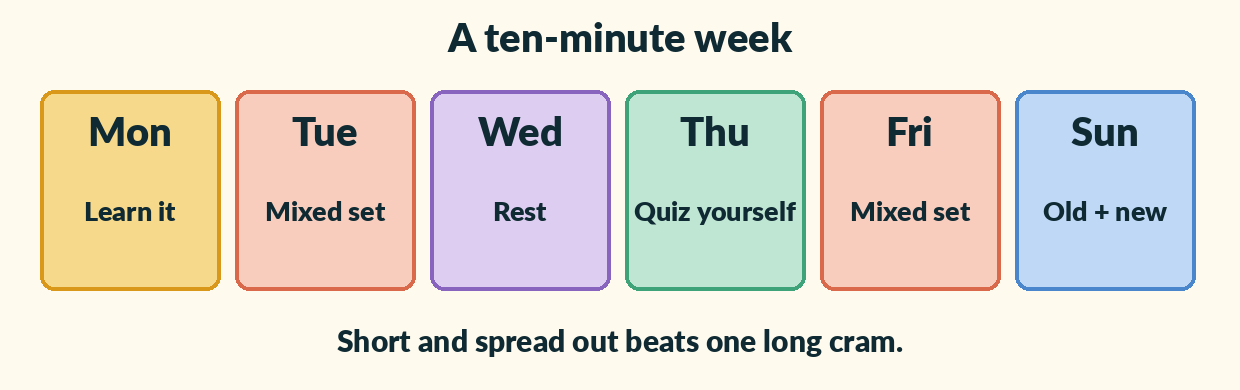
- Learn it once. Do a few problems of a new kind, with the method in front of you.
- Come back after a gap. A day or two later, try a few from memory before you look anything up.
- Shuffle. Mix new problems with older kinds, so each one needs a decision.
- Check, then fix. A wrong answer is information. Work out why, then try one more.
Where a puzzle adventure fits
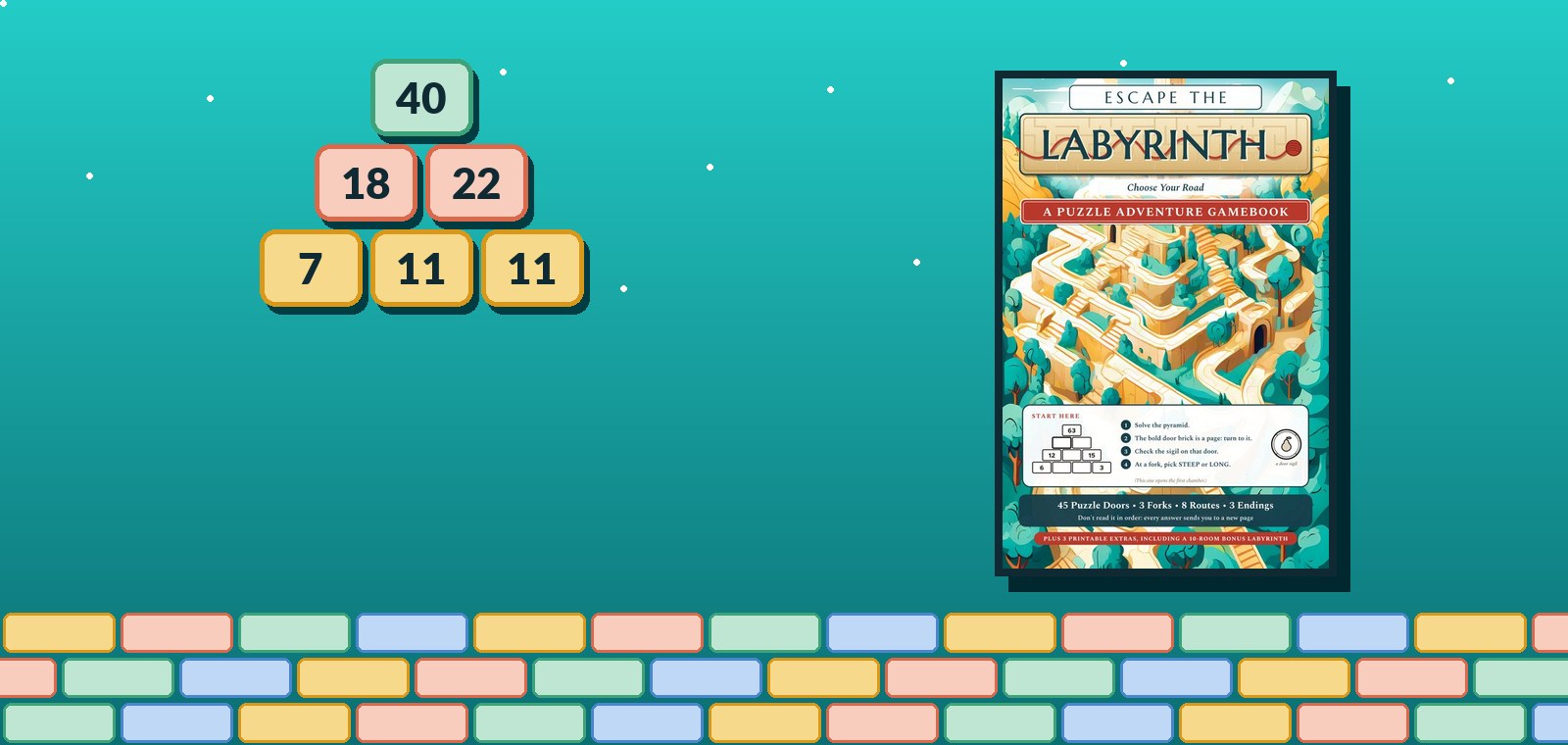
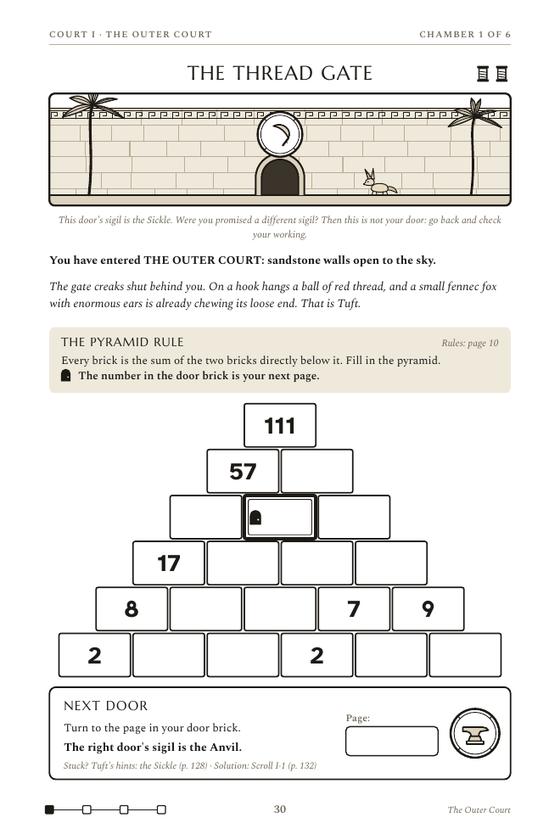
Escape the Labyrinth is a puzzle adventure gamebook, so you do not read it in order. Each chamber is a number-pyramid lock, and the kind of lock changes as you travel: its 45 chambers draw on 14 puzzle kinds, among them wrong-brick, ink-blot, symbol and number-path locks. That is a natural shuffle. It is a book of puzzles, not a course, so it will not replace a textbook; it is one way to get mixed practice that feels like a game.
Books mentioned
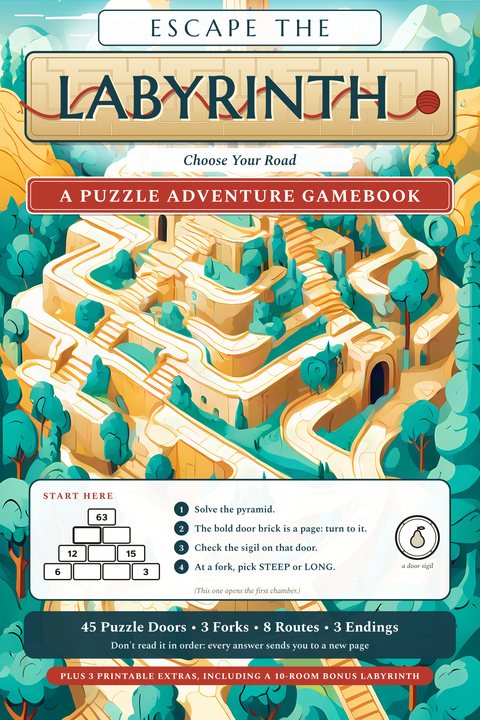
Escape the Labyrinth
A puzzle adventure gamebook with 45 locked chambers. You choose your road, and the puzzle kind changes from door to door.
View on AmazonAs an Amazon Associate we earn from qualifying purchases. Cover images are the ones we have on file; the book you receive may show a slightly different cover.
More field notes
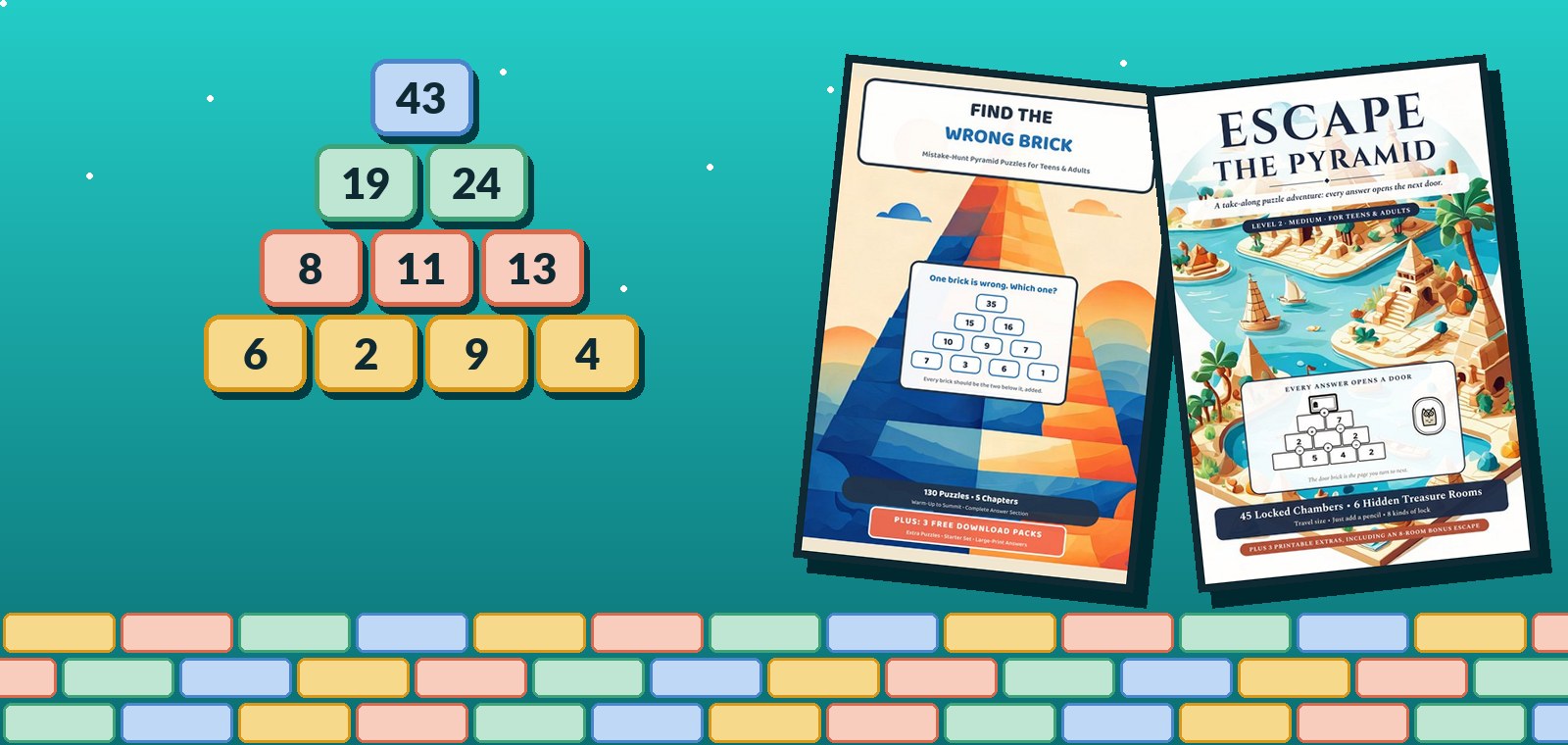
How to Find the Wrong Brick: Count the Complaints
One brick in the pyramid is wrong. Check every pair, count where the complaints meet, and you will find it every time.
Do Puzzles Protect the Ageing Brain? What the Studies Show, and What They Don't
Studies of older adults link number puzzles and similar activities to better thinking, but proof that they slow decline is thin. Six studies, with their limits.
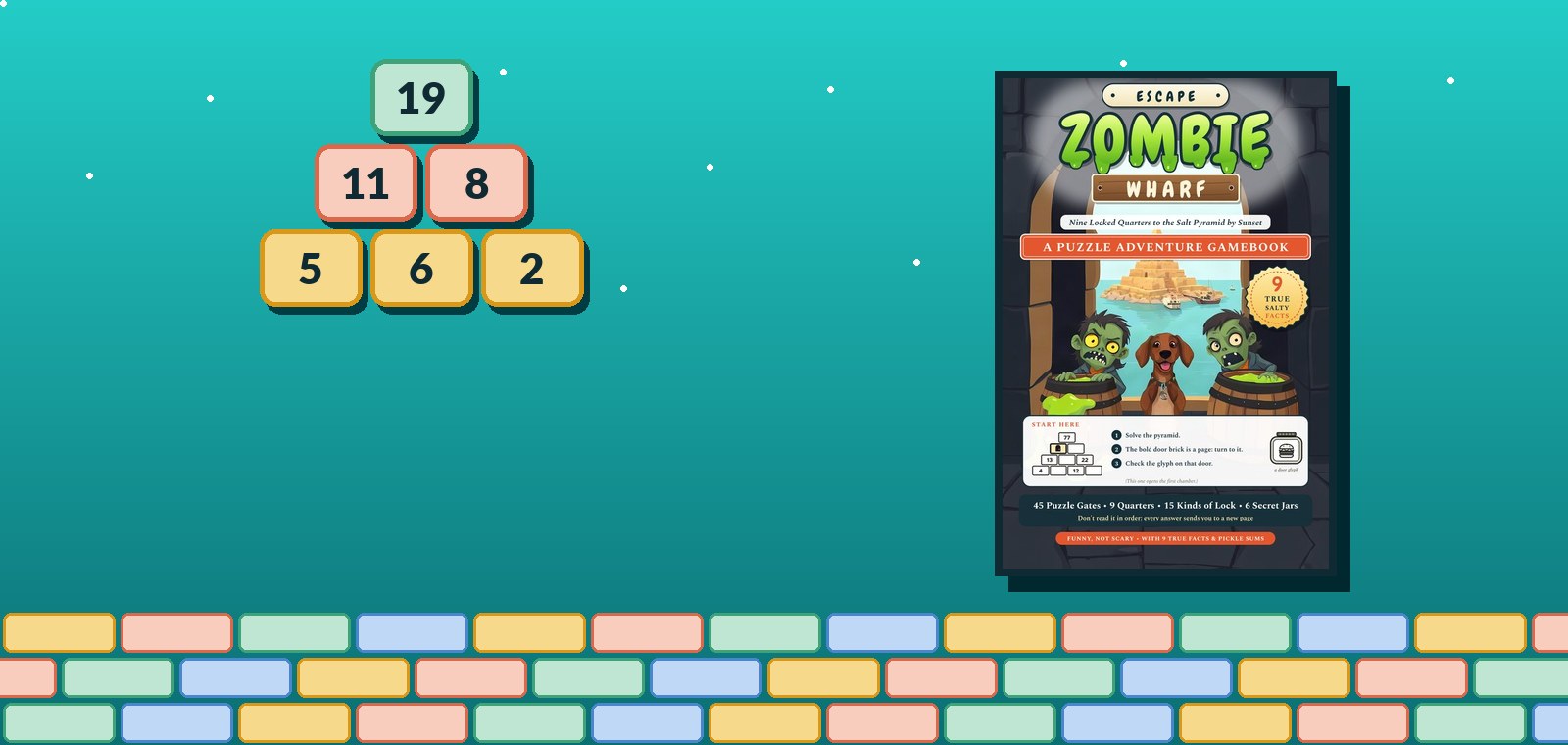
Escape Zombie Wharf: The Story and a Look Inside
Escape Zombie Wharf: the story, how a chamber plays and a look at a real page.
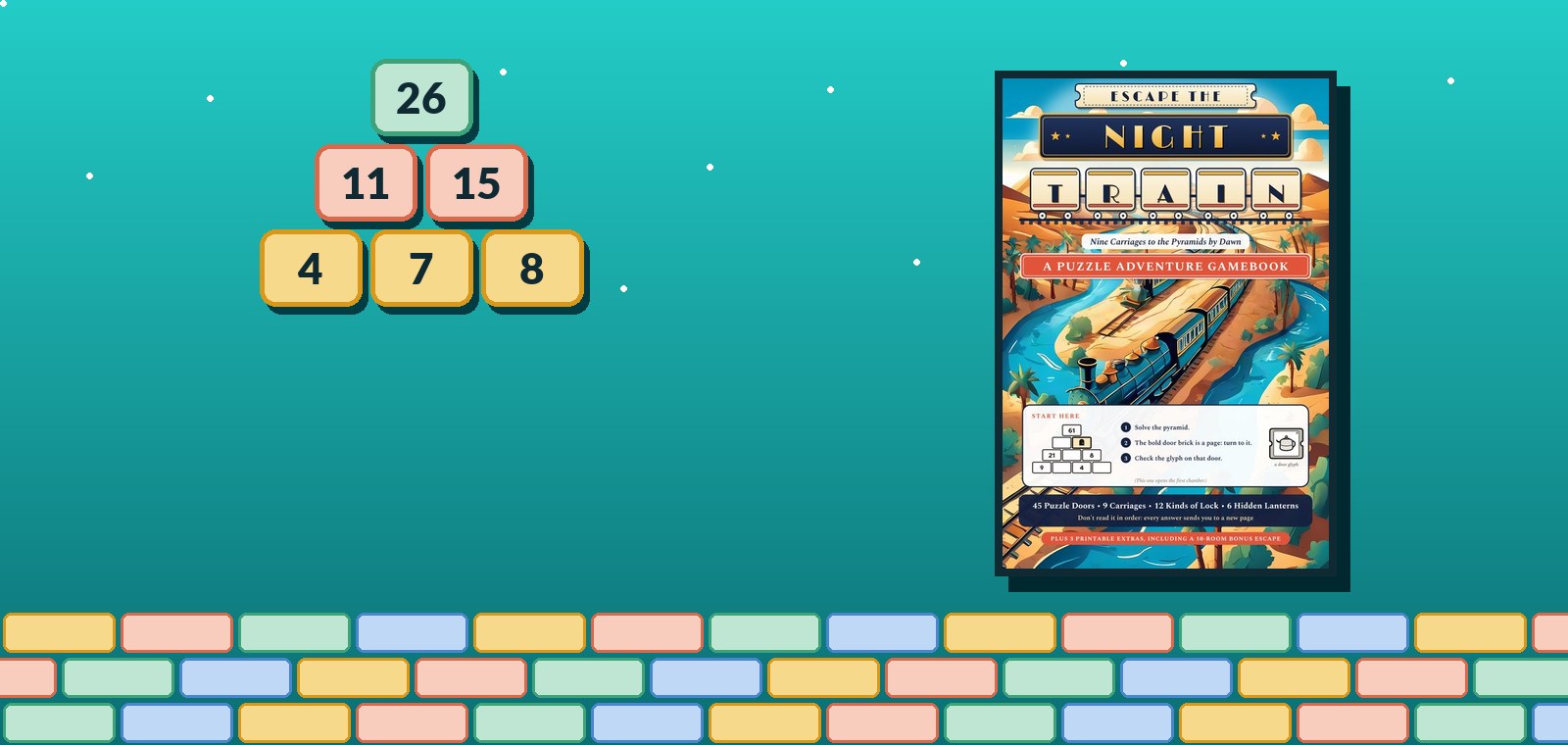
Carriage Lamps: The Lock That Tells You a Whole Row
A lamp at the end of a row shows the total of every brick in it. One quick subtraction fills in a hidden brick, and a neat check keeps you honest.
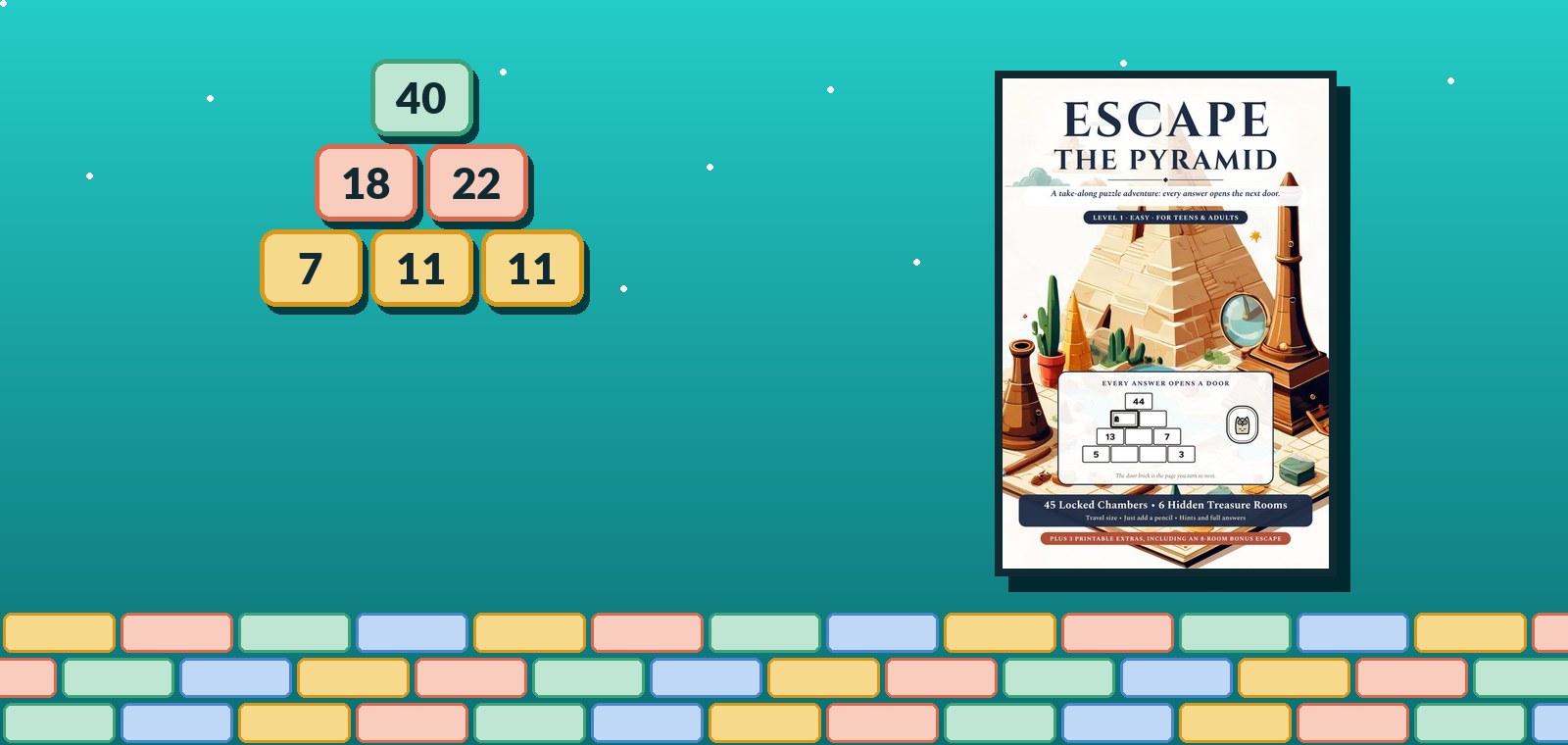
What Maths and Puzzles Can Do for Kids, Teens, Adults and Seniors
What research actually shows about puzzles and maths practice at four stages of life, what it does not show, and where to start.
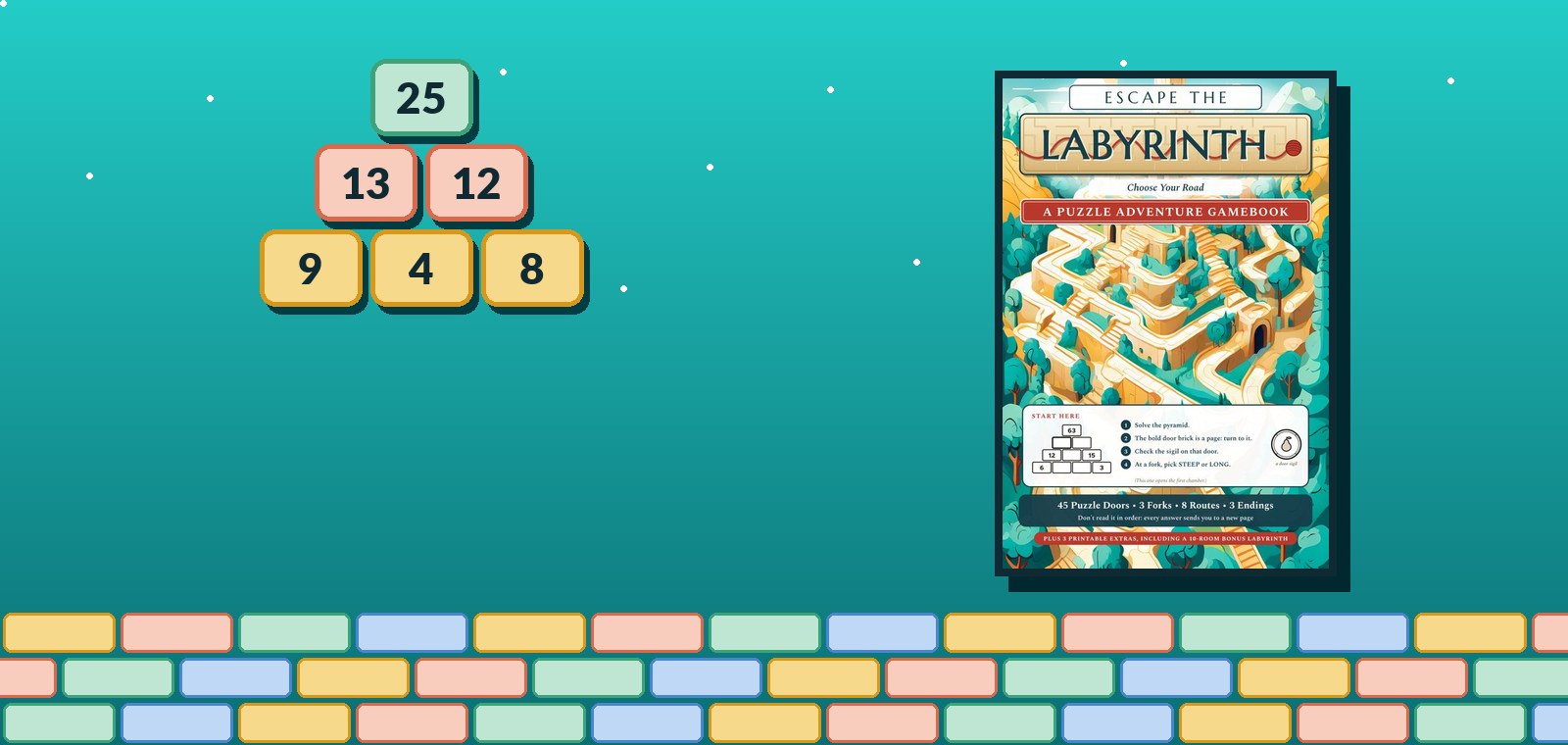
Escape the Labyrinth: The Story and a Look Inside
Escape the Labyrinth: the story, how a chamber plays and a look at a real page.
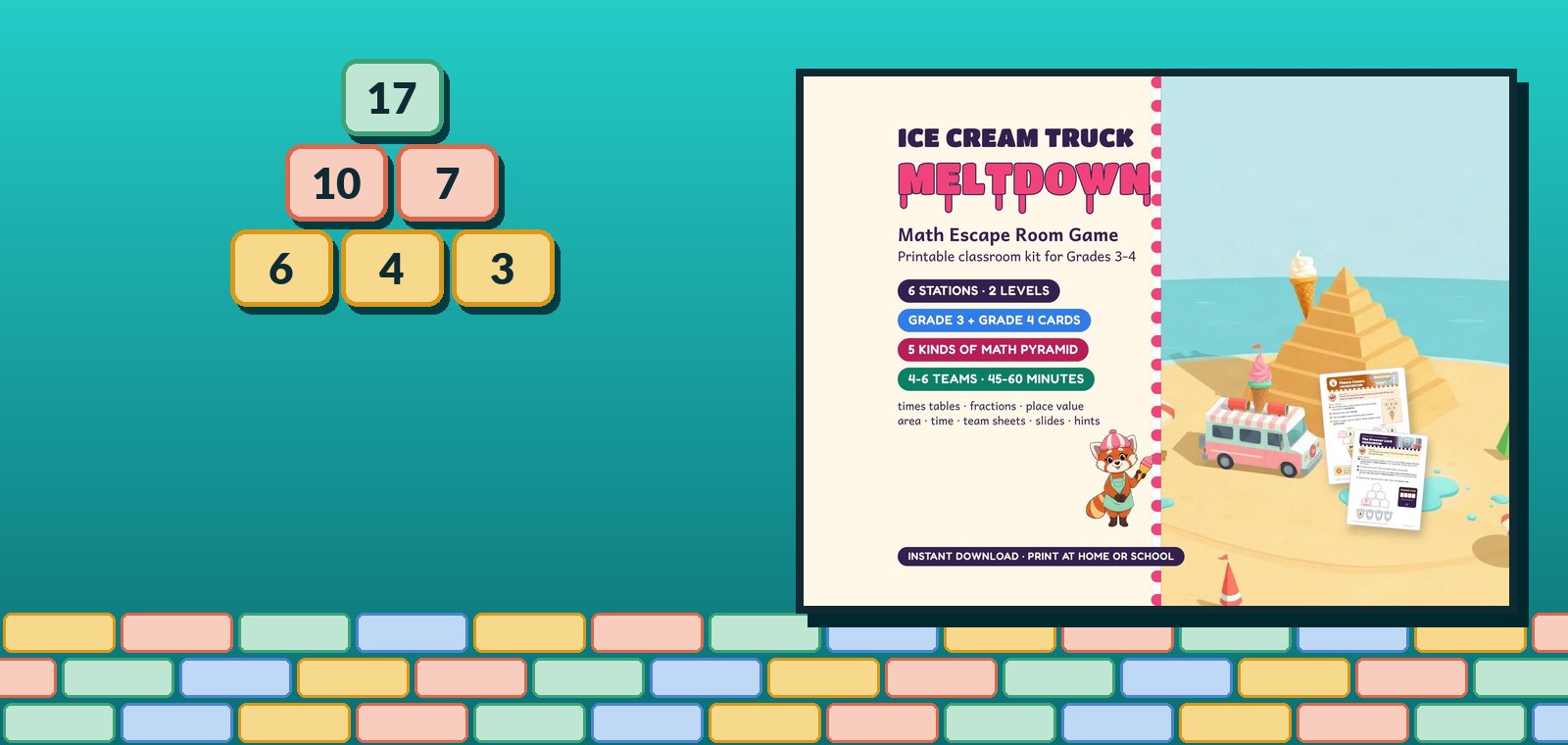
Ice Cream Truck Meltdown: What It Can Do for Players
Ice Cream Truck Meltdown (Grades 3 and 4): what is in it, what players can get out of it and how to run it.
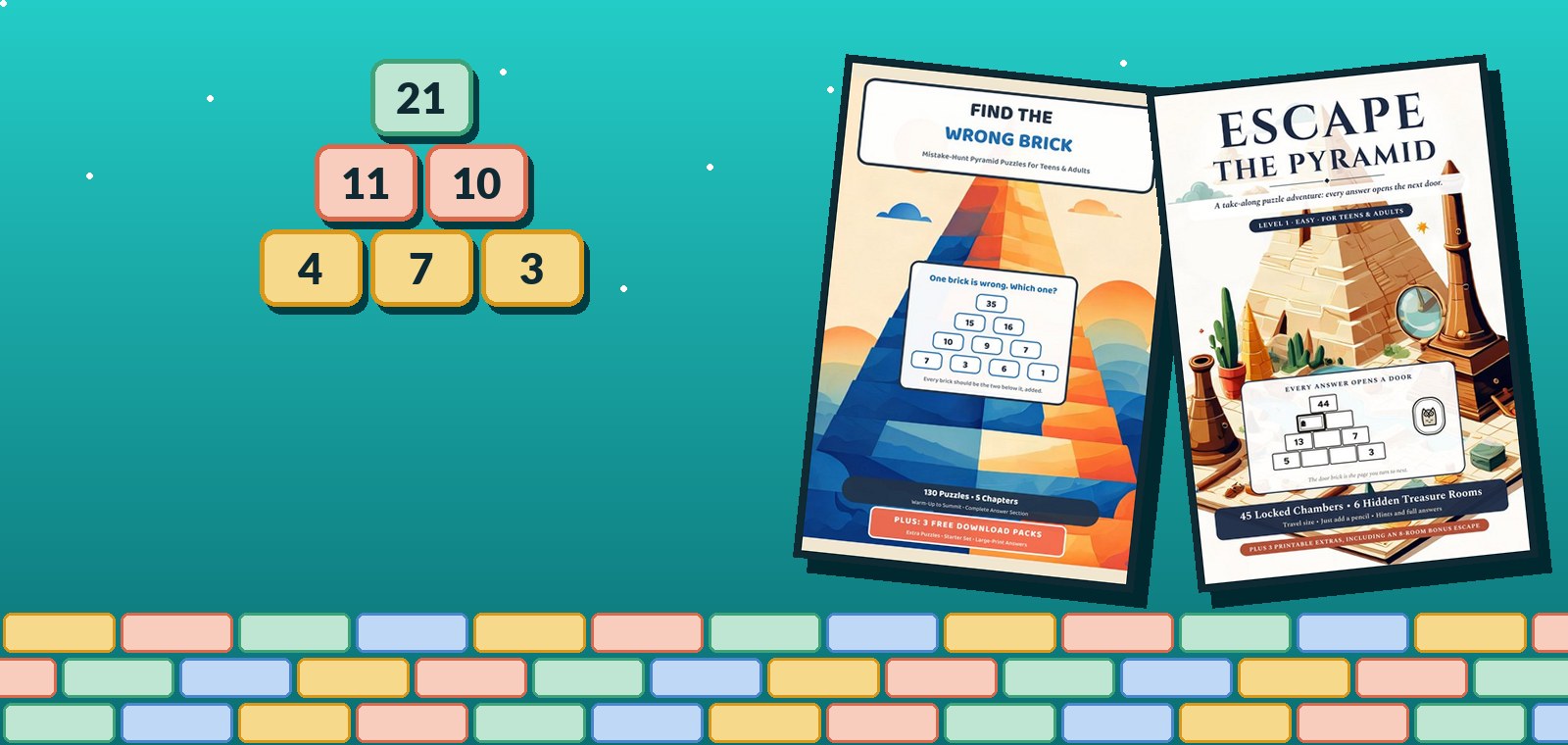
The Odd-Even Check: Spot a Mistake in Five Seconds
Odd plus odd is even. Three small facts let you test a brick without adding it up, and catch many mistakes at a glance.
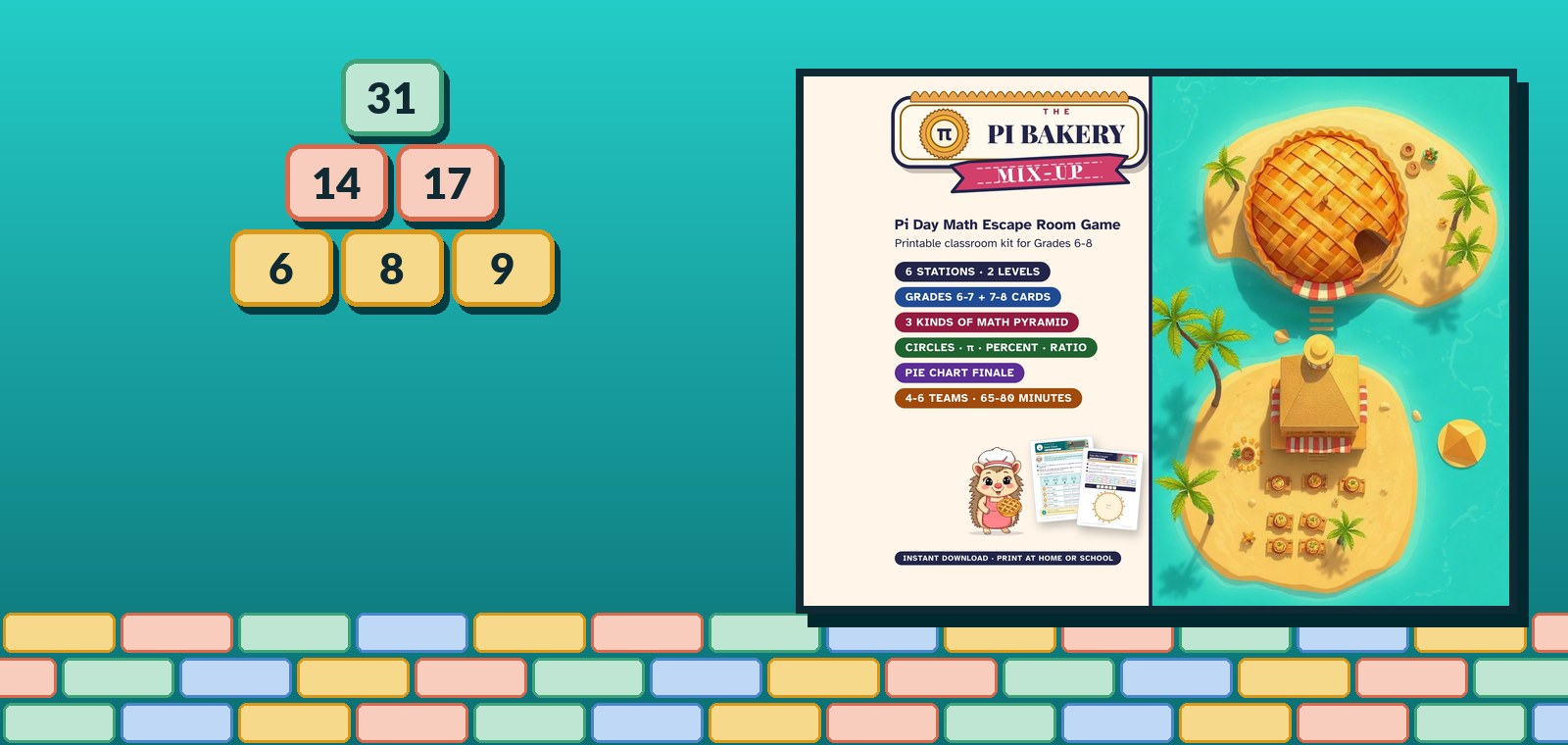
The Pi Bakery Mix-Up: A Pi Day Escape Room Where the Slices Must Add Up to 100
A bakery where every tin has been swapped. A tour of The Pi Bakery Mix-Up, a Pi Day math escape room for Grades 6 to 8, with its video.
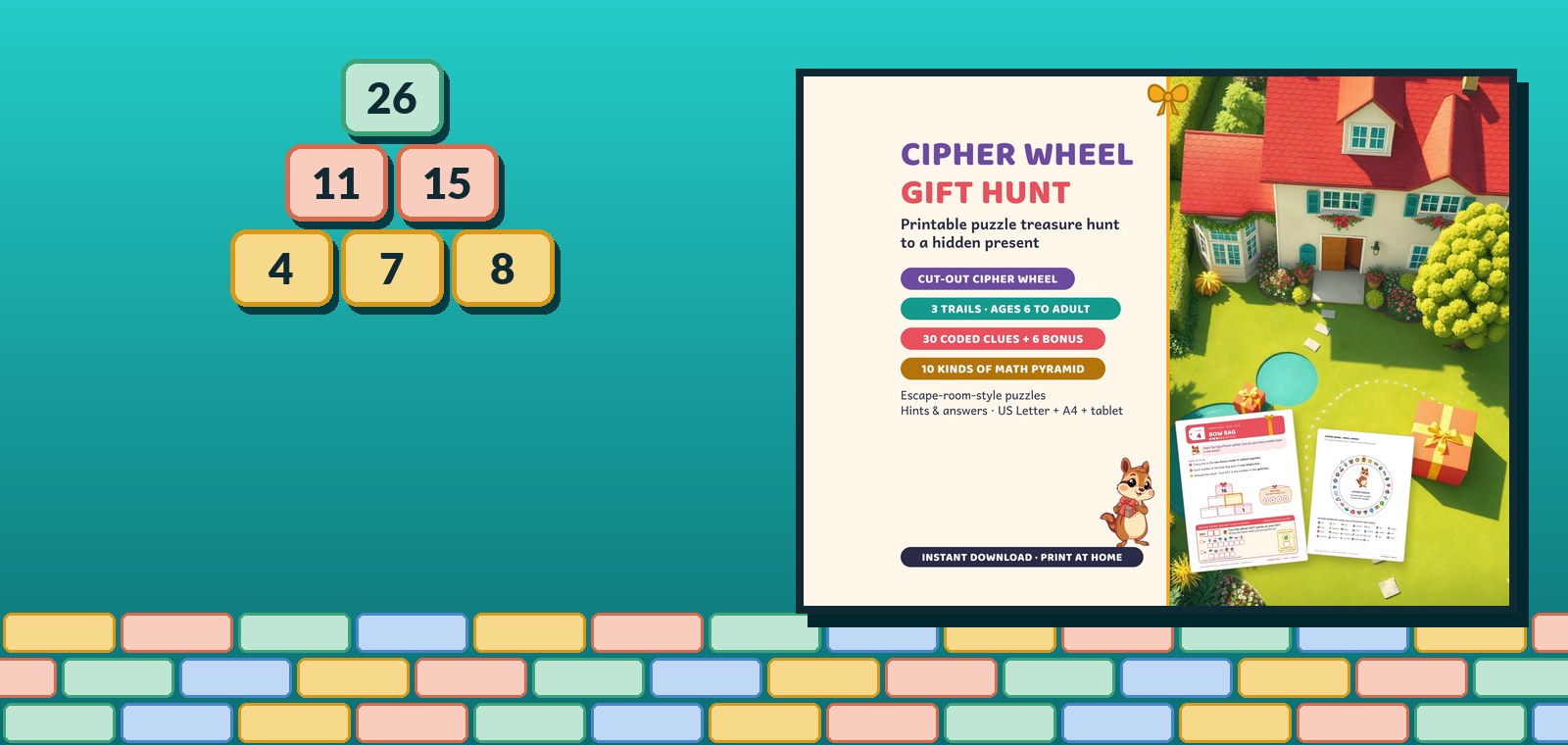
Cipher Wheel Gift Hunt: How a Present Becomes a Puzzle Trail
Solve a puzzle, set a cut-out wheel, decode where the next clue hides. Here is how the Cipher Wheel Gift Hunt works, with its 15-second video.
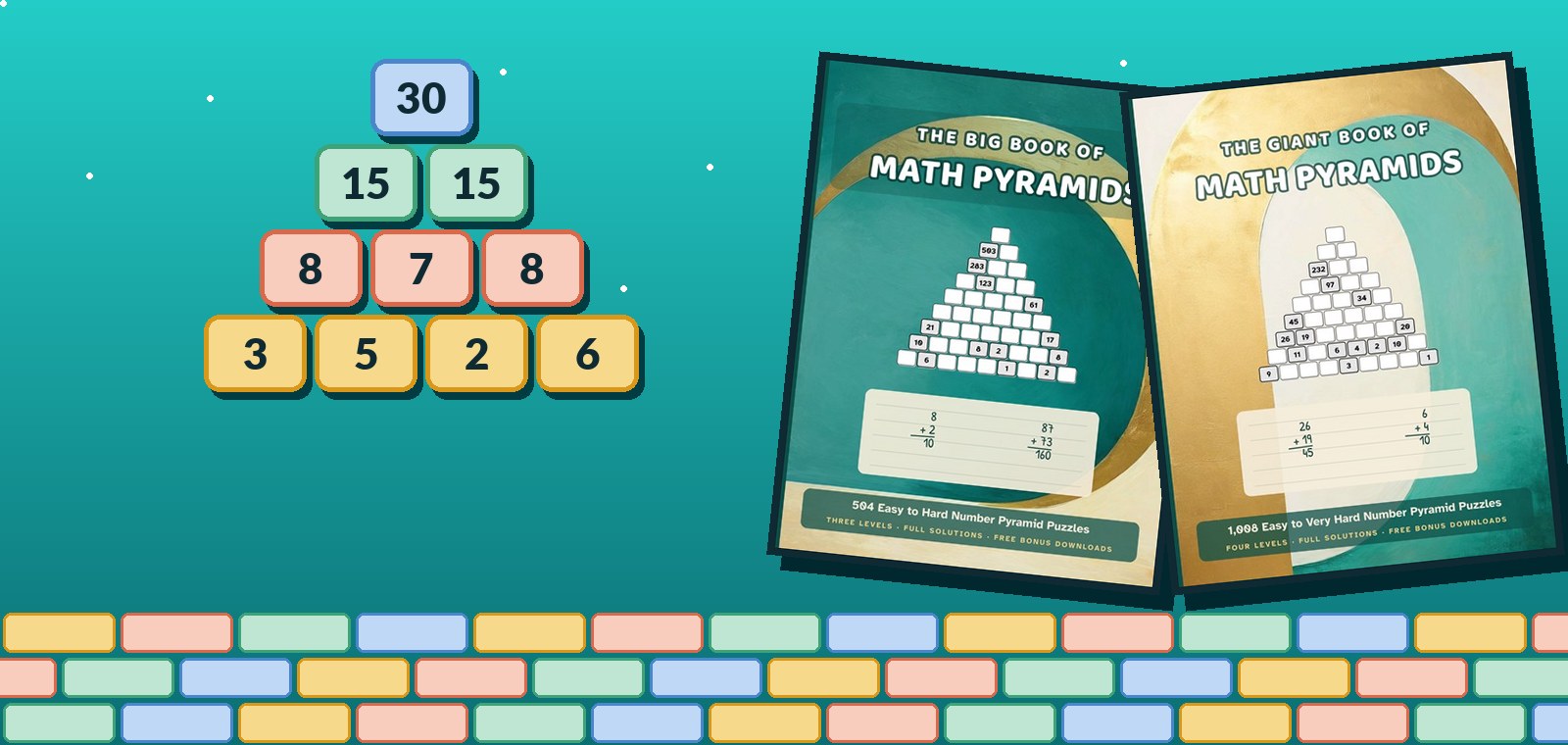
The Top-Brick Shortcut: Why 1, 3, 3, 1 Makes Pyramids Easy
Skip the middle rows. In a four-row pyramid the top is 1, 3, 3 and 1 times the bottom bricks. Why it works, and how to use it.
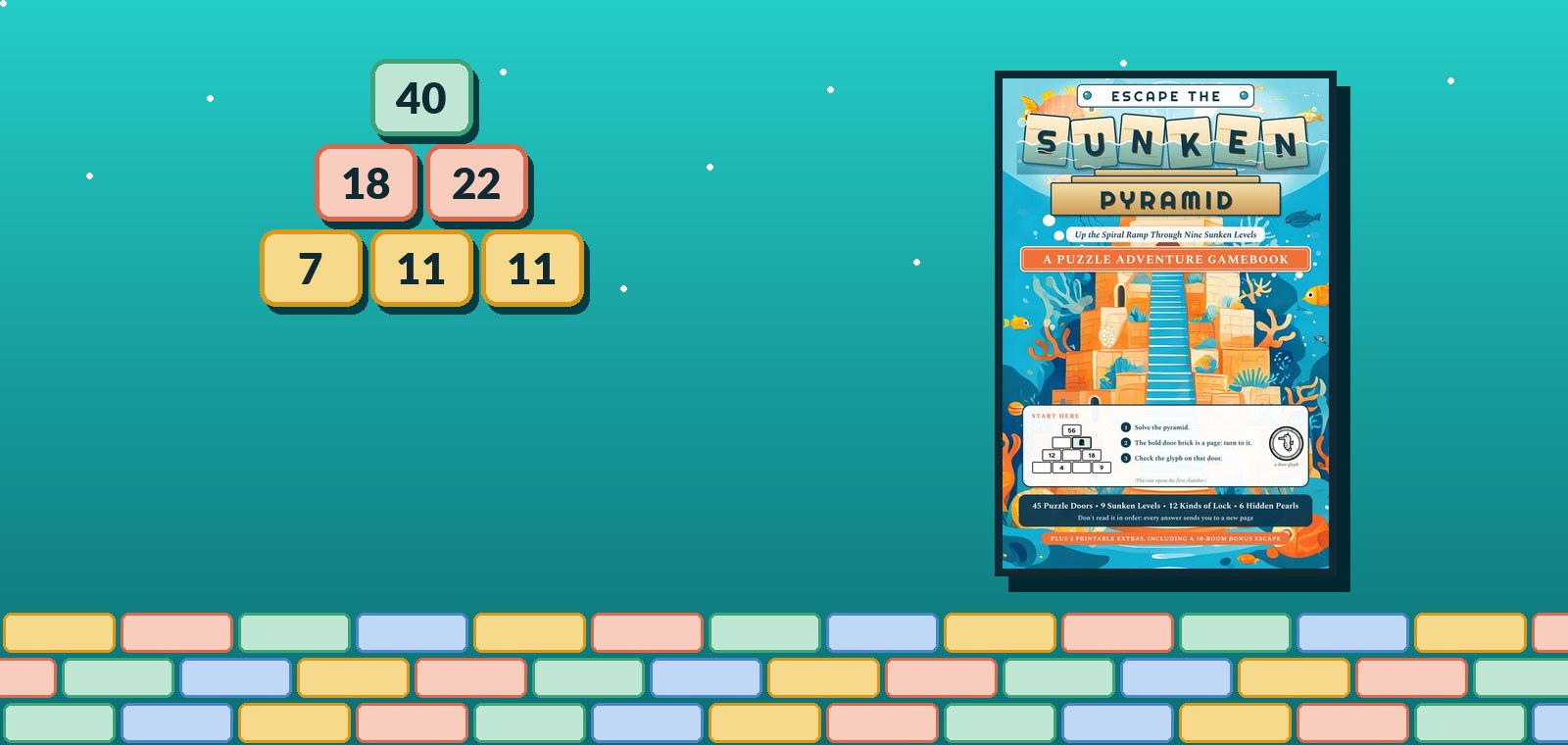
Sonar Echoes: The Buoy Lock That Gives You the Gap
In Escape the Sunken Pyramid some bricks carry a sonar buoy that shows the gap between two bricks. How to use a gap and a sum together.
Creouts Publishing
Puzzle books, printable games and, soon, games you can play here.
As an Amazon Associate we earn from qualifying purchases.
Amazon and Etsy are trademarks of their owners. Creouts is not affiliated with Etsy.