
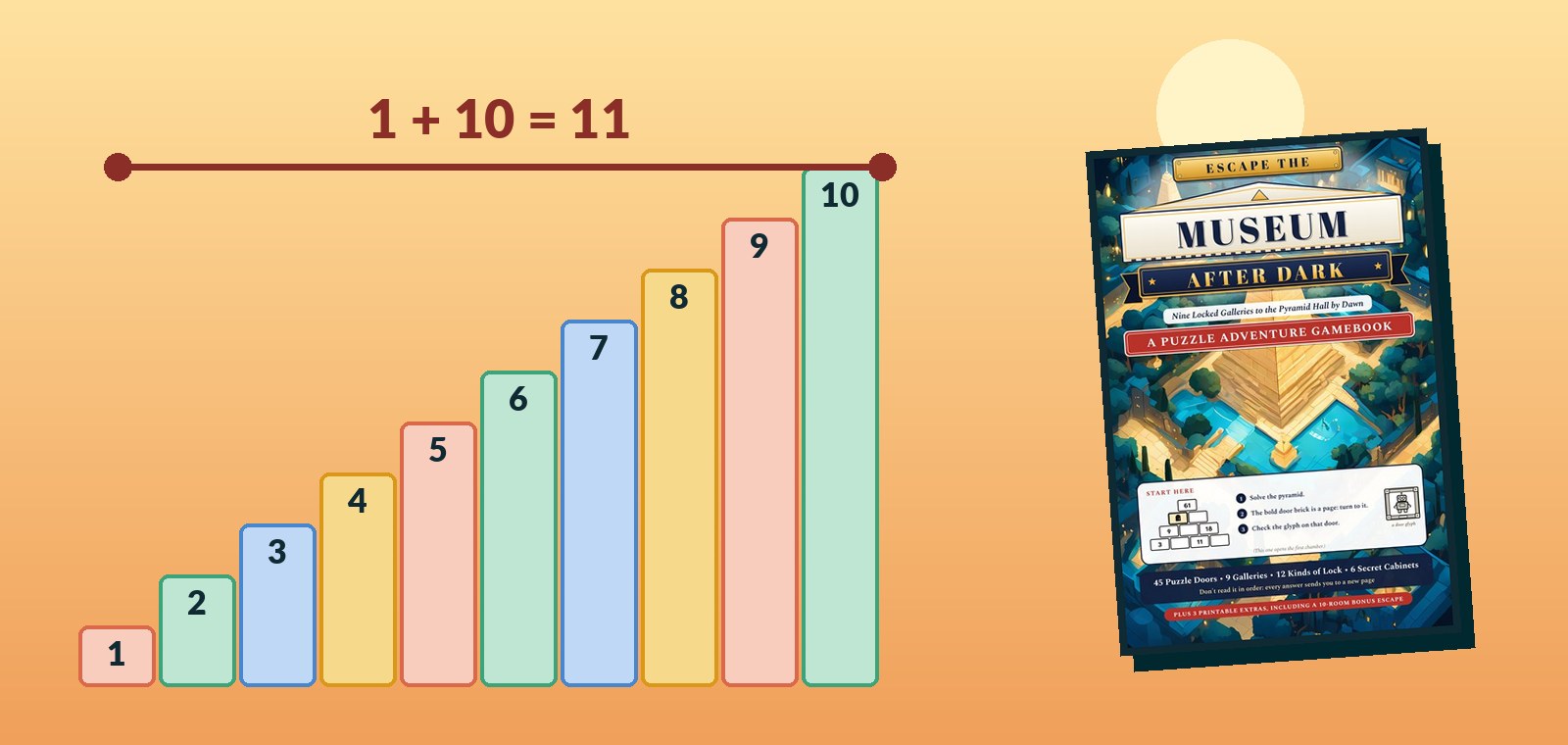
Try this: add every whole number from 1 to 100. One at a time, that is 100 small sums and plenty of chances to slip. There is a shortcut that takes a few seconds, and once you see why it works you can use it for any list like this.
The story (a legend, honestly)
The shortcut is tied to Carl Friedrich Gauss, the German mathematician. The popular story says that as a schoolboy his teacher, J. G. Büttner, set the class the job of adding 1 to 100, and Gauss gave the right answer, 5050, far faster than expected (Wikipedia tells it this way, and itself words it as a popular story).
How much of it is solid? Less than you might think. Brian Hayes, writing in American Scientist, traced it back to a memorial book published in 1856, a year after Gauss died. That account has him entering the school in 1784 after his seventh birthday and meeting the arithmetic class two years later (so about nine; later tellings differ on his age), and it does not mention the numbers 1 to 100 or the pairing trick at all. Those details came in later retellings. So treat the 1-to-100 classroom scene as a legend. The good news: the maths does not depend on the story. You can check every step yourself.
Step 1: write the list twice, the second time backwards
Put 1 to 50 on one line. Under it, put 100 down to 51. Now add each column. Why is this a good move? Because as the top number goes up by 1, the bottom number goes down by 1, so each column's total stays the same.
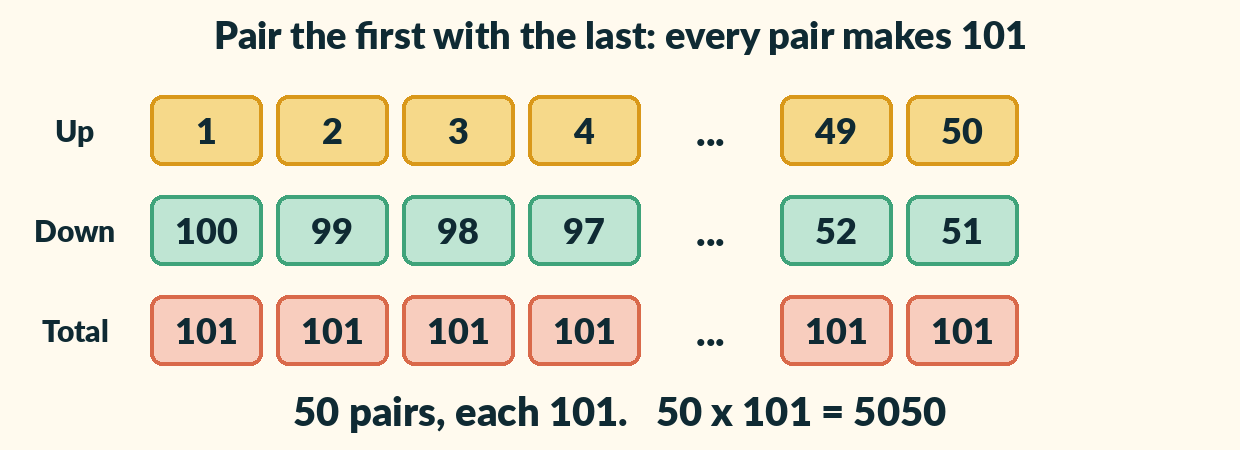
Check the first and the last: 1 + 100 = 101 and 50 + 51 = 101. The same must hold in between. All 100 numbers are used exactly once (1 to 50 on top, 51 to 100 below), so the total is 50 x 101 = 5050.
Step 2: see it as a staircase
The pairing idea works for any length, and a picture shows why. Take a staircase whose rows have 1, 2, 3, 4, 5 and 6 blocks. That is 1 + 2 + 3 + 4 + 5 + 6, the number we want.
Now turn a copy of the staircase upside down and fit it against the first. Reason for the move: each row of the first staircase is short by exactly the number of blocks the upside-down copy has in that row, so together they fill each row to the same width. Here every row is 6 + 1 = 7 blocks wide, and there are 6 rows.
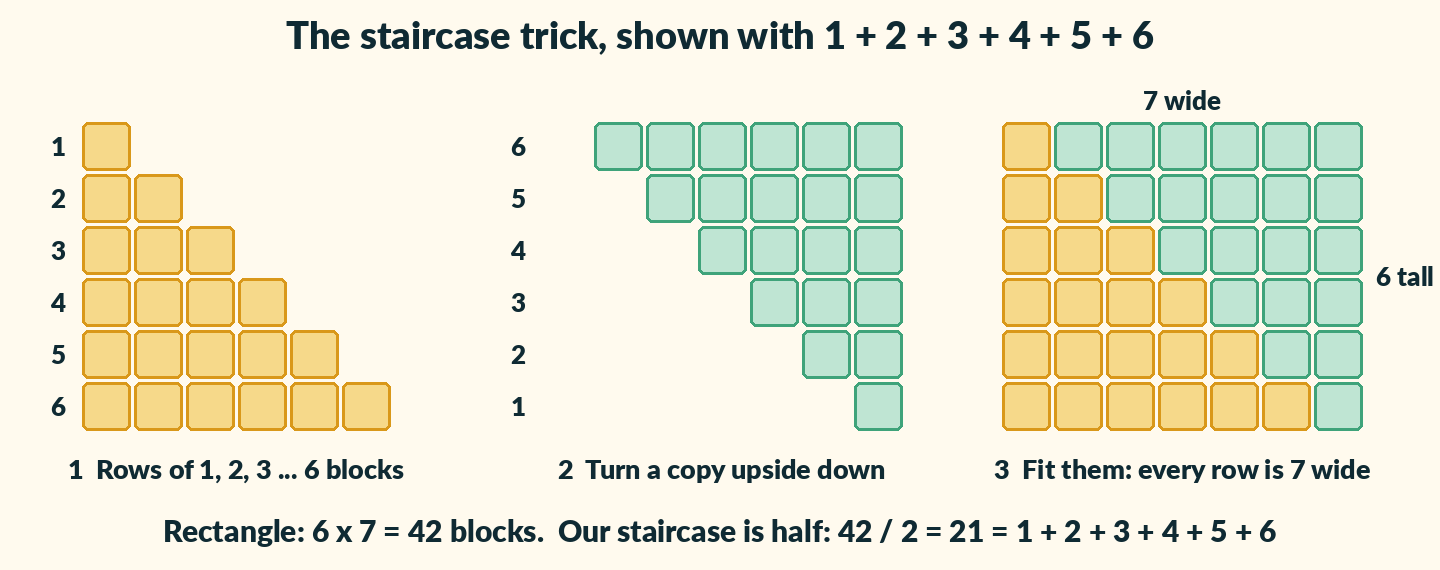
The rectangle holds 6 x 7 = 42 blocks. Two identical staircases fill it, so one staircase is 42 / 2 = 21. And 1 + 2 + 3 + 4 + 5 + 6 really is 21. For 1 to 100 the rectangle is 100 tall and 101 wide: 100 x 101 = 10,100, and half of that is 5050. Same answer, found a different way.
Step 3: the rule for any list
Why halve? Because the staircase trick always doubles the sum into a rectangle. Why (n + 1)? Because the upside-down copy adds the missing blocks to each row, and each row then holds n + 1.
The pyramid link
Build a pyramid of bricks with 1 brick in the top row, 2 in the next, 3 in the next, and so on down. How many bricks in all? It is the same sum. A 7-row pyramid has 1 + 2 + ... + 7 = 7 x 8 / 2 = 28 bricks.
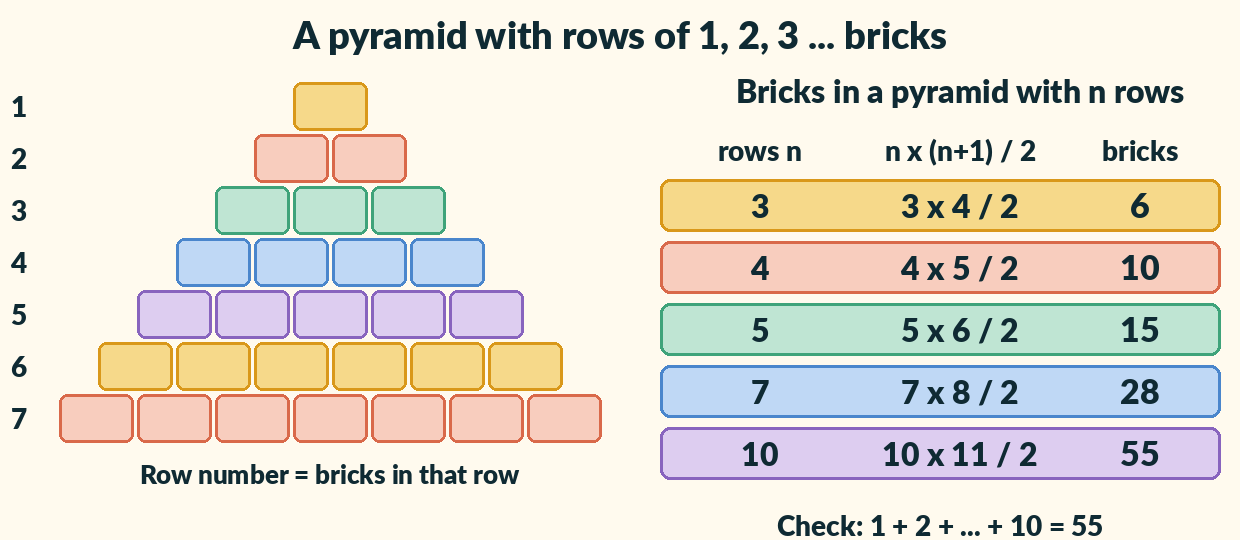
Numbers of this kind are called triangular numbers: 1, 3, 6, 10, 15, 21, 28 and on (Wikipedia: Triangular number). They turn up elsewhere too. If 5 people each shake hands once with every other person, there are 10 handshakes, the fourth triangular number. And add two neighbouring triangular numbers and you always get a square: 6 + 10 = 16, 10 + 15 = 25.
Try it yourself
- Add 1 to 20. (Check: 20 x 21 / 2.)
- Add 1 to 1000. Same trick, bigger numbers.
- Add 2 + 4 + 6 + ... + 20. Hint: it is double 1 + 2 + ... + 10.
- Add 5 + 6 + 7 + ... + 14. Pair the first with the last again. How many pairs, and what does each make?
Where this meets our books
Spotting structure and pairing numbers up is the same habit that helps with number-pyramid puzzles, where bricks are linked by adding. This trick is not something you need to solve them, though, and we are not claiming it makes you faster. Our puzzle adventure gamebooks are a place to practise noticing patterns in a game setting. Escape the Pyramid, Level 1 (Easy) and Escape the Labyrinth are both books you do not read in order: each locked chamber sends you to the page its answer opens. Number pyramids feature in both, but neither book is only about them.
Books mentioned
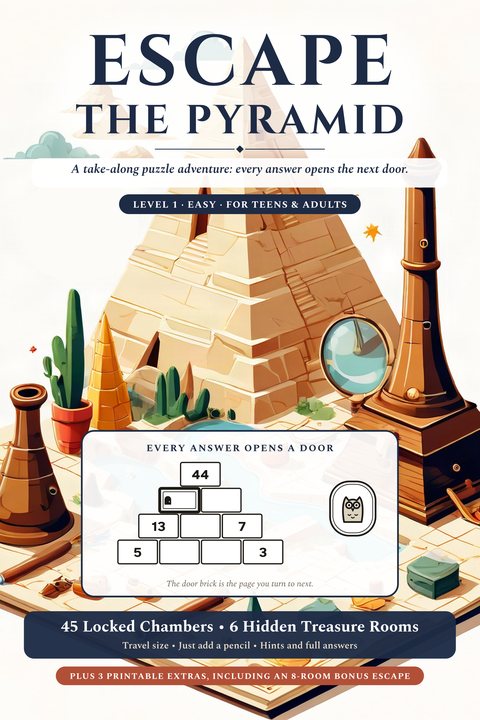
Escape the Pyramid, Level 1 (Easy)
A puzzle adventure gamebook with 45 locked chambers and 6 treasure rooms, hints and full answers in the back.
View on Amazon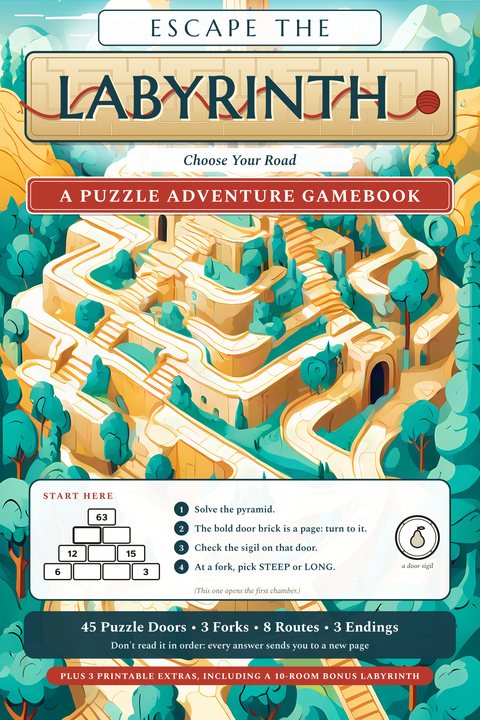
Escape the Labyrinth
A puzzle adventure gamebook with 45 locked chambers. You choose your road, and the puzzle kind changes from door to door.
View on Amazon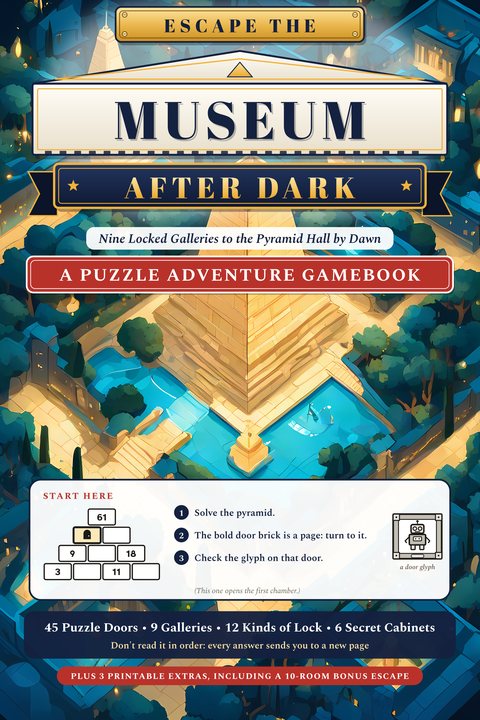
Escape the Museum After Dark
Climb nine locked galleries to the Pyramid Hall by dawn. A puzzle adventure gamebook.
View on AmazonAs an Amazon Associate we earn from qualifying purchases. Cover images are the ones we have on file; the book you receive may show a slightly different cover.
More field notes
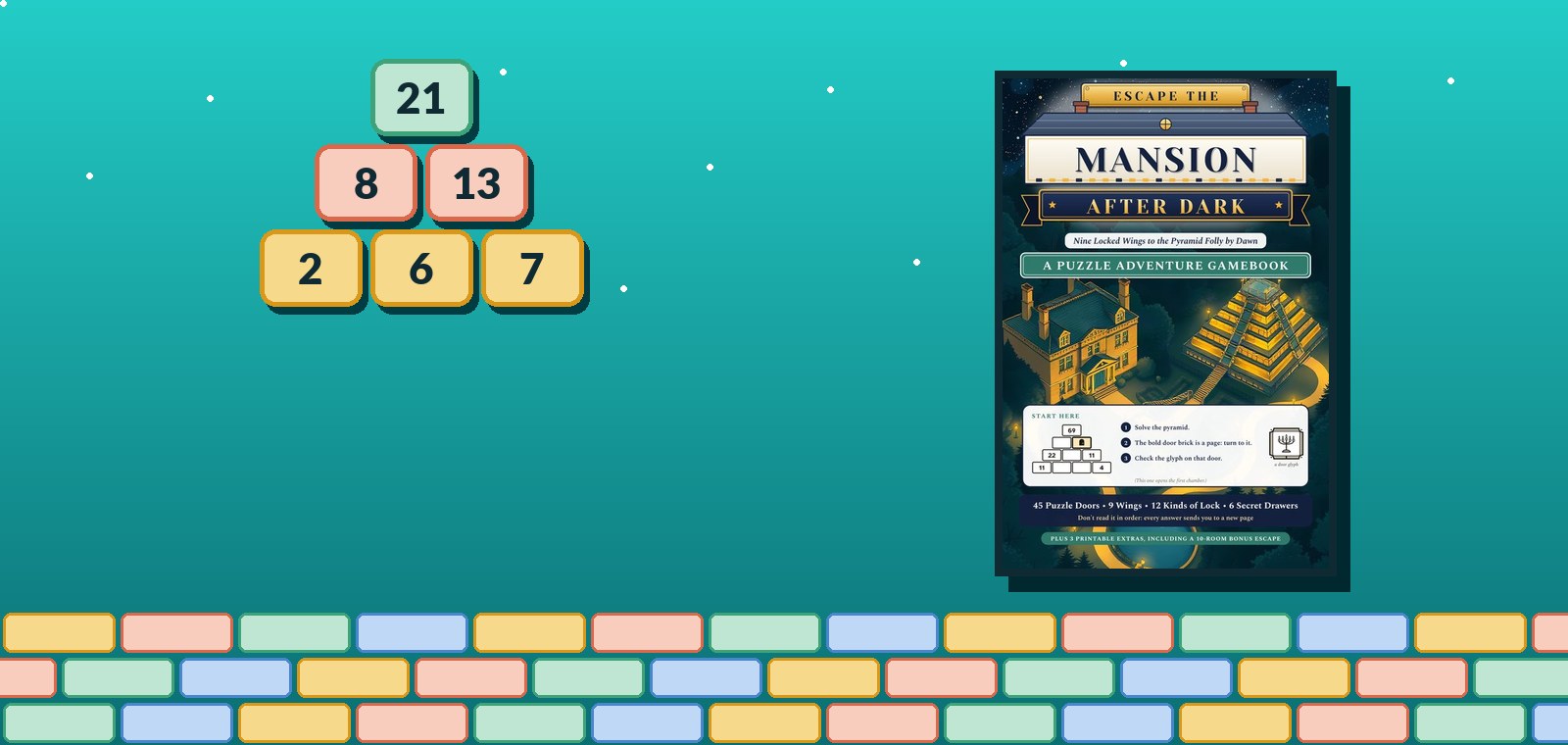
Portrait Pairs: When a Gilt Frame Multiplies Two Bricks
A frame holds two bricks and its plaque shows their product. Try each pair of factors and let the pyramid decide. A lock from Escape the Mansion After Dark.
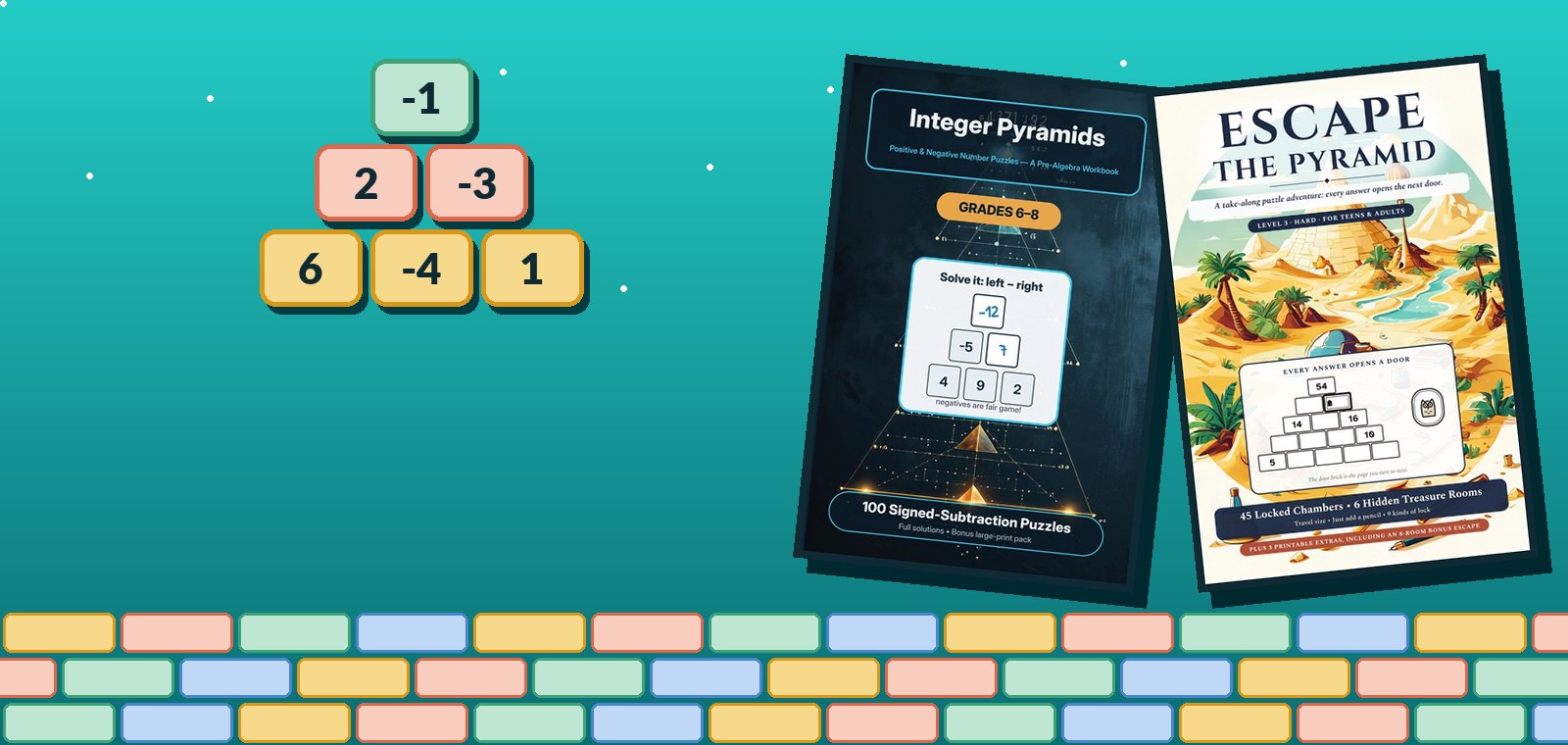
Negative Numbers in a Pyramid: Moving Left on the Number Line
Adding a negative number is just a step to the left. A number line, a pyramid and a few easy habits make negatives feel ordinary.
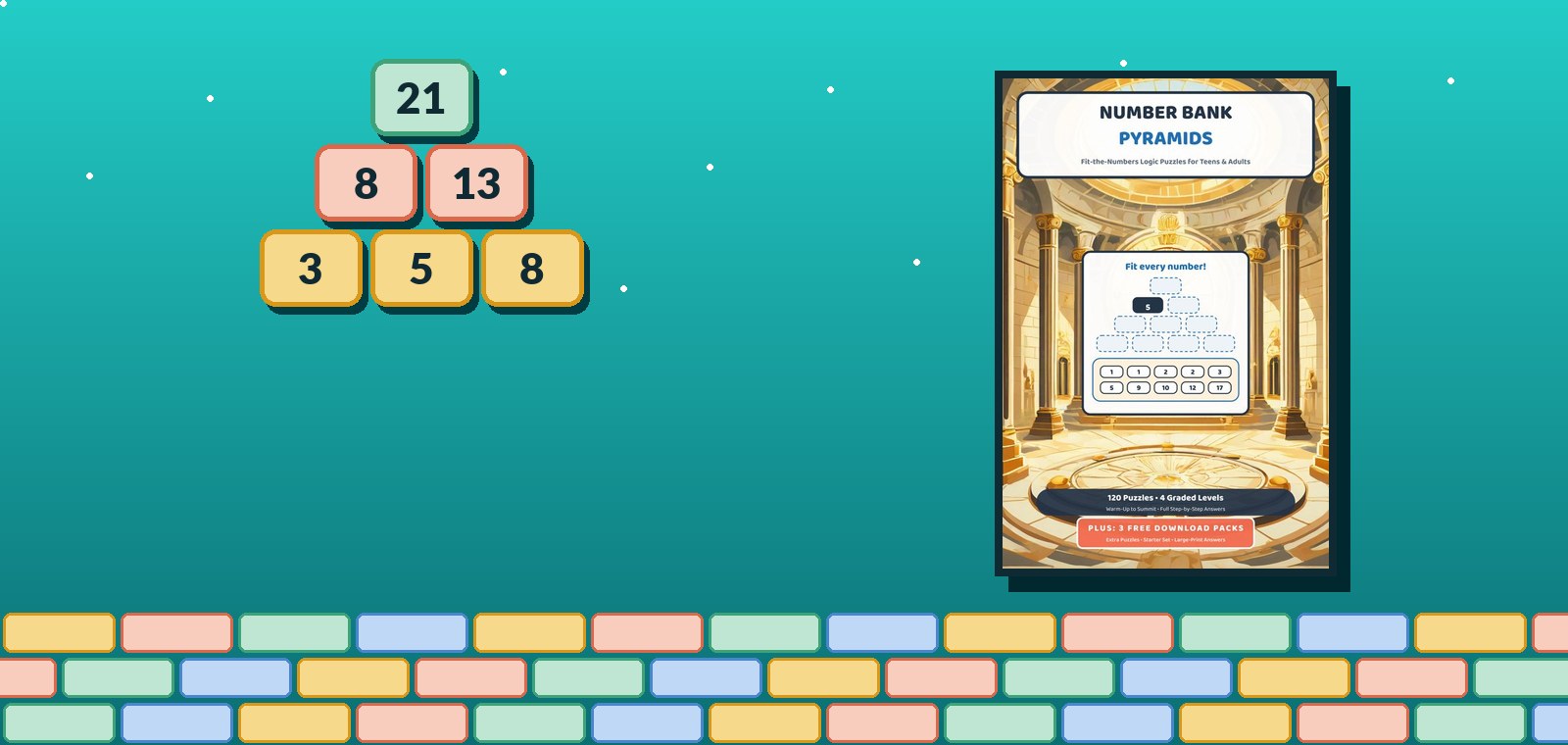
Number Bank Pyramids: Place Every Number Once
An empty pyramid and a bank of numbers. Each number is used exactly once. A worked sample, a 20-second video and a pyramid to try yourself, with the one rule you need to read the hidden digits.
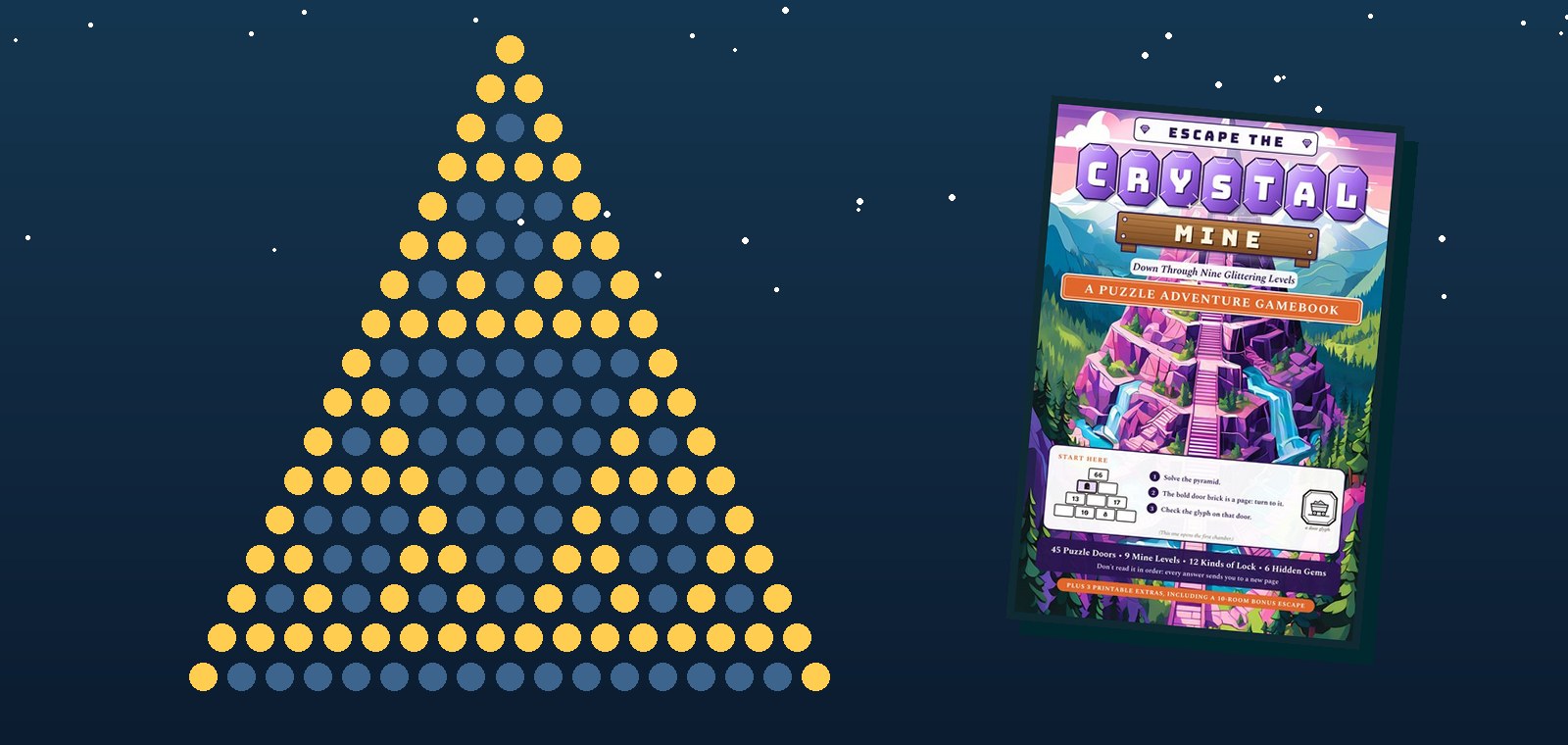
Pascal's Triangle: Patterns Hiding in a Number Pyramid
One simple rule builds a triangle full of surprises: doubling rows, counting and triangular numbers, Fibonacci numbers, a fractal and route counting. Each pattern is drawn step by step.
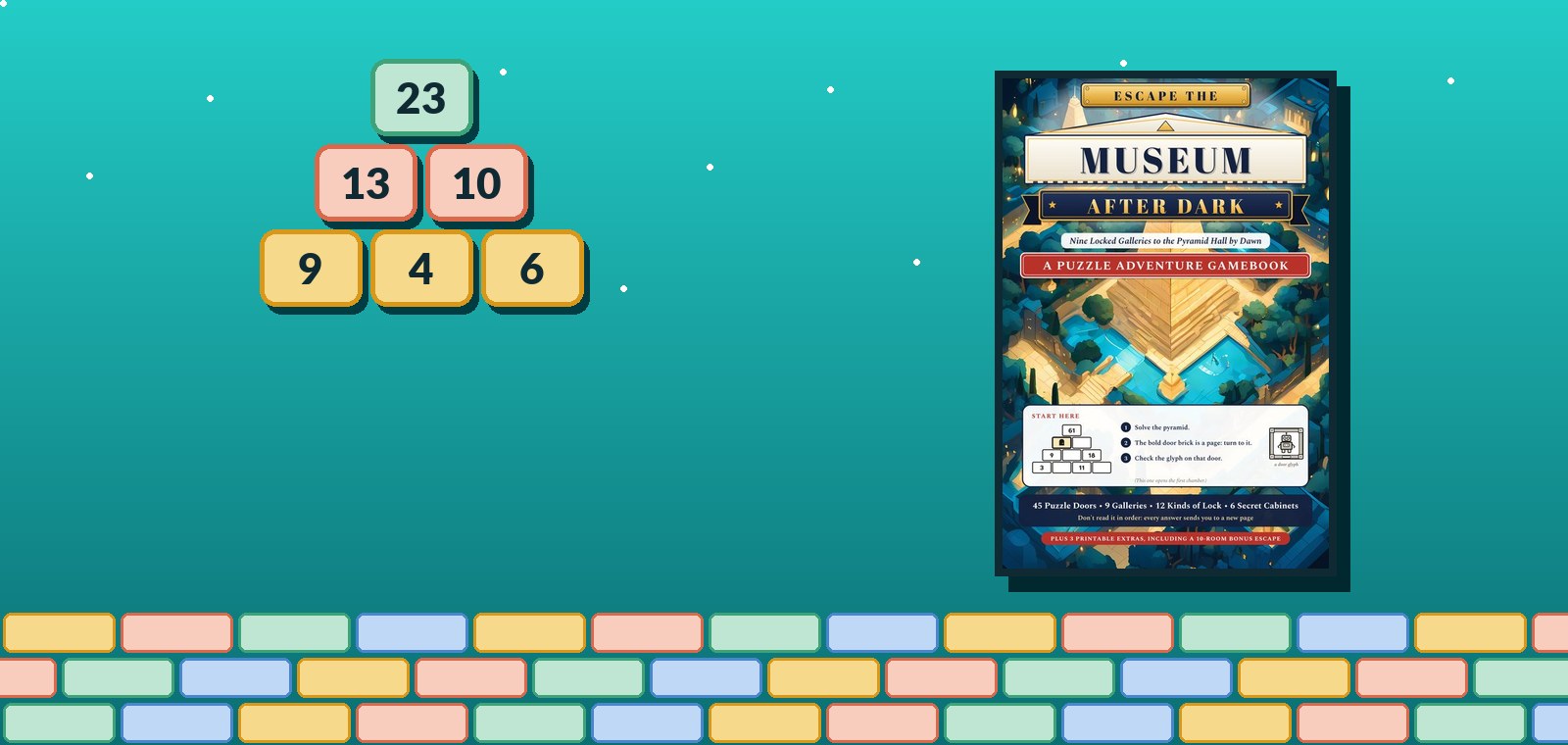
Escape the Museum After Dark: The Story and a Look Inside
Escape the Museum After Dark: the story, how a chamber plays and a look at a real page.
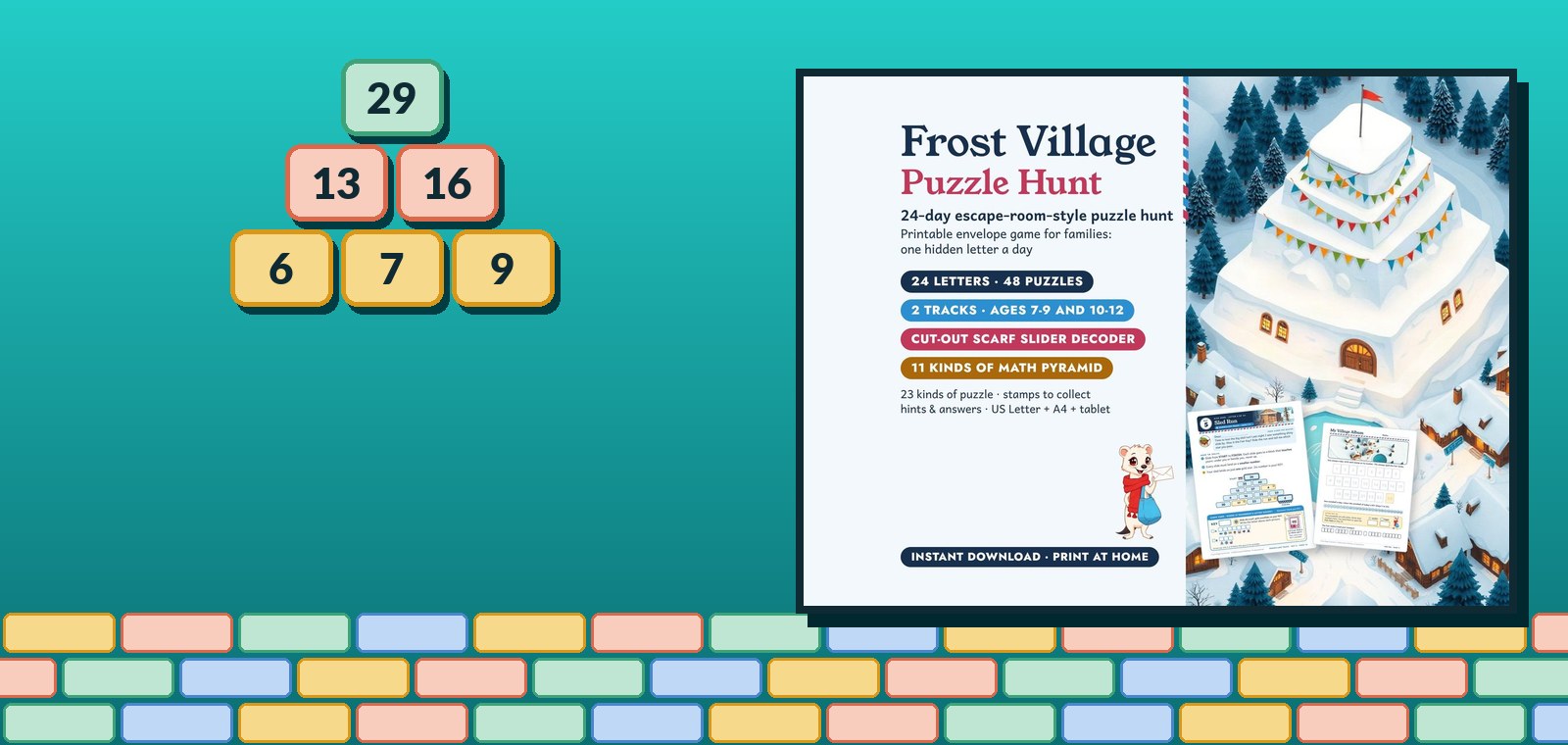
Frost Village Puzzle Hunt: What It Can Do for Players
Frost Village Puzzle Hunt (Ages 7 to 12): what is in it, what players can get out of it and how to run it.
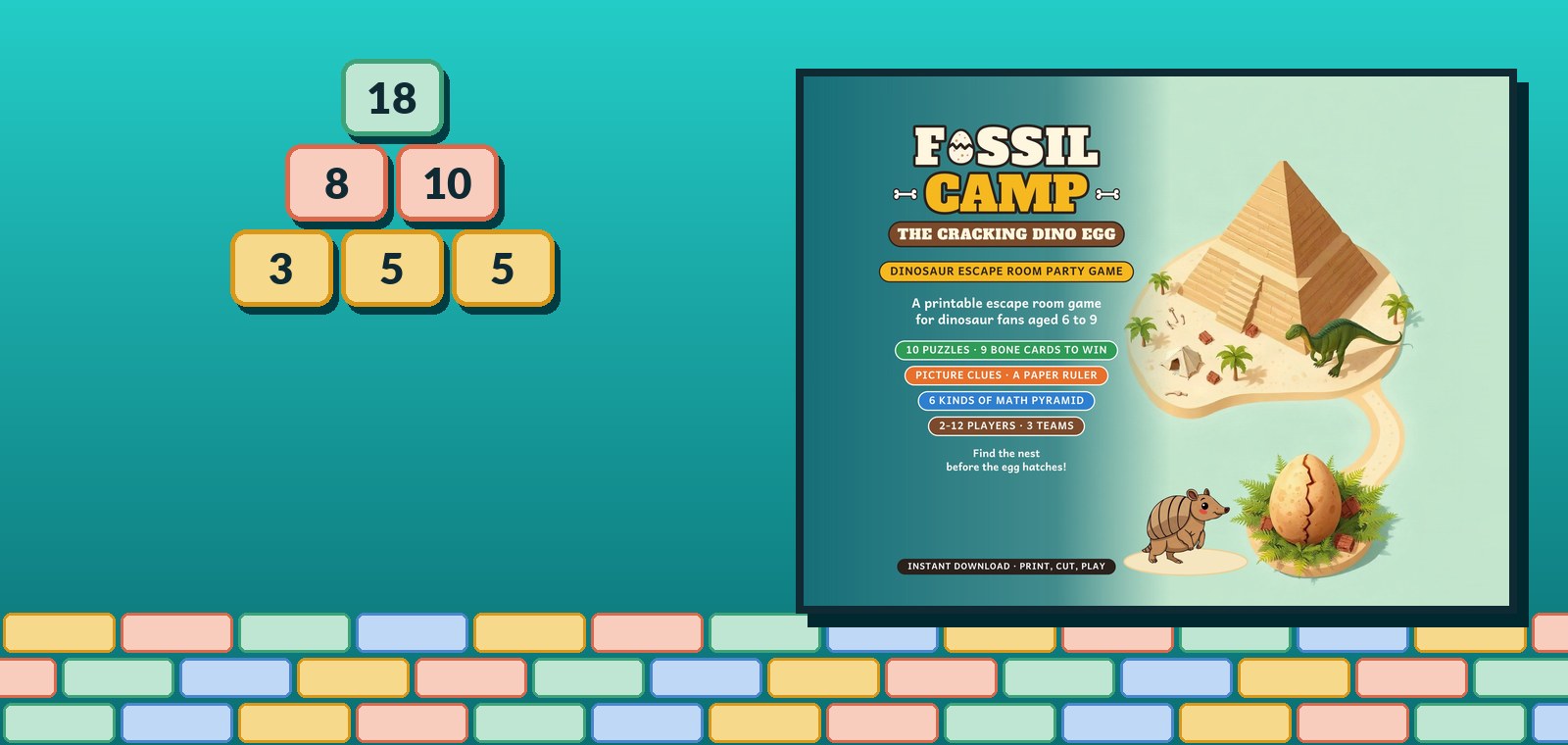
Fossil Camp: Nine Sites, Nine Bone Cards, One Cracking Egg
A dinosaur egg is about to hatch and the nest is behind the Bone Gate. A tour of the Fossil Camp kit for ages 6 to 9, with its video.
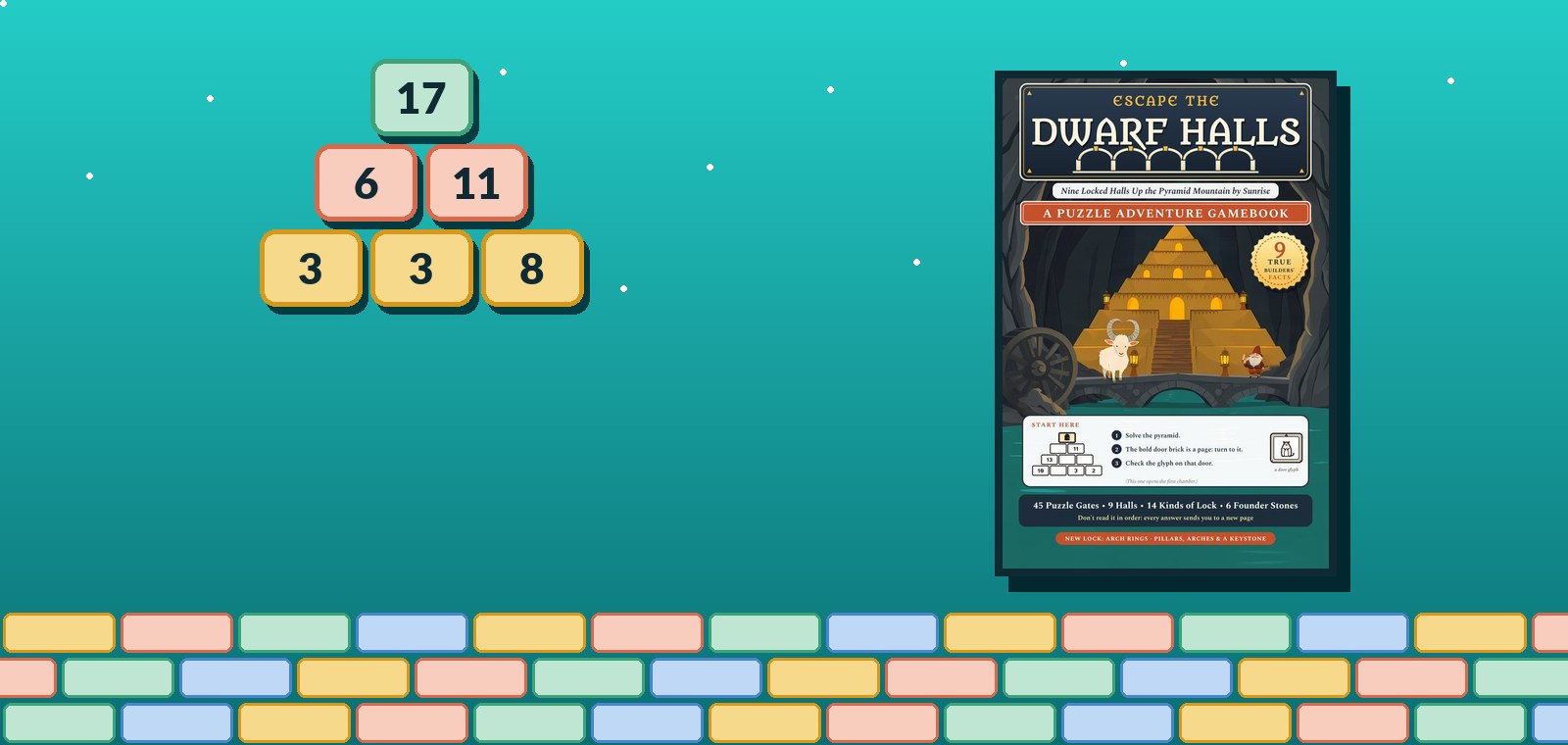
Escape the Dwarf Halls: The Story and a Look Inside
Escape the Dwarf Halls: the story, how a chamber plays and a look at a real page.
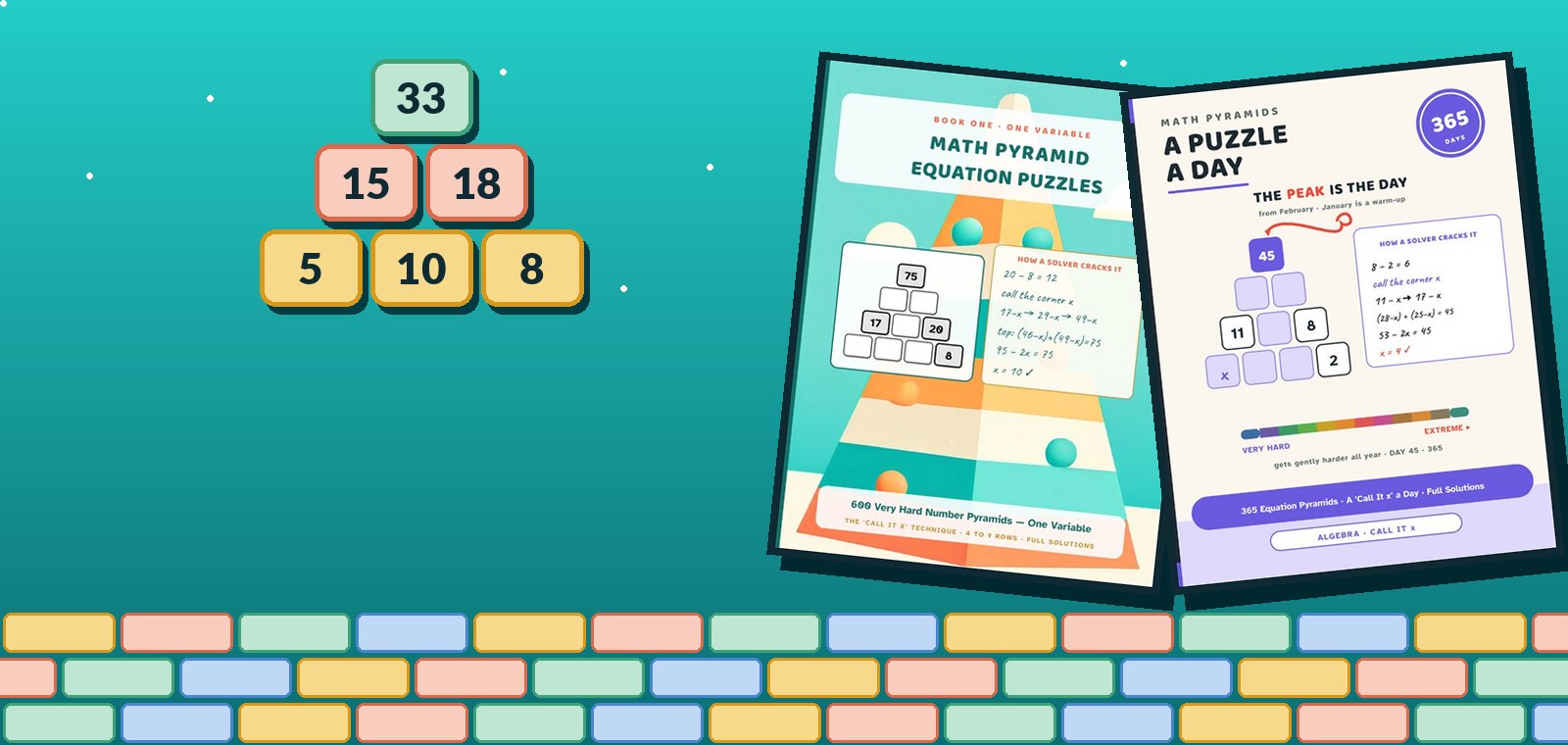
Call It x: Your First Algebra Is Hiding in a Pyramid
When a brick is missing and the sums don't reach it, name it x. A gentle four-step method, drawn out.
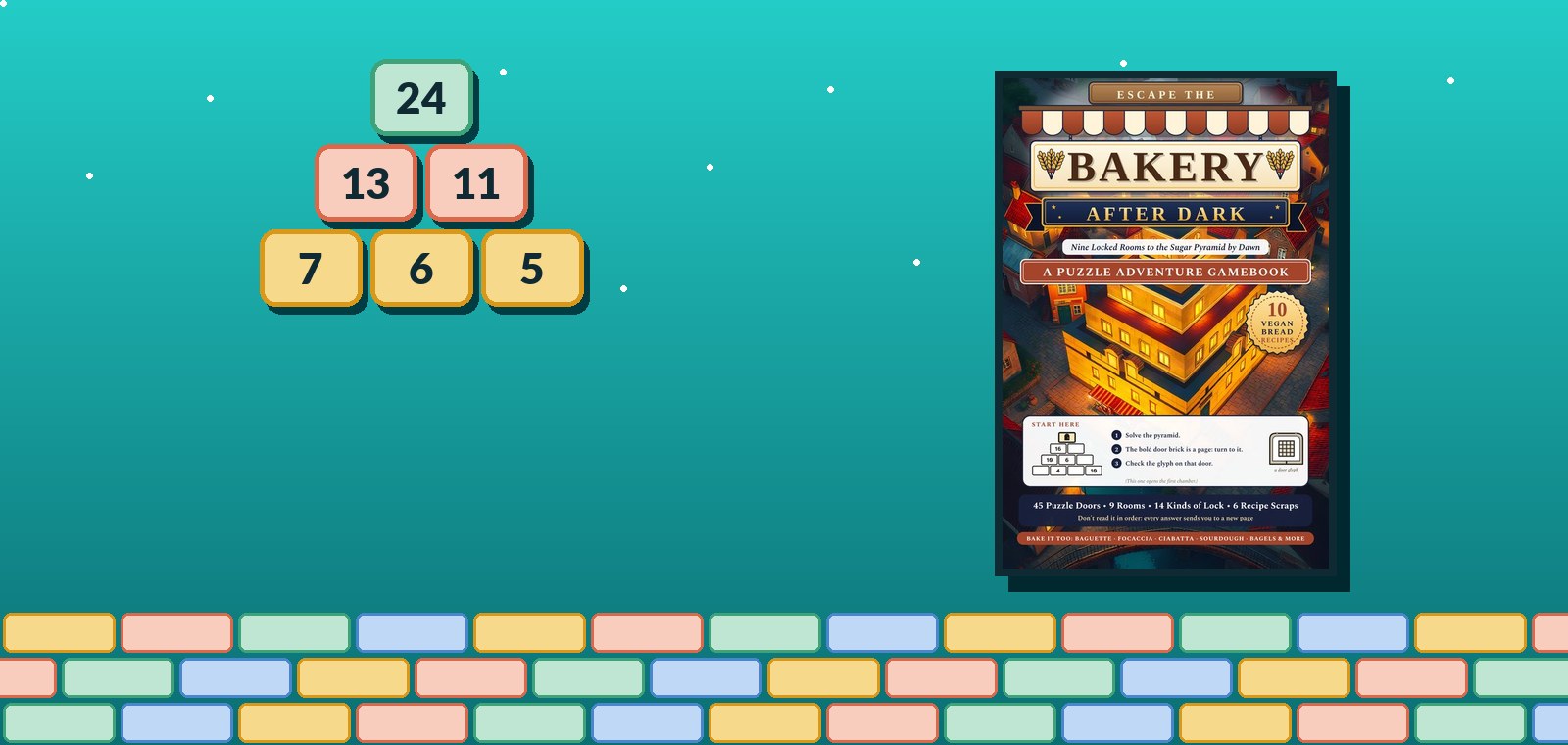
Escape the Bakery After Dark: The Story and a Look Inside
Escape the Bakery After Dark: the story, how a chamber plays and a look at a real page.
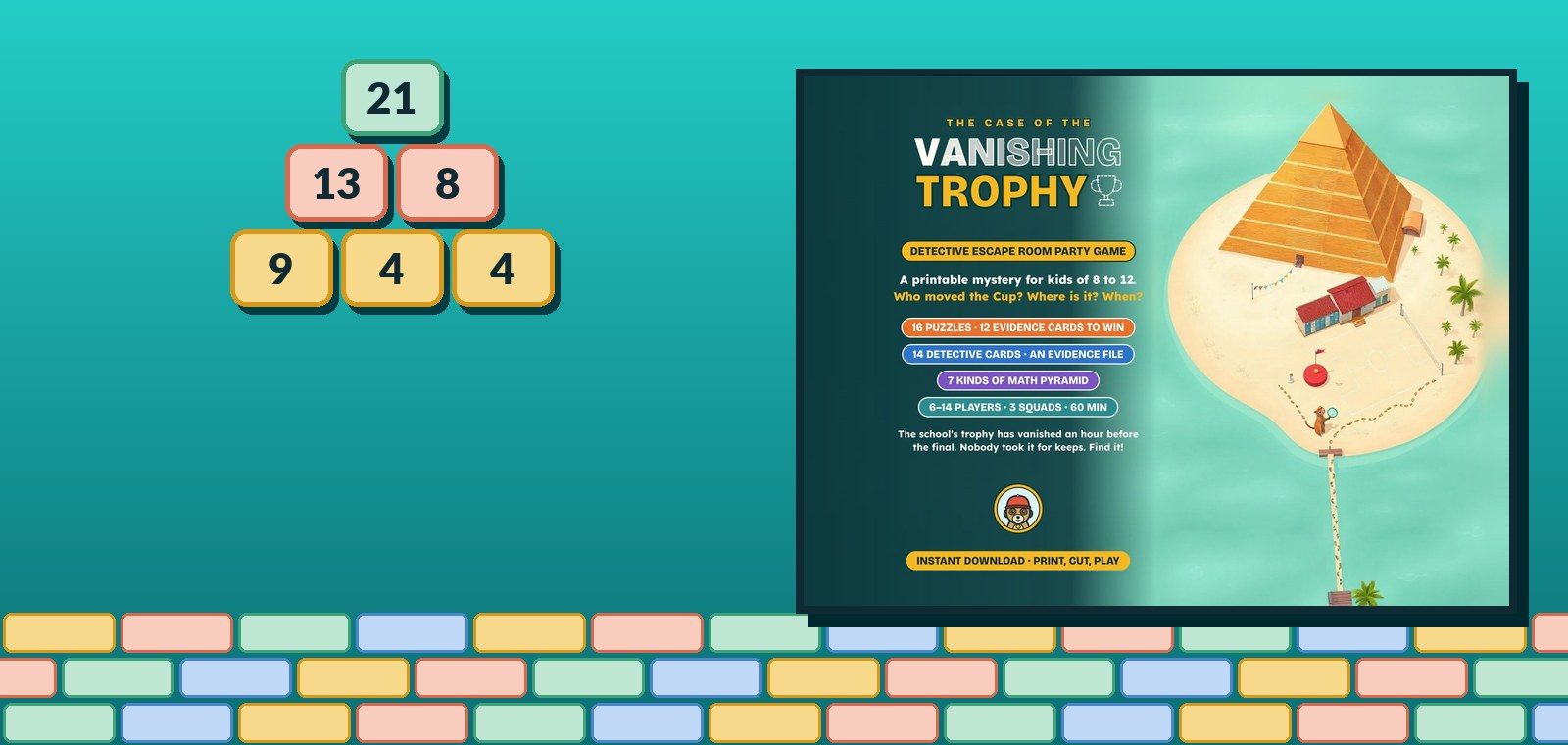
The Case of the Vanishing Trophy: What It Can Do for Players
The Case of the Vanishing Trophy (Ages 8 to 12): what is in it, what players can get out of it and how to run it.
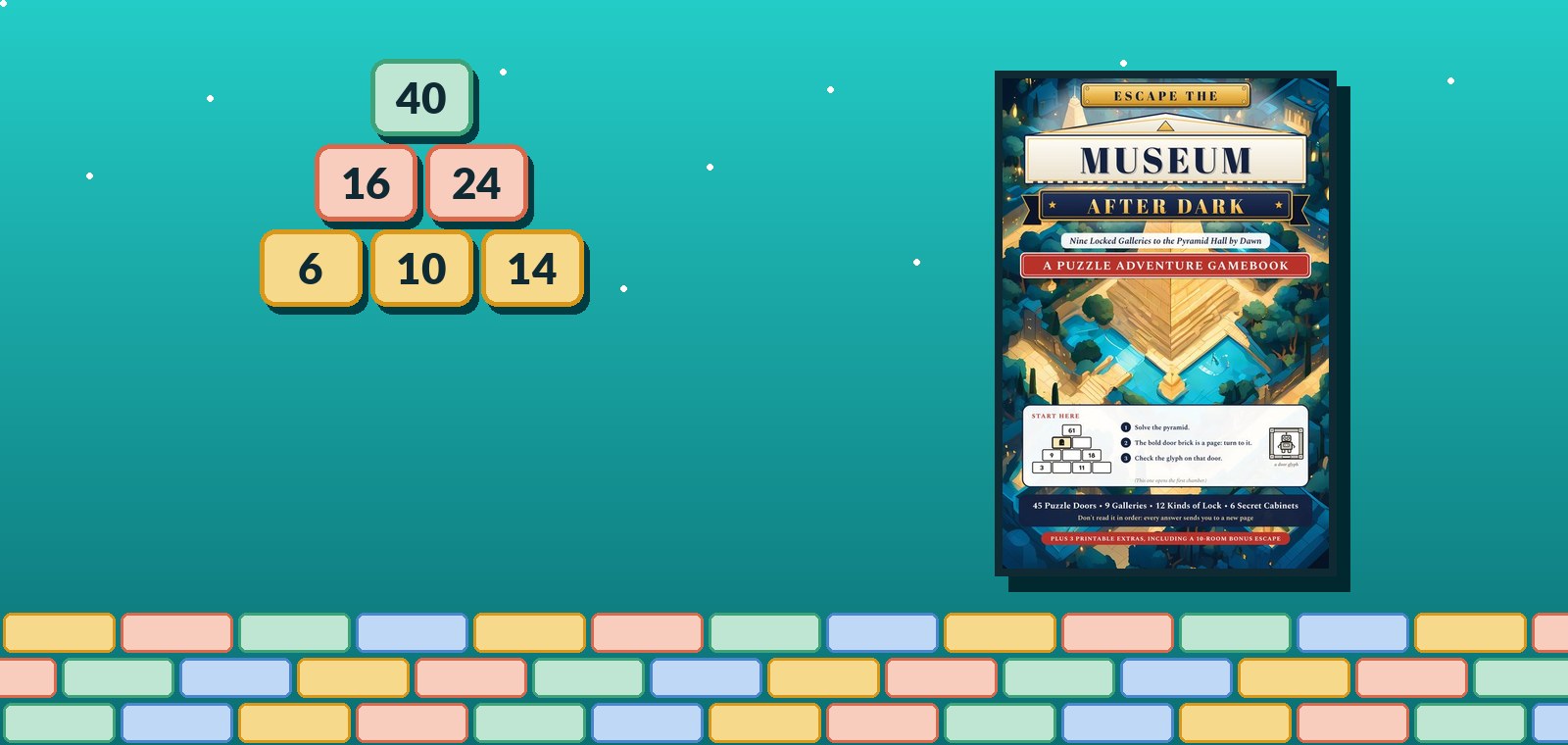
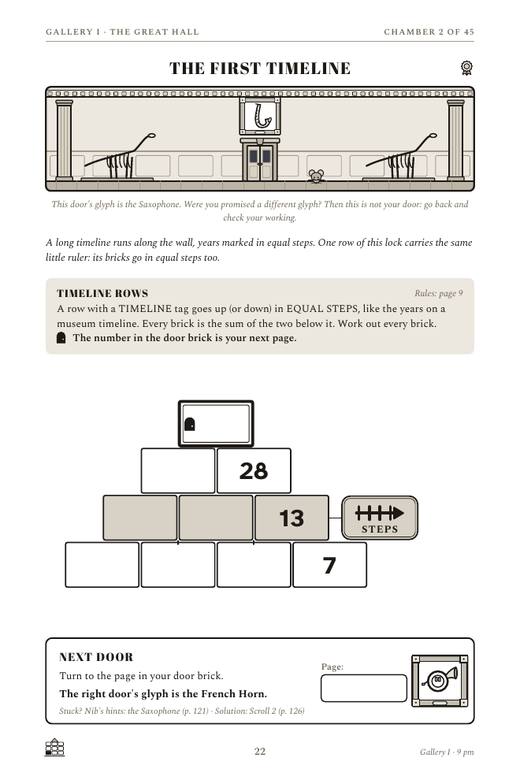
Timeline Rows: Equal Steps Like the Years on a Museum Wall
A timeline row goes up in equal steps, and every row above it is a timeline too, with a step twice as big. A lock from Escape the Museum After Dark.
Creouts Publishing
Puzzle books, printable games and, soon, games you can play here.
As an Amazon Associate we earn from qualifying purchases.
Amazon and Etsy are trademarks of their owners. Creouts is not affiliated with Etsy.