
Chemistry is the science of what things are made of and how they change. You do not need a lab to see it happen: a kitchen has acids, bases, salts and water. We made a free chemistry set of printables: a periodic table, 12 element spotlights and 12 safe experiments, each on one illustrated page.
Safety first
- Children should do these with a grown-up nearby, and an adult handles anything hot or sharp.
- Never taste experiments, and never mix cleaning products.
- Wear safety glasses for anything that fizzes, and never seal a fizzing reaction in a closed bottle.
Try it: the red cabbage color test
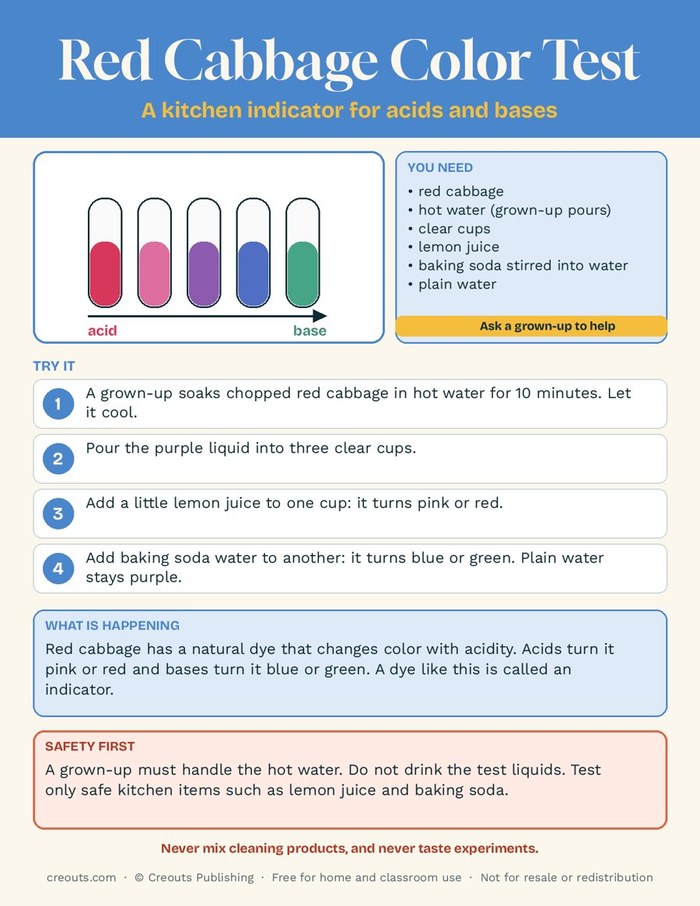
- Make the indicator: a grown-up soaks chopped red cabbage in hot water for 10 minutes and lets it cool. The purple liquid is your test solution.
- Split it: pour it into three clear cups.
- Add an acid: a little lemon juice turns one cup pink or red.
- Add a base: baking soda stirred into water turns another cup blue or green. Plain water stays purple.
Why it works: red cabbage contains a natural dye that changes color with acidity. Acids turn it pink or red, and bases turn it blue or green. A dye like this is called an indicator. Do not drink the test liquids.
A periodic table you can print
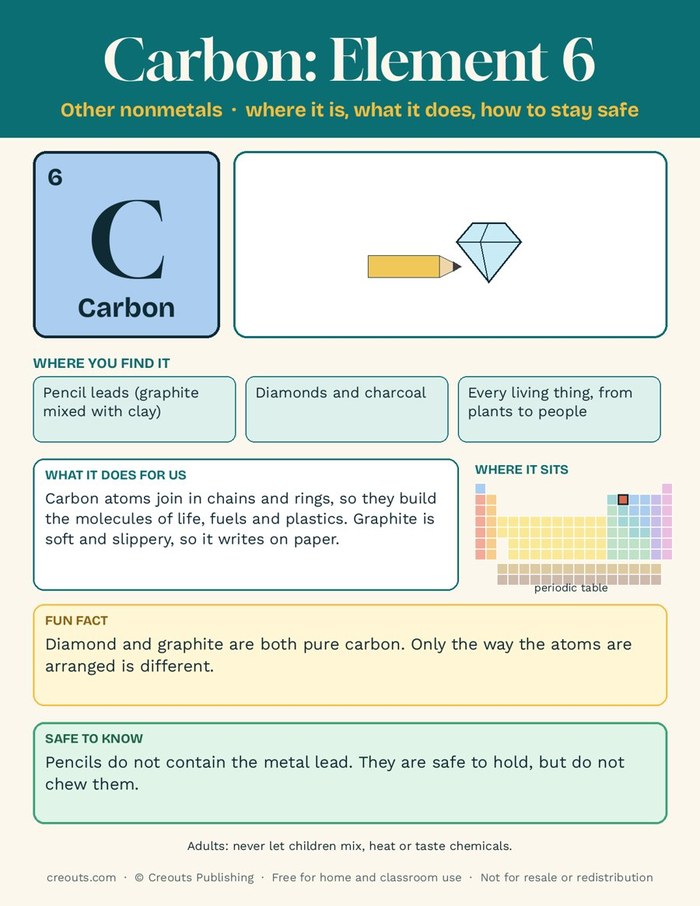
The periodic table shows all 118 elements, colored by family, with a second page listing every name. Each spotlight, such as carbon, helium and copper, shows where you find the element, what it does for us and how to stay safe. Elements in the same column behave alike, which is why the table is arranged that way.
Games mentioned
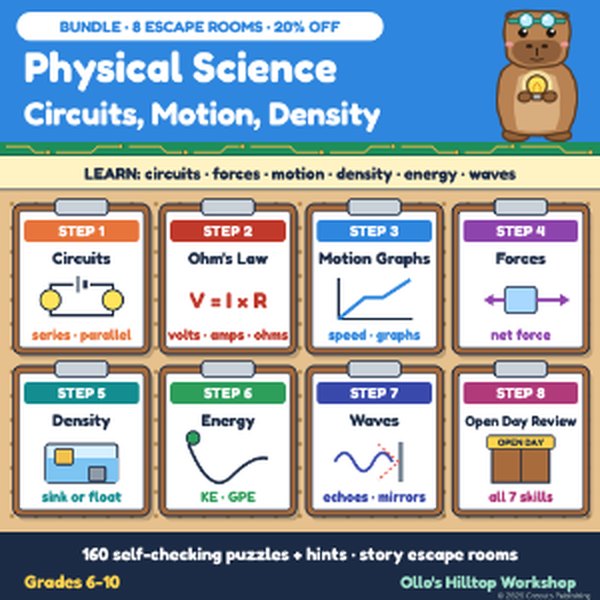
Physical Science: Circuits, Motion and Density Escape Rooms
Eight self-checking decks for Grades 6 to 10. This bundle covers circuits, motion, forces and density, not chemistry.
See it on Boom LearningDigital download: nothing is shipped.
More field notes
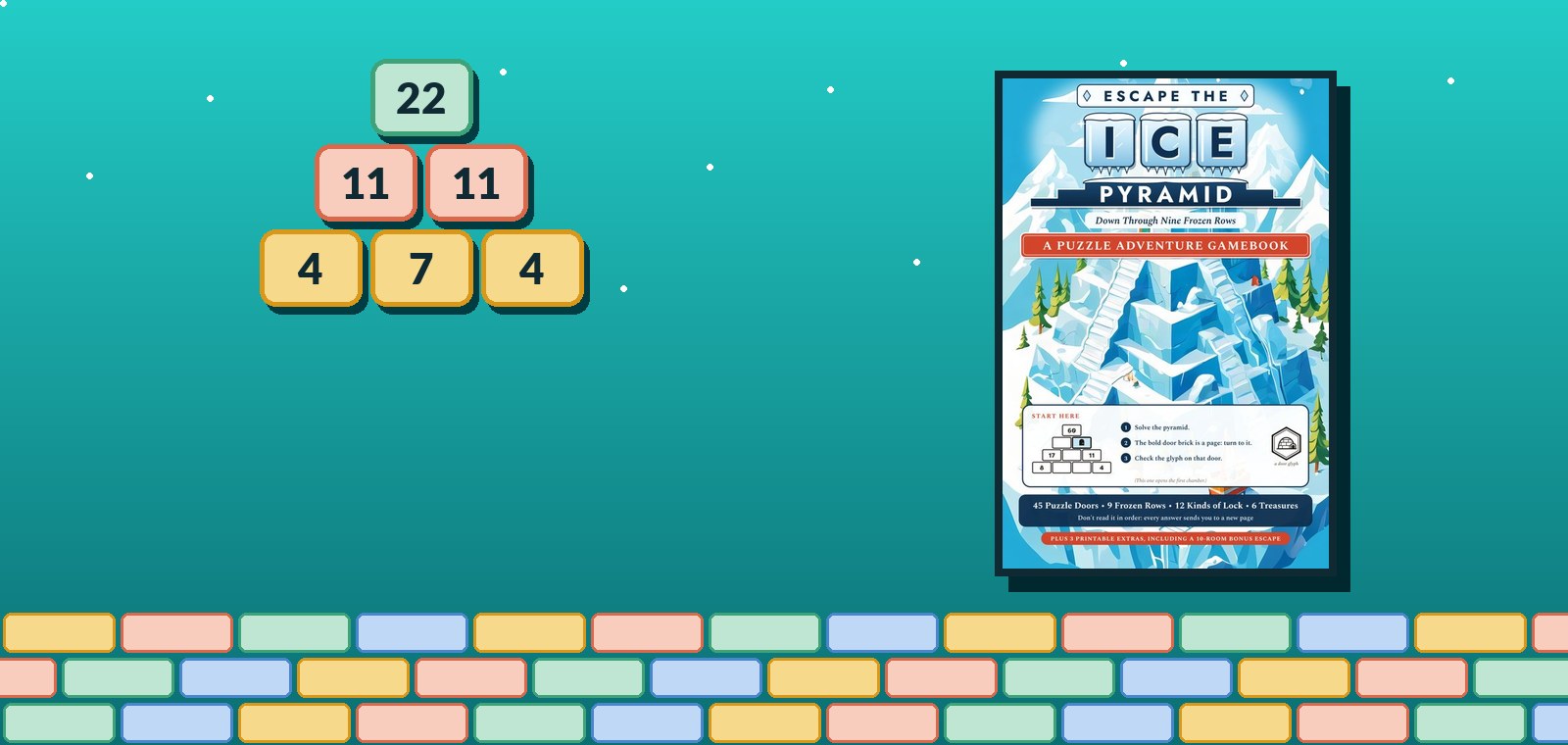
Ice Shards: Rebuild a Shattered Pyramid From Its Pieces
The pyramid has shattered. Fit each shard back into the gaps, the way up it lies, until every brick is the sum of the two below it.
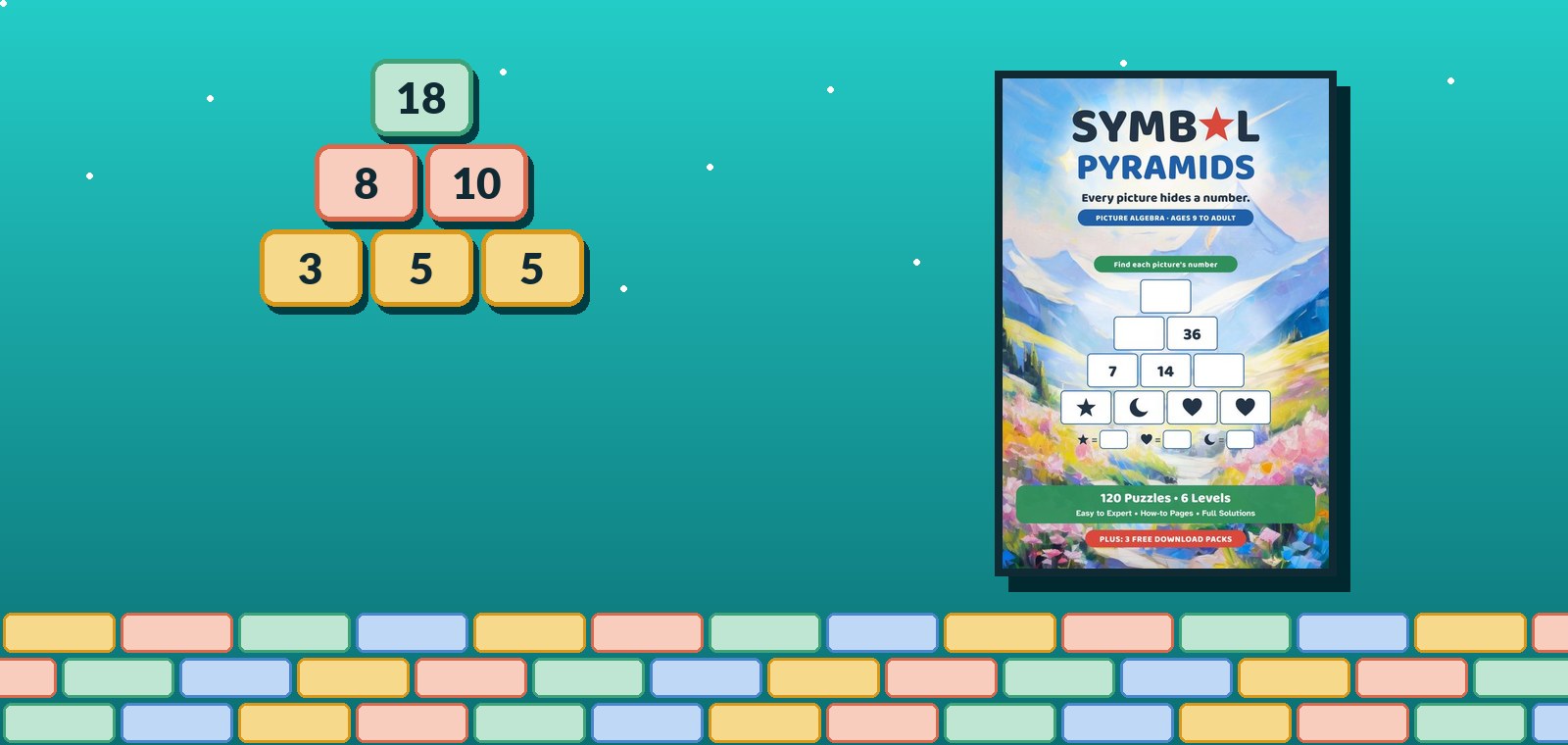
Symbol Pyramids: What Is a Star Worth?
The bottom row is pictures. Every picture hides a number, and the same picture is always the same number. A worked sample, a 20-second video and a pyramid to try yourself, with the one rule you need to read the hidden digits.
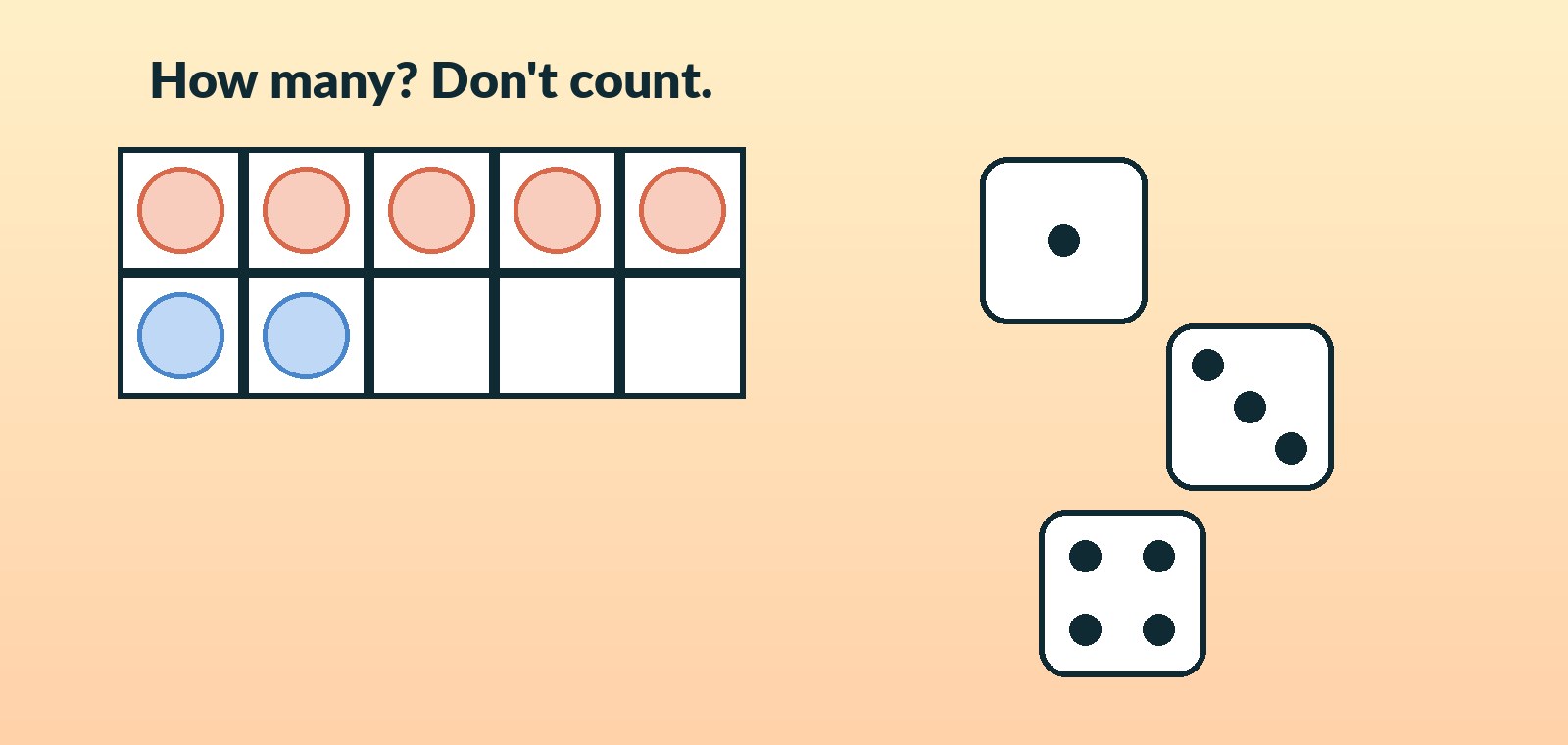
Seeing Numbers Without Counting: Subitizing and Ten-Frames
What 'subitizing' means, what the researchers say about it, and five ten-minute games with dice, dominoes and ten-frames.
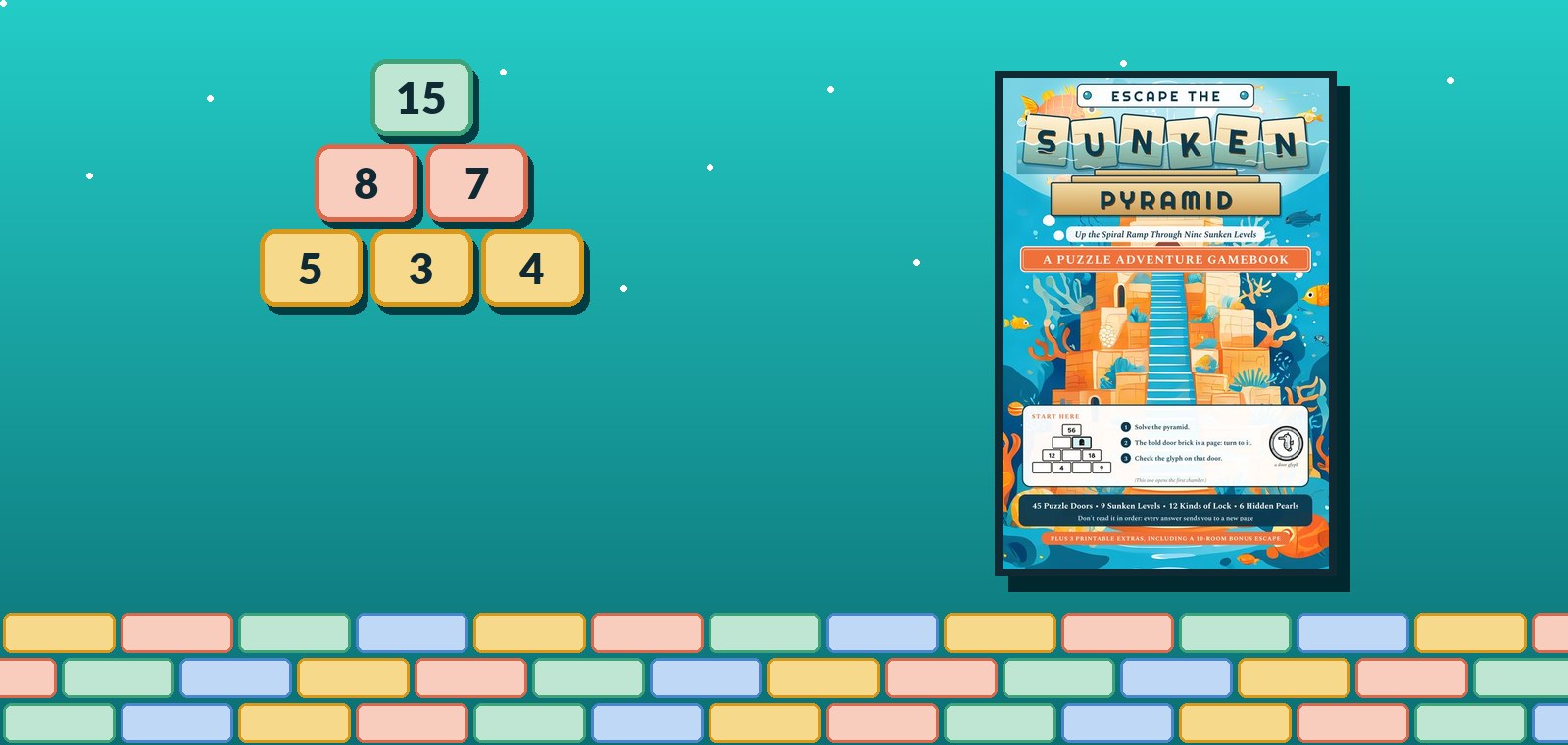
Escape the Sunken Pyramid: The Story and a Look Inside
Escape the Sunken Pyramid: the story, how a chamber plays and a look at a real page.
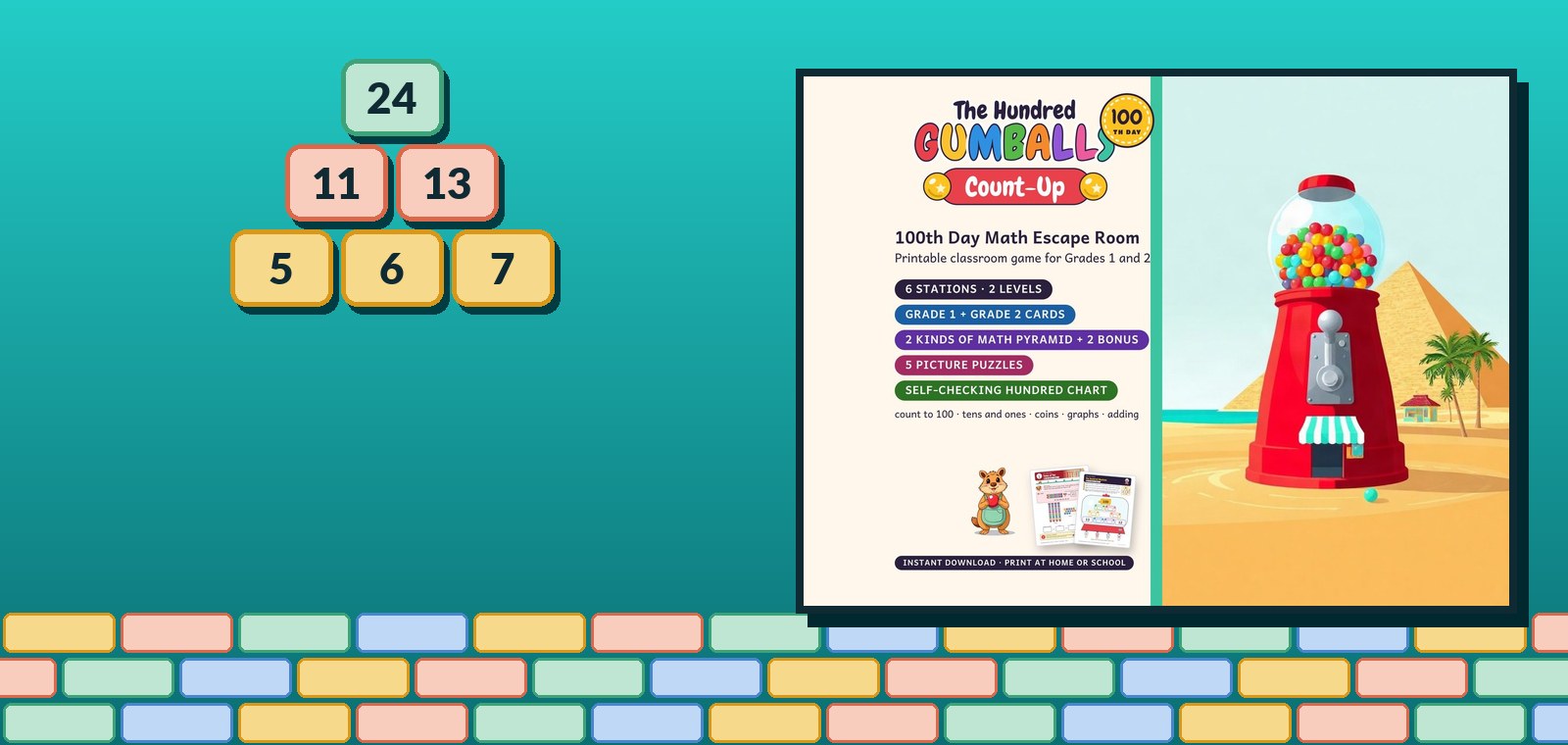
The Hundred Gumballs Count-Up: What It Can Do for Players
The Hundred Gumballs Count-Up (Grades 1 and 2): what is in it, what players can get out of it and how to run it.
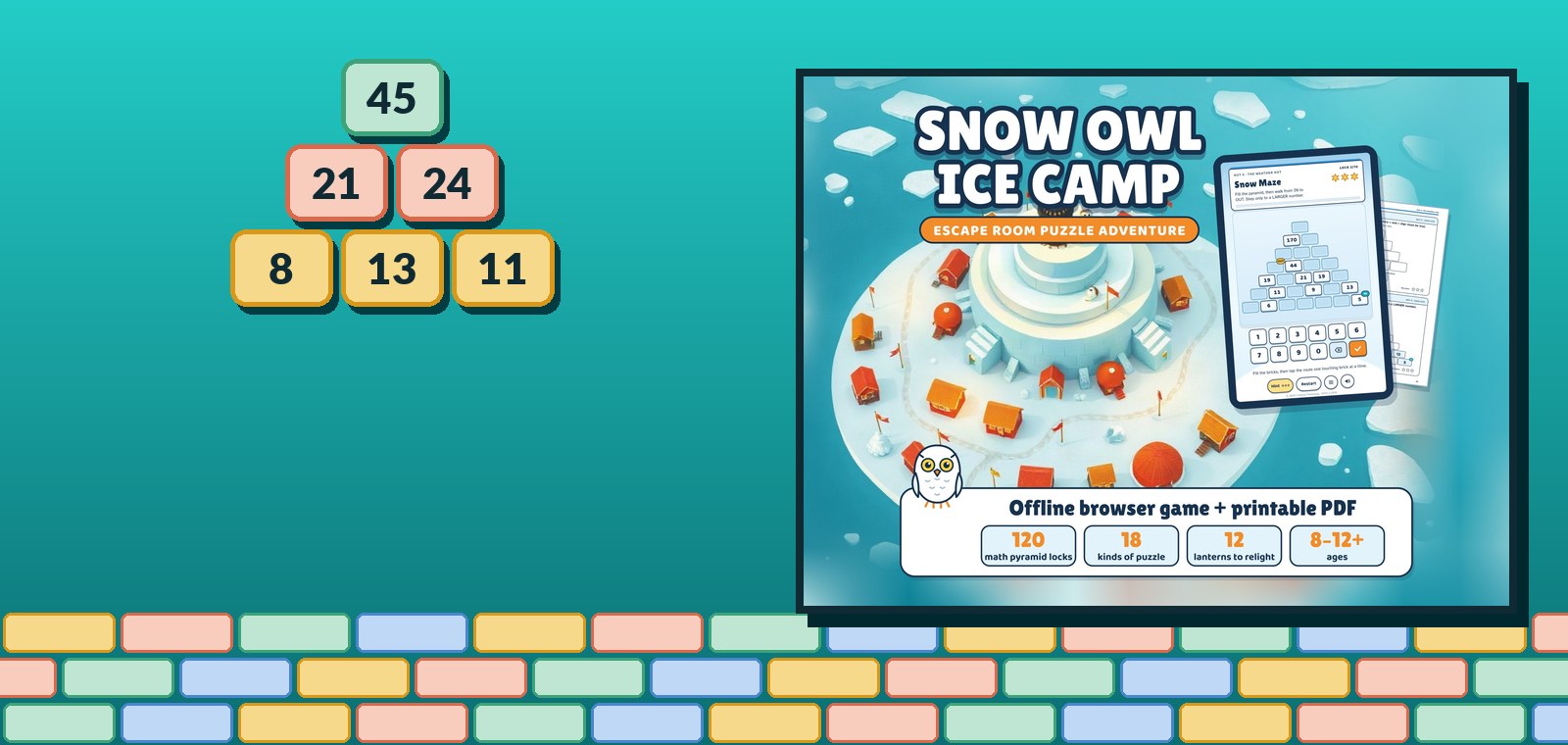
Snow Owl Ice Camp: A Math Game That Opens in Your Browser, Offline
230 number pyramids, twelve huts and twelve lanterns to relight, as an offline browser game plus a printable PDF. How it works, and what it needs.
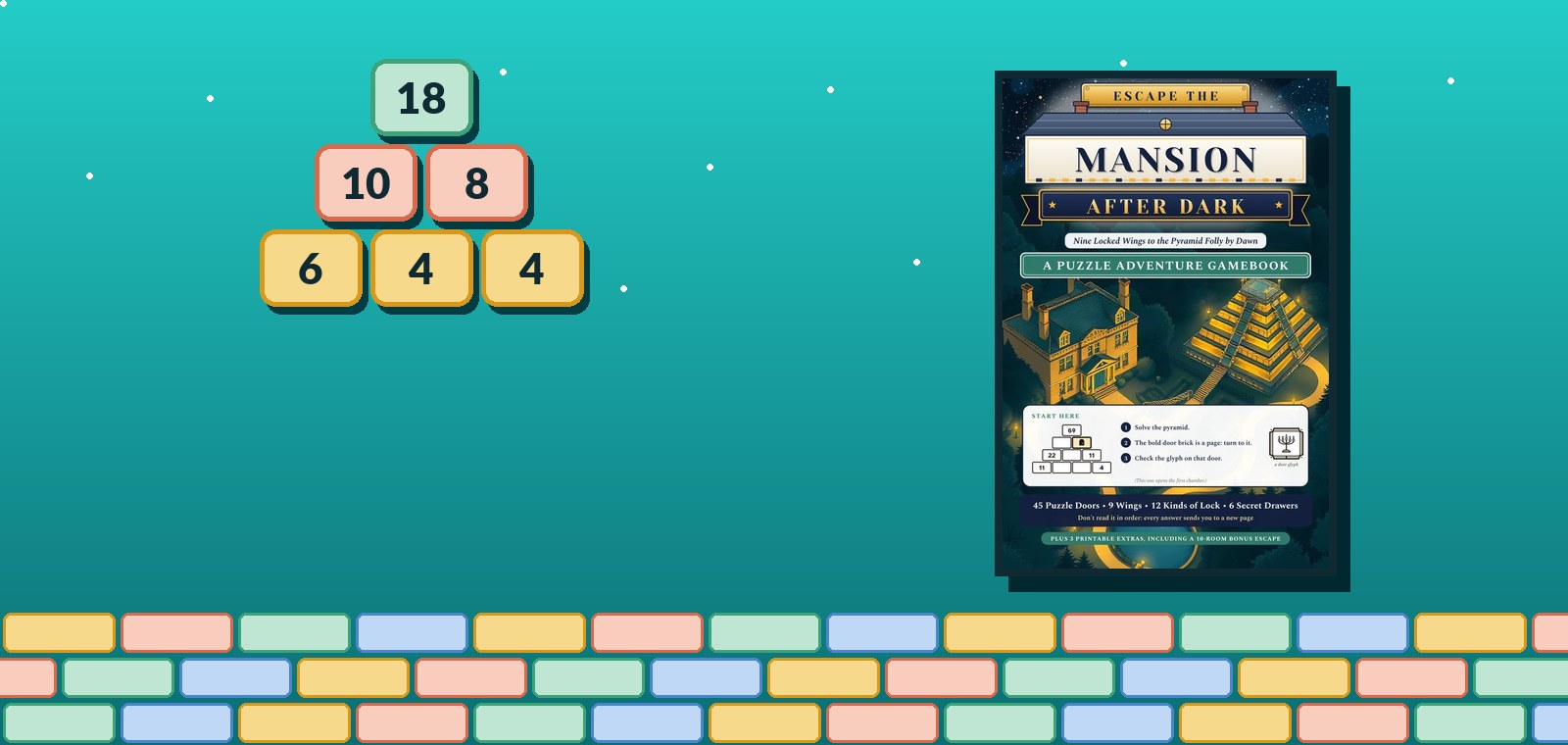
Escape the Mansion After Dark: The Story and a Look Inside
Escape the Mansion After Dark: the story, how a chamber plays and a look at a real page.
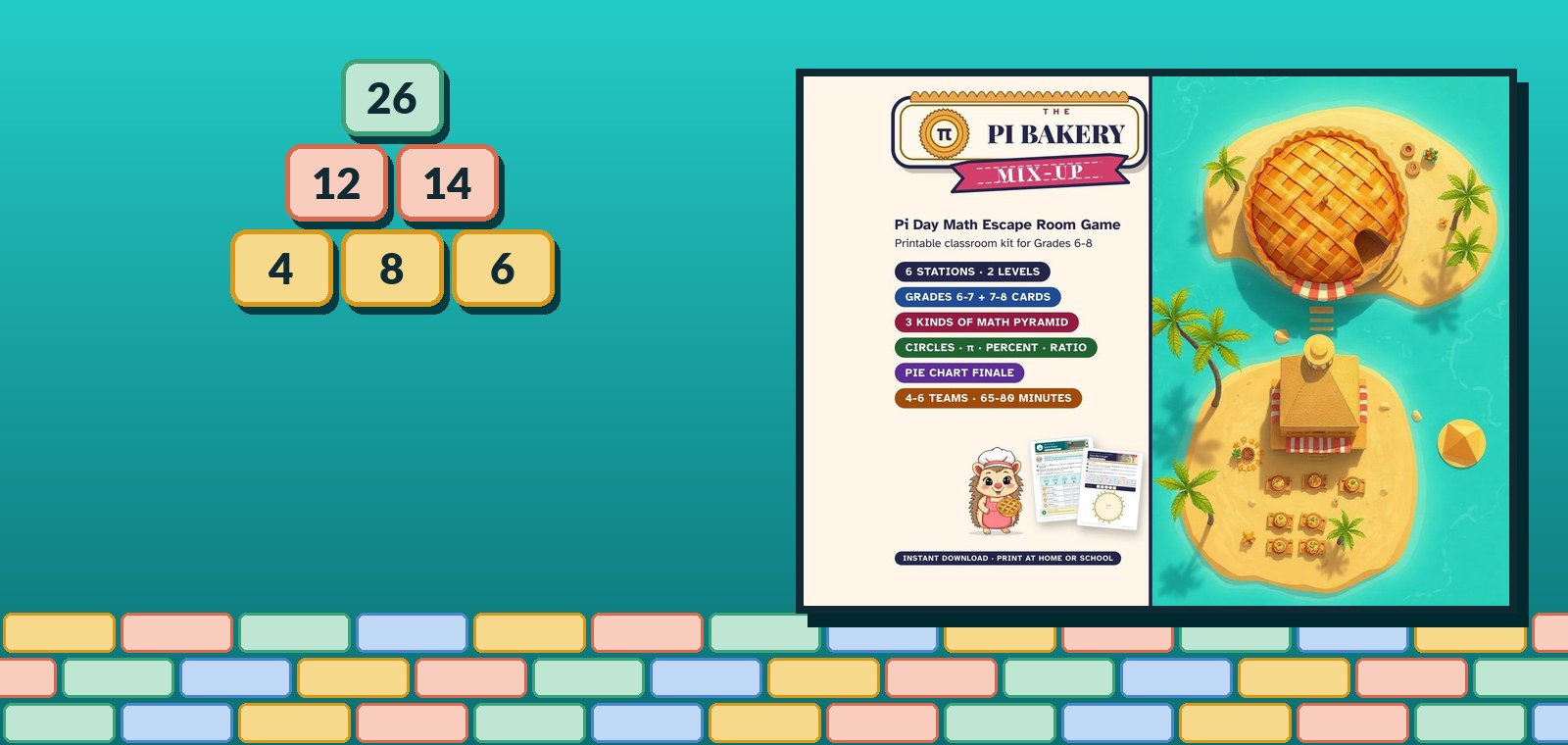
The Pi Bakery Mix-Up: What It Can Do for Players
The Pi Bakery Mix-Up (Grades 6 to 8): what is in it, what players can get out of it and how to run it.
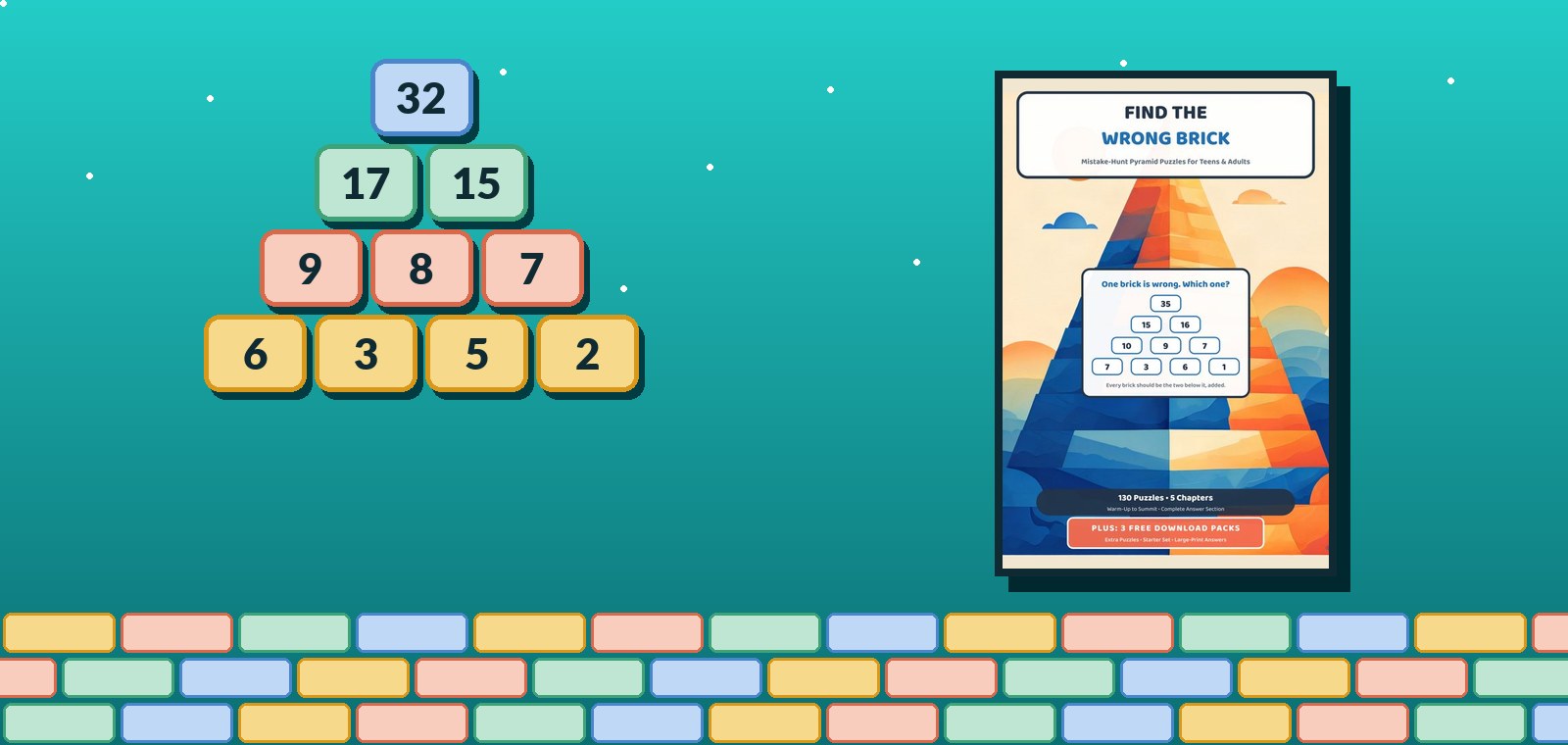
Find the Wrong Brick: Proofread a Math Pyramid
The whole pyramid is printed. One brick is wrong. You proofread it. A worked sample, a 20-second video and a pyramid to try yourself, with the one rule you need to read the hidden digits.
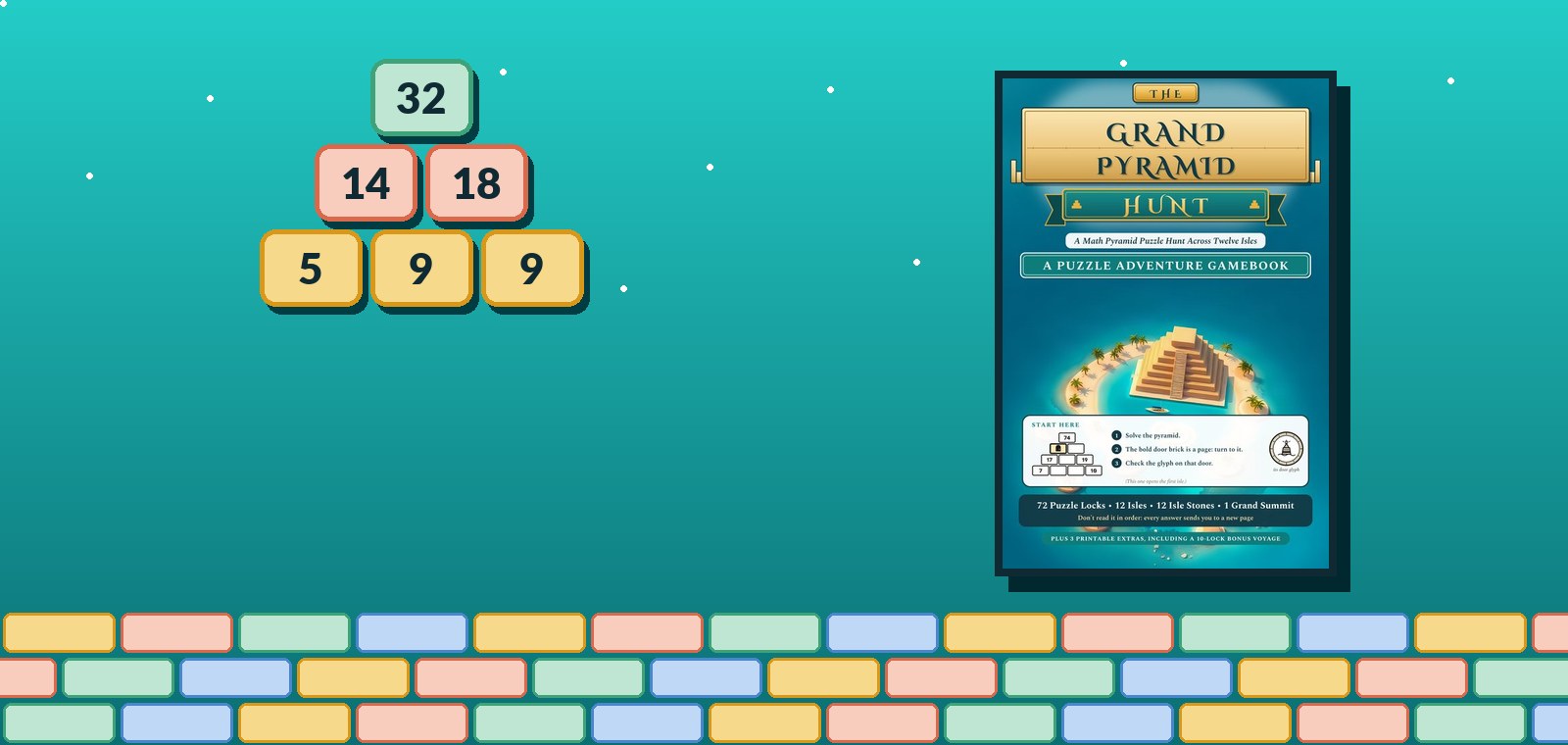
The Grand Pyramid Hunt: The Story and a Look Inside
The Grand Pyramid Hunt: the story, how a chamber plays and a look at a real page.
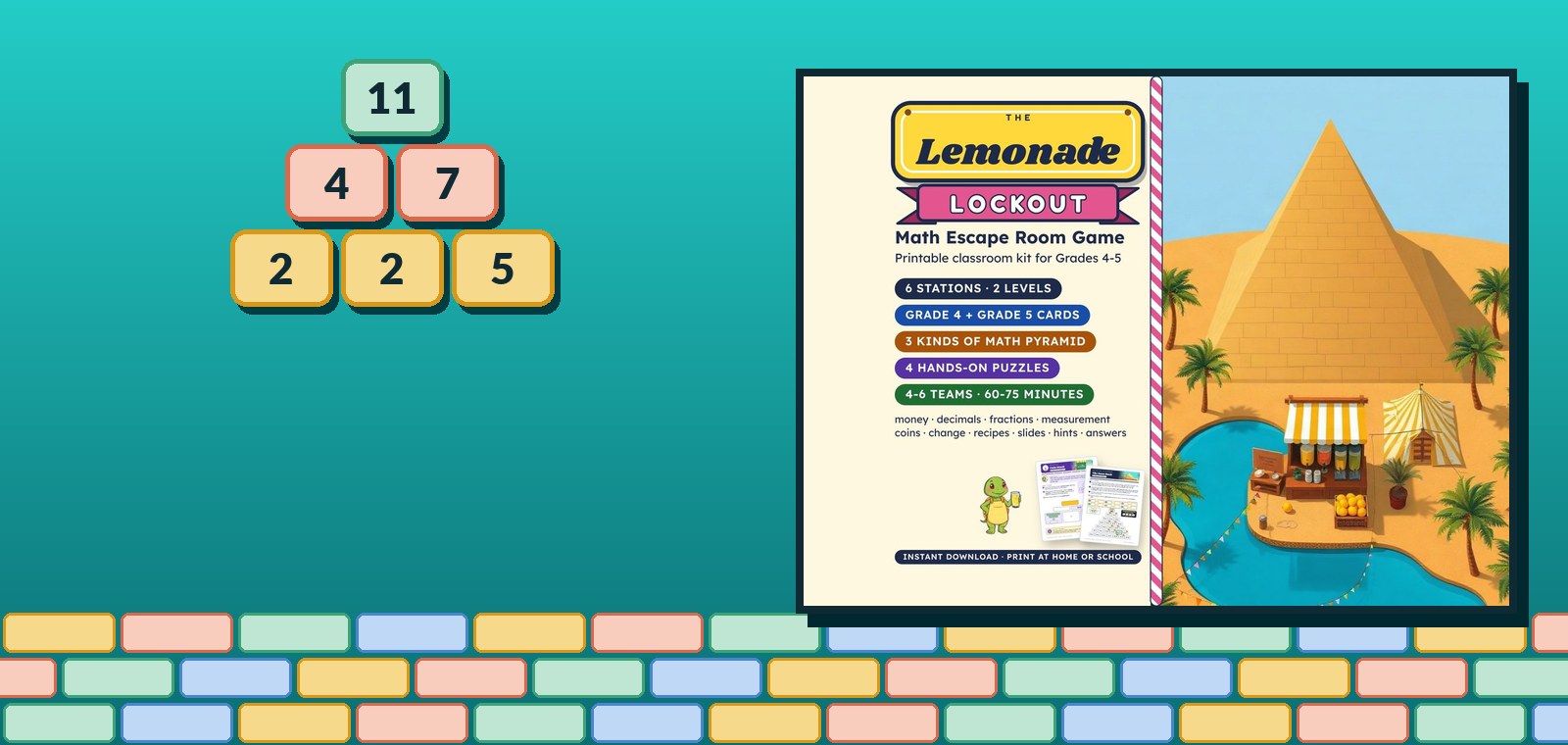
The Lemonade Lockout: What It Can Do for Players
The Lemonade Lockout (Grades 4 and 5): what is in it, what players can get out of it and how to run it.
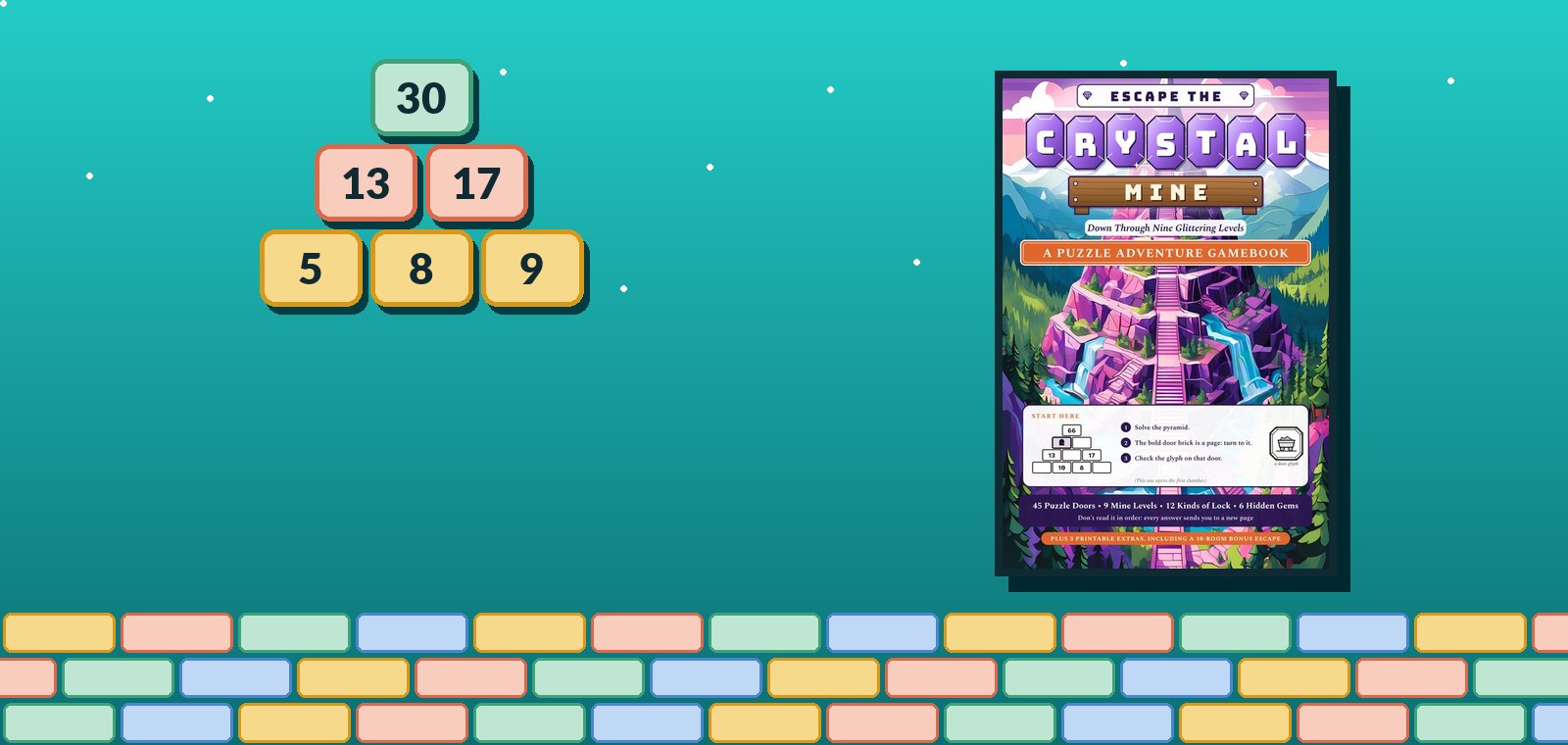
Crystal Clusters: A Lock That Only Tells You the Weight of the Group
Bricks that have grown together show only their combined weight. One cluster can give a hidden brick away, once you spot the shortcut.
Sleep on It: How a Night's Sleep Can Help You Spot the