
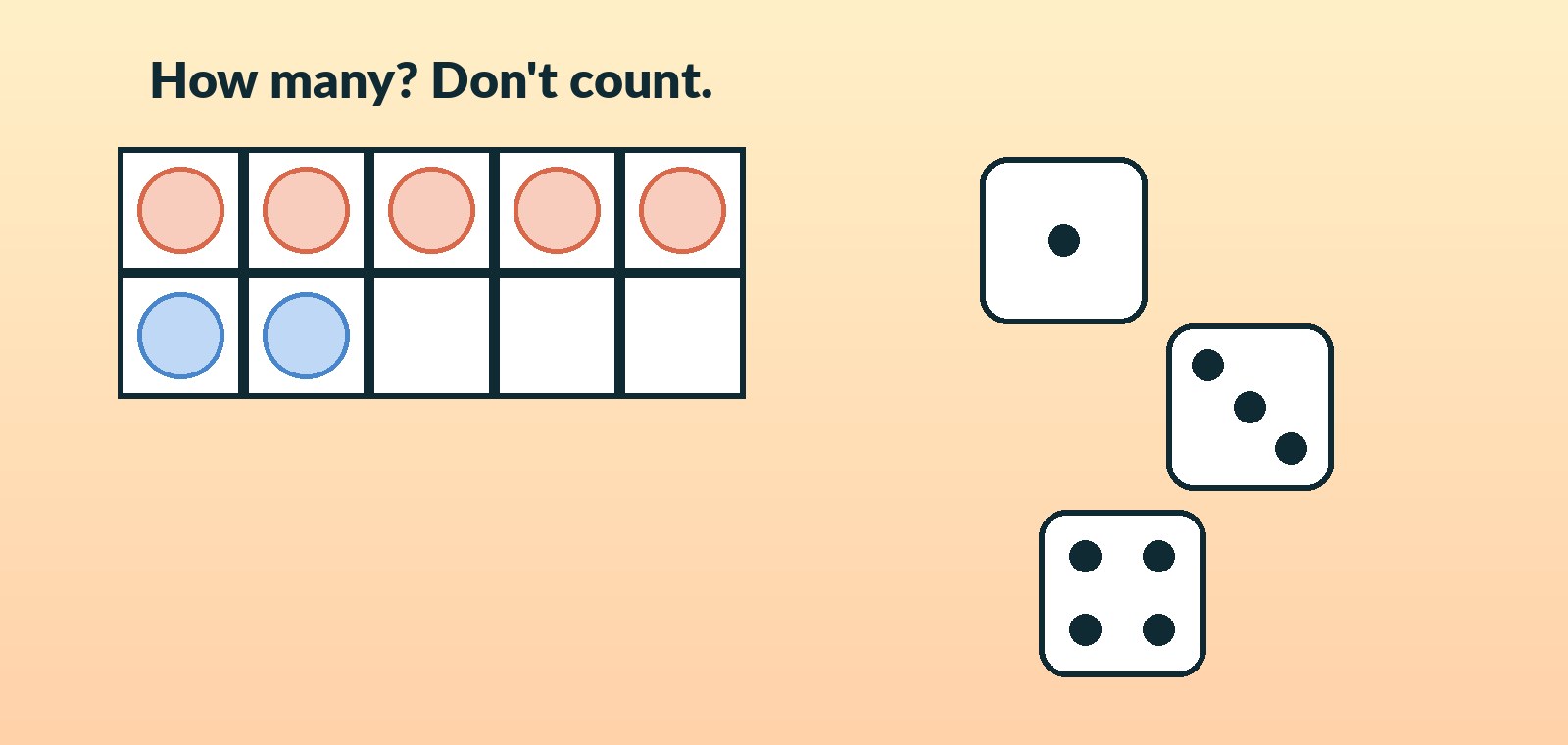
Glance at a die showing four. You did not count: you just saw four. That quick, exact seeing has a name, subitizing, and it is a handy skill for early maths. Here is where the word comes from, what the researchers say, and some simple games for home.
Where the word comes from
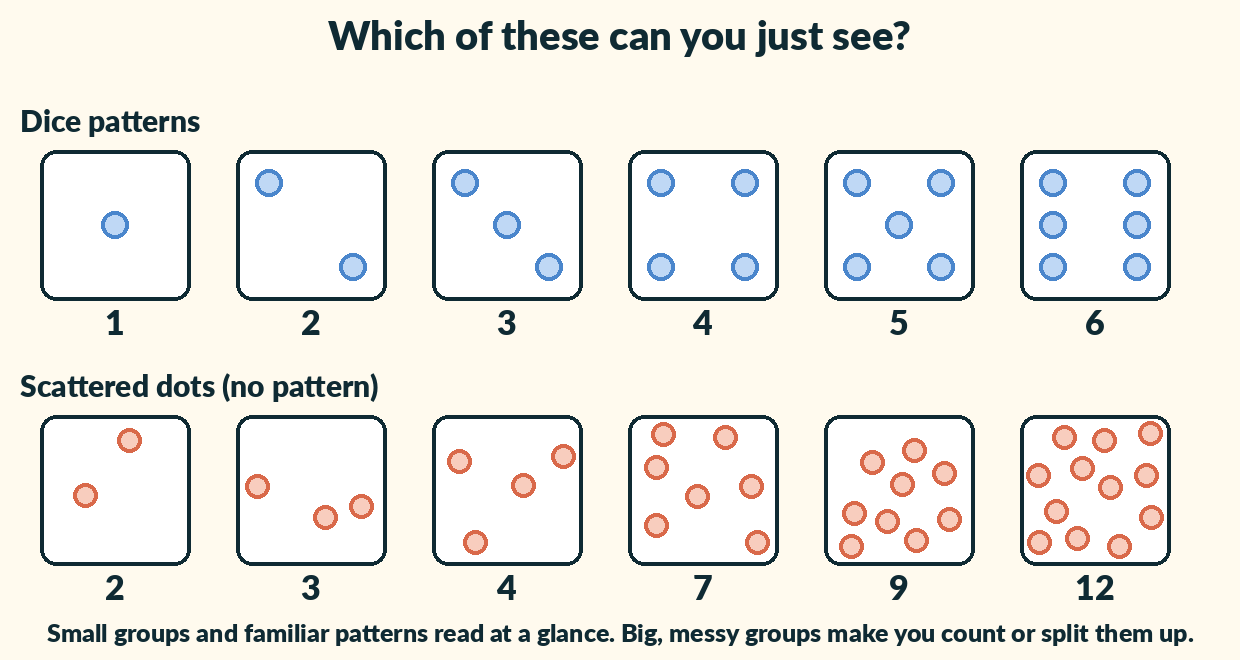
The word was coined in 1949 by E. L. Kaufman and colleagues in a paper about how people judge the number of dots they see (Kaufman, Lord, Reese and Volkmann, 1949, American Journal of Psychology). It comes from the Latin subitus, meaning sudden. Small groups, roughly four or fewer, can be told at a glance; bigger groups, we have to count or split up.
Two kinds, according to Clements
In a 1999 article in Teaching Children Mathematics, Douglas Clements asked what subitizing is and why we should teach it (Clements, 1999, listed by Stanford's DREME). He separates two kinds:
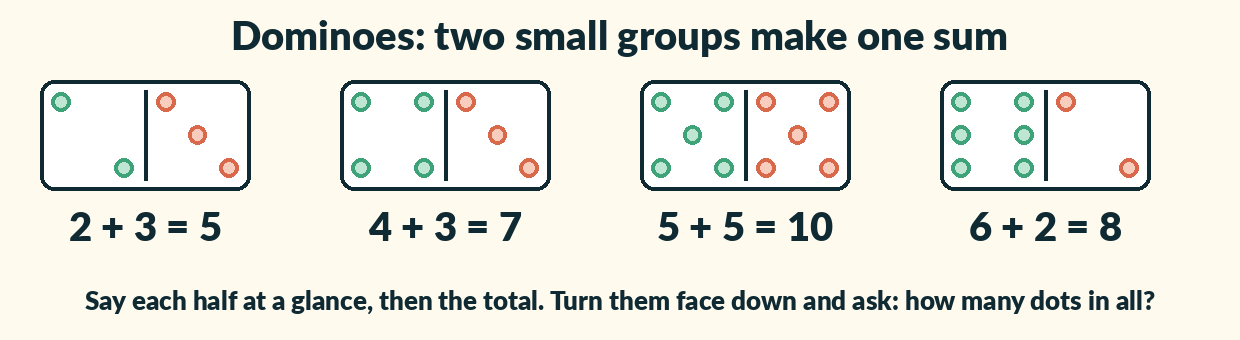
- Perceptual subitizing: knowing a small group at a glance, with no counting, like the three dots on a domino half.
- Conceptual subitizing: seeing a bigger group as parts you can name, like eight dots as two groups of four, or as a row of five and three more.
Clements and Sarama, who study how young children learn maths, say that seeing a number as parts helps children put numbers together and take them apart, which is the heart of adding and subtracting (as reported by The Hechinger Report).
Ten-frames: conceptual subitizing on a tray
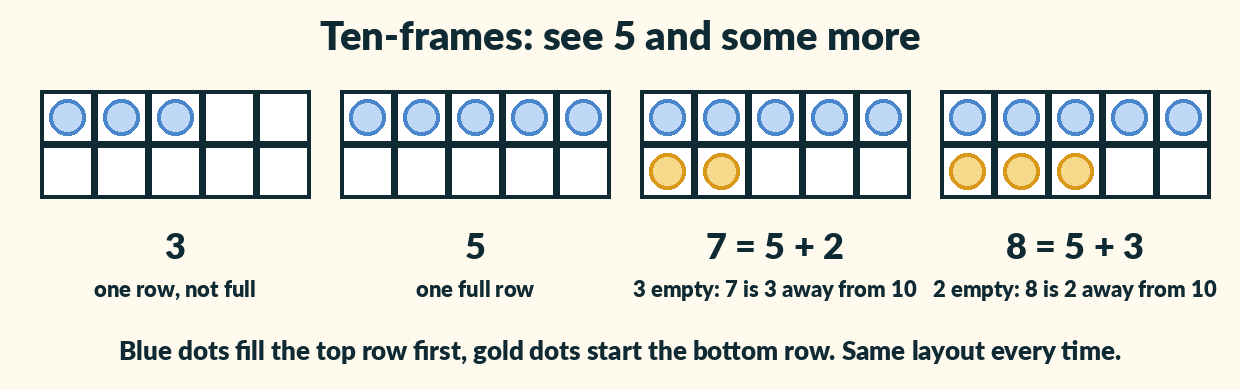
A ten-frame is a box of two rows of five. Dots always fill the top row first. So seven is never a pile to count: it is a full row and two more, and you can see there are three empty squares left, so 7 is 3 away from 10. The same layout every time is what makes it work.
If you want the next step, getting from 8 + 5 to 10 + 3, our post Better Ways to Learn Addition and Subtraction covers making ten, so we will not repeat it here.
Five games, ten minutes each
Keep them short and playful. Say the number out loud and ask how they saw it: there is no single right way.
- Dice flash. Roll one die, cover it with a hand, lift for a second. How many? Then say how you knew.
- Dot-card quick look. Draw dots on index cards in patterns (the dice layouts, a row of five and some more, and some scattered ones). Show a card for a moment. Do the neat patterns feel easier than the scattered ones?
- Domino totals. Pick a domino. Say each half at a glance, then the total, like 4 and 3 make 7.
- Ten-frame flash. Draw a ten-frame on paper and use coins or buttons. Show a number for a moment, then ask: how many? How many empty squares?
- Show me with fingers. Call a number from 1 to 10 and show it fast, with five on one hand and the rest on the other.
What the evidence says, and does not say
Children who are quick at subitizing tend to do better in early arithmetic, but that is a link, not proof that practising it causes the gain. The Hechinger Report, which reviewed recent work, says the evidence that it is worth spending lots of classroom time on is still thin (Hechinger Report). So treat these as quick, friendly games, not a programme.
Games mentioned
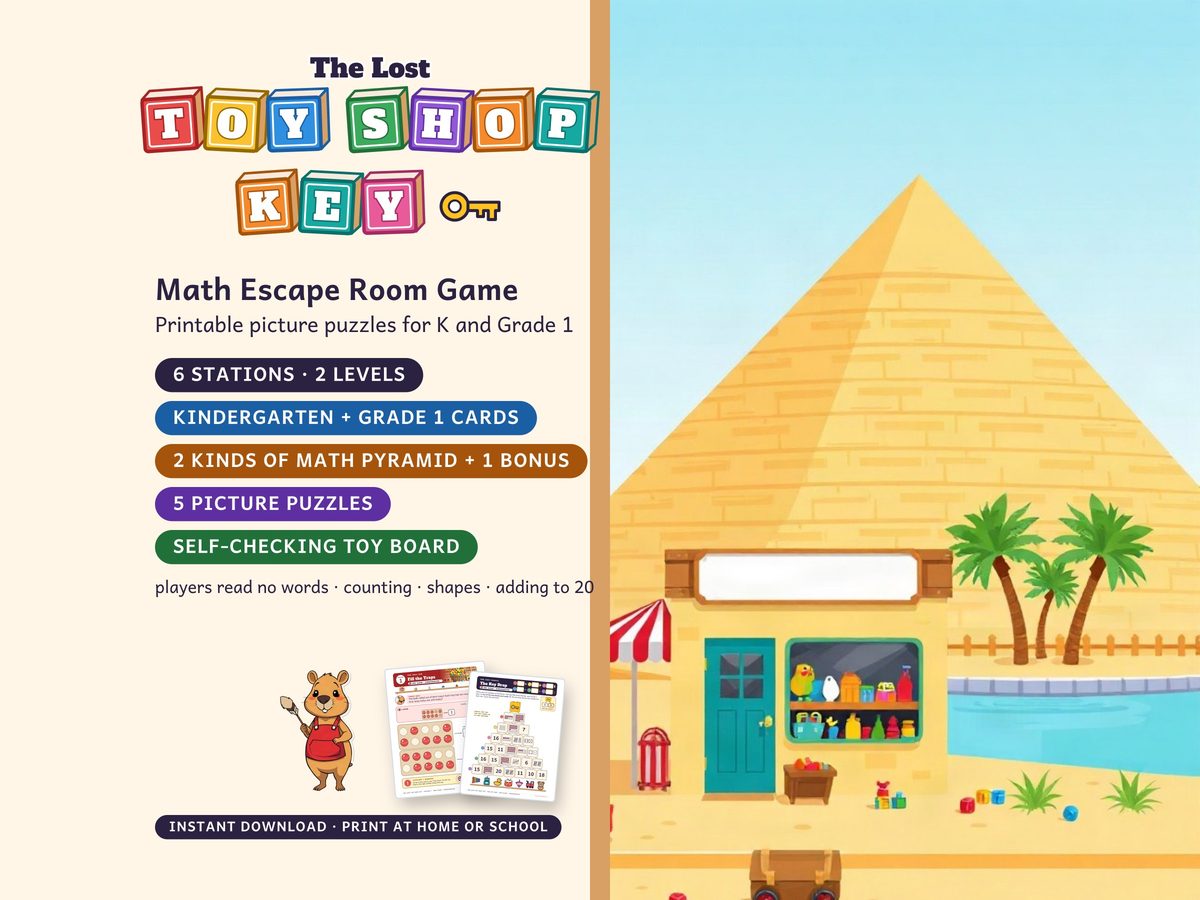
The Lost Toy Shop Key
A printable picture-puzzle math escape room for Kindergarten and Grade 1: six toy shelves, two levels with one answer key, a Toy Board self-check and the Key Drop finale.
See detailsDigital download: nothing is shipped.
More field notes
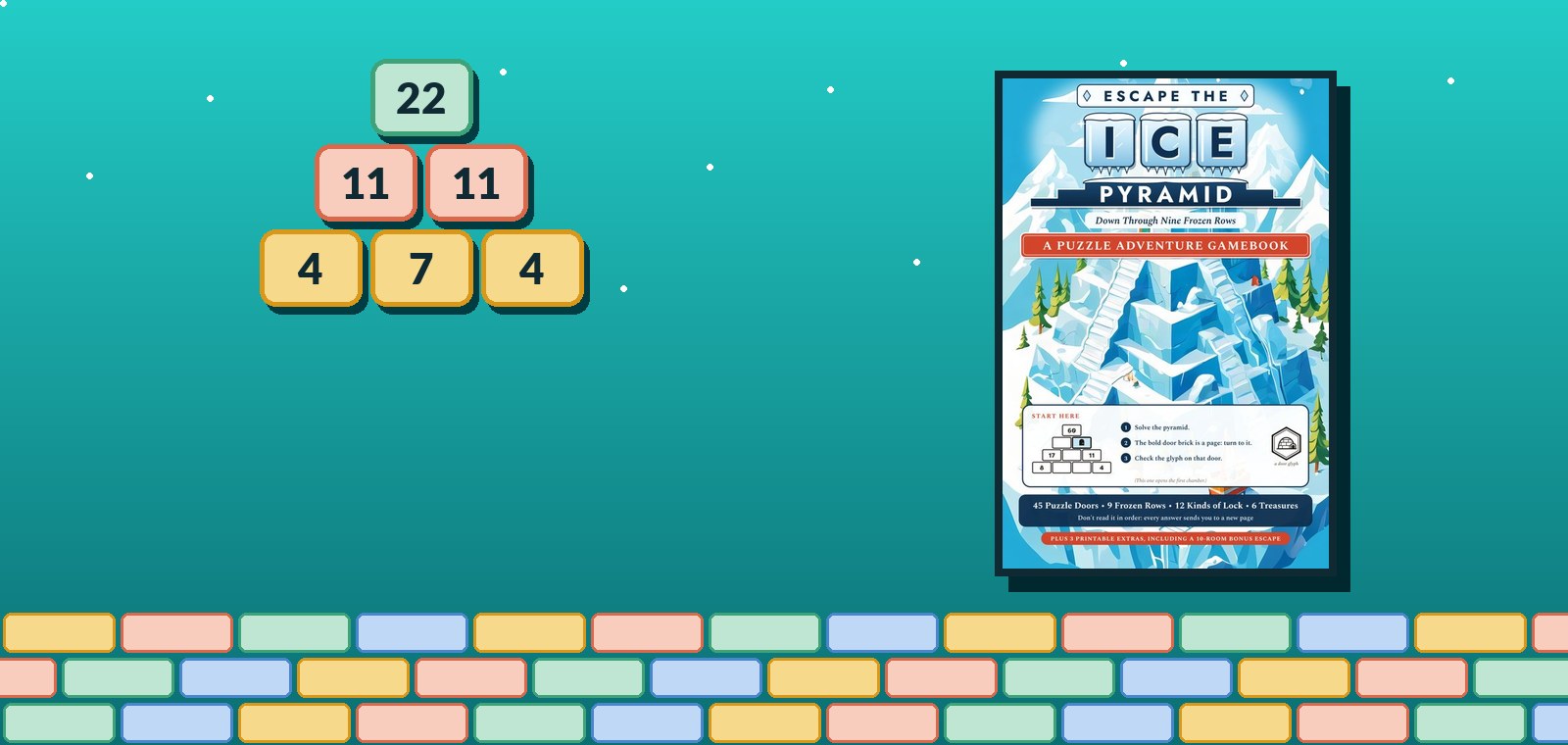
Ice Shards: Rebuild a Shattered Pyramid From Its Pieces
The pyramid has shattered. Fit each shard back into the gaps, the way up it lies, until every brick is the sum of the two below it.
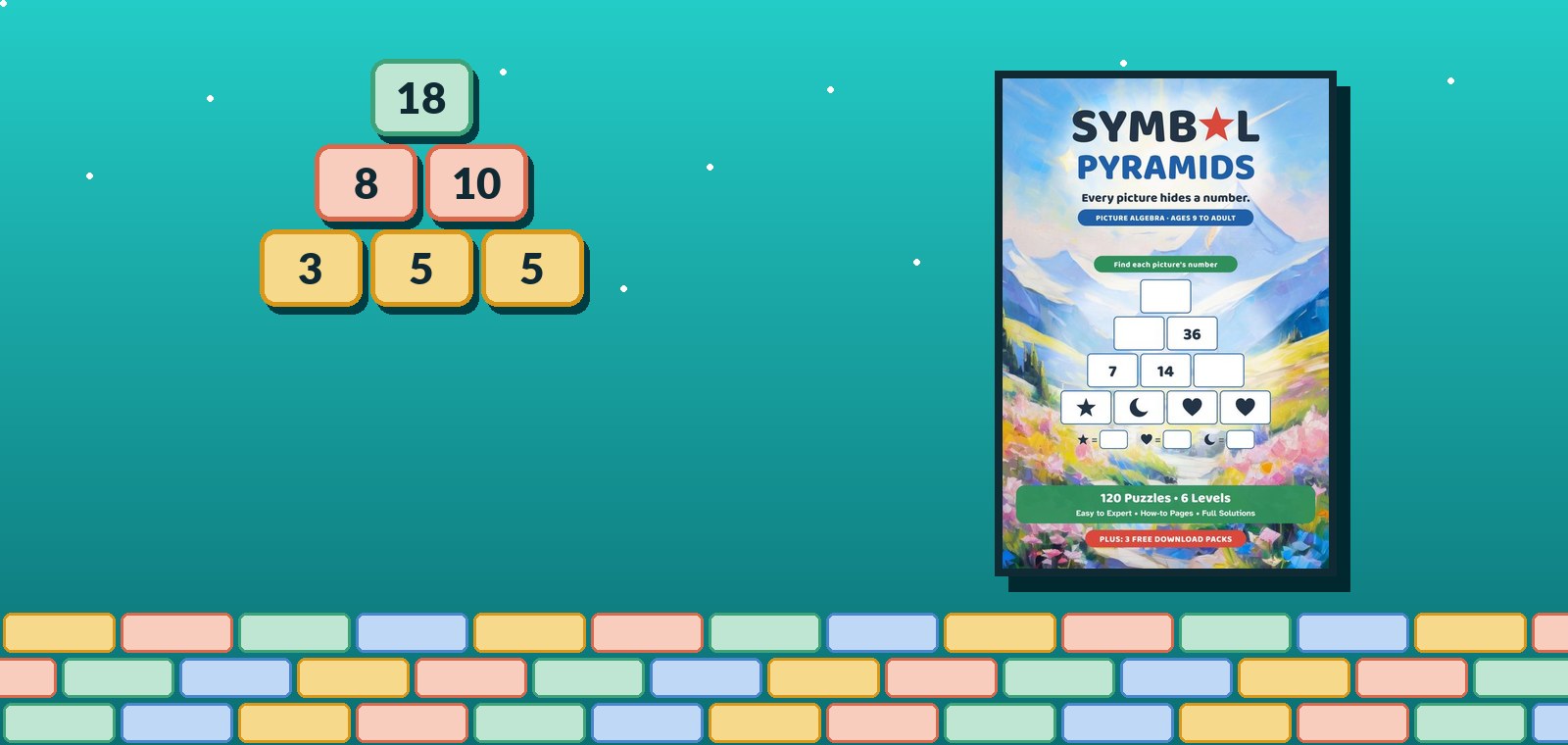
Symbol Pyramids: What Is a Star Worth?
The bottom row is pictures. Every picture hides a number, and the same picture is always the same number. A worked sample, a 20-second video and a pyramid to try yourself, with the one rule you need to read the hidden digits.
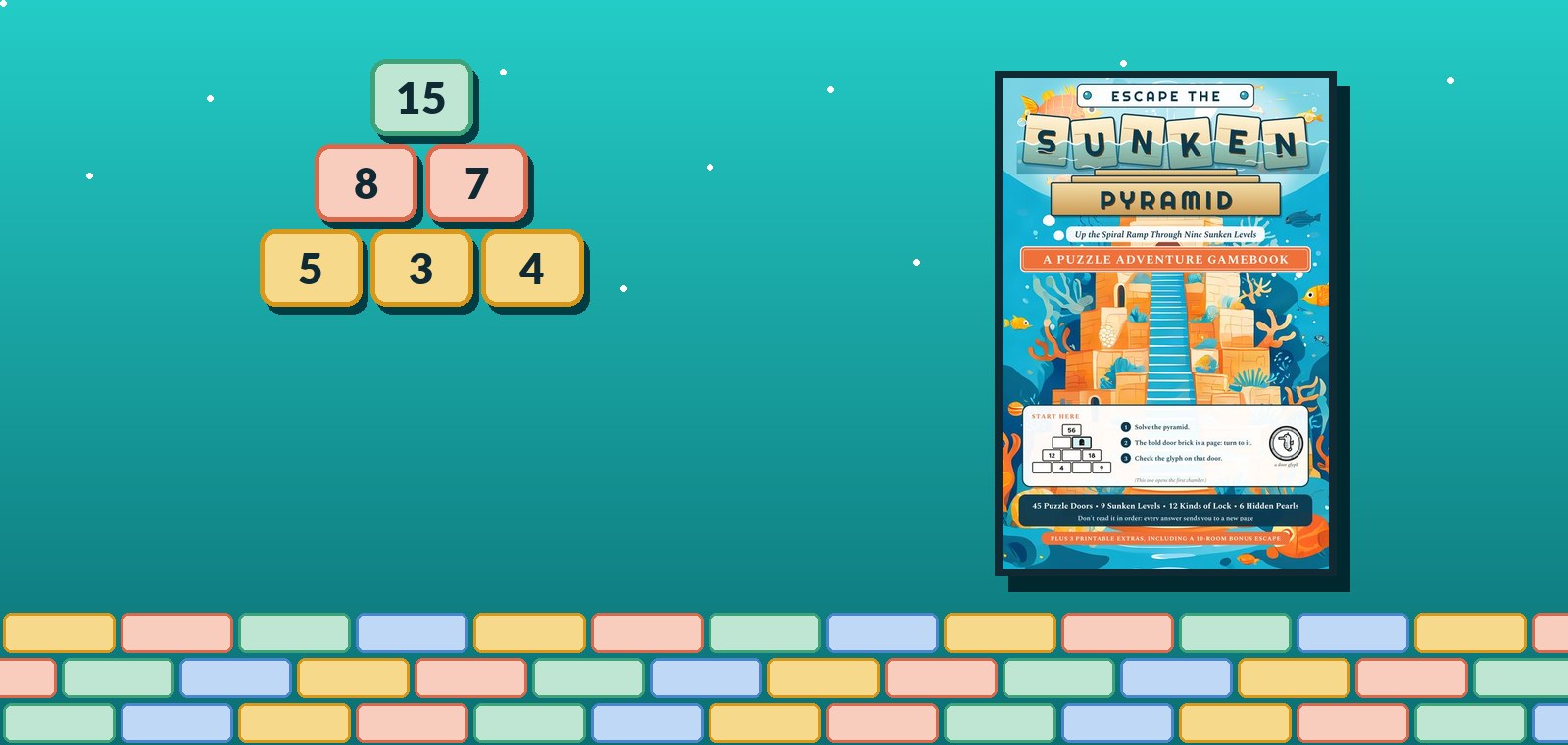
Escape the Sunken Pyramid: The Story and a Look Inside
Escape the Sunken Pyramid: the story, how a chamber plays and a look at a real page.
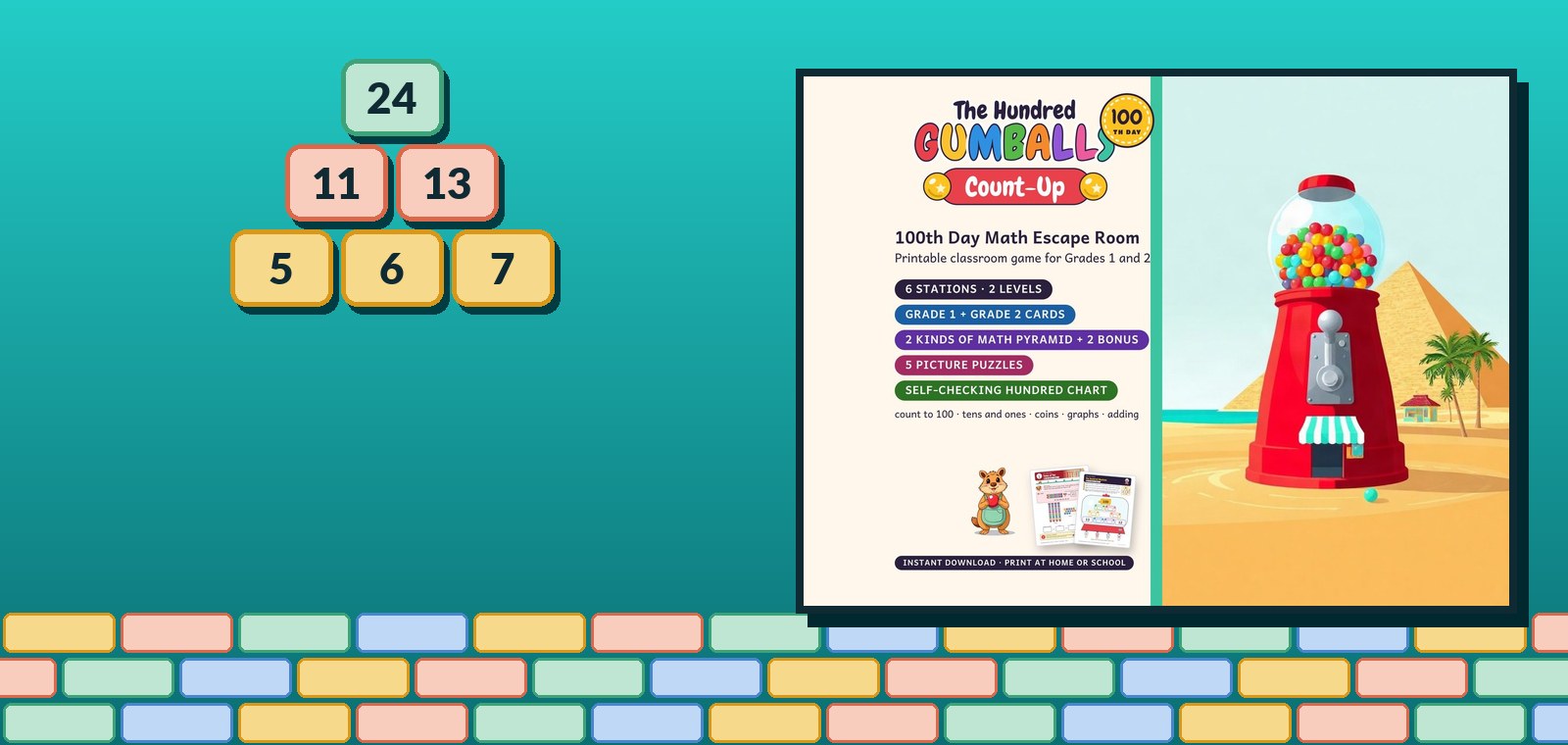
The Hundred Gumballs Count-Up: What It Can Do for Players
The Hundred Gumballs Count-Up (Grades 1 and 2): what is in it, what players can get out of it and how to run it.
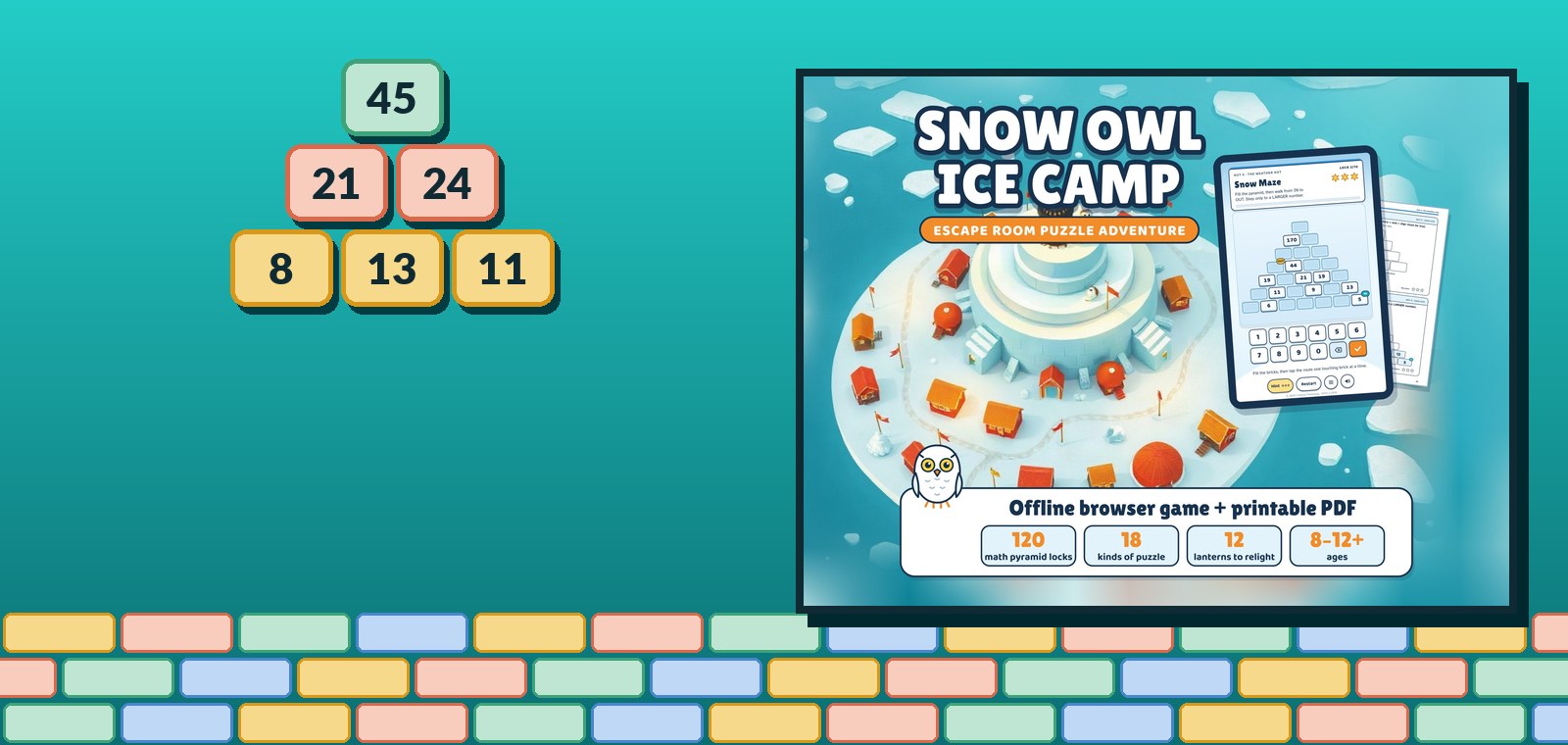
Snow Owl Ice Camp: A Math Game That Opens in Your Browser, Offline
230 number pyramids, twelve huts and twelve lanterns to relight, as an offline browser game plus a printable PDF. How it works, and what it needs.
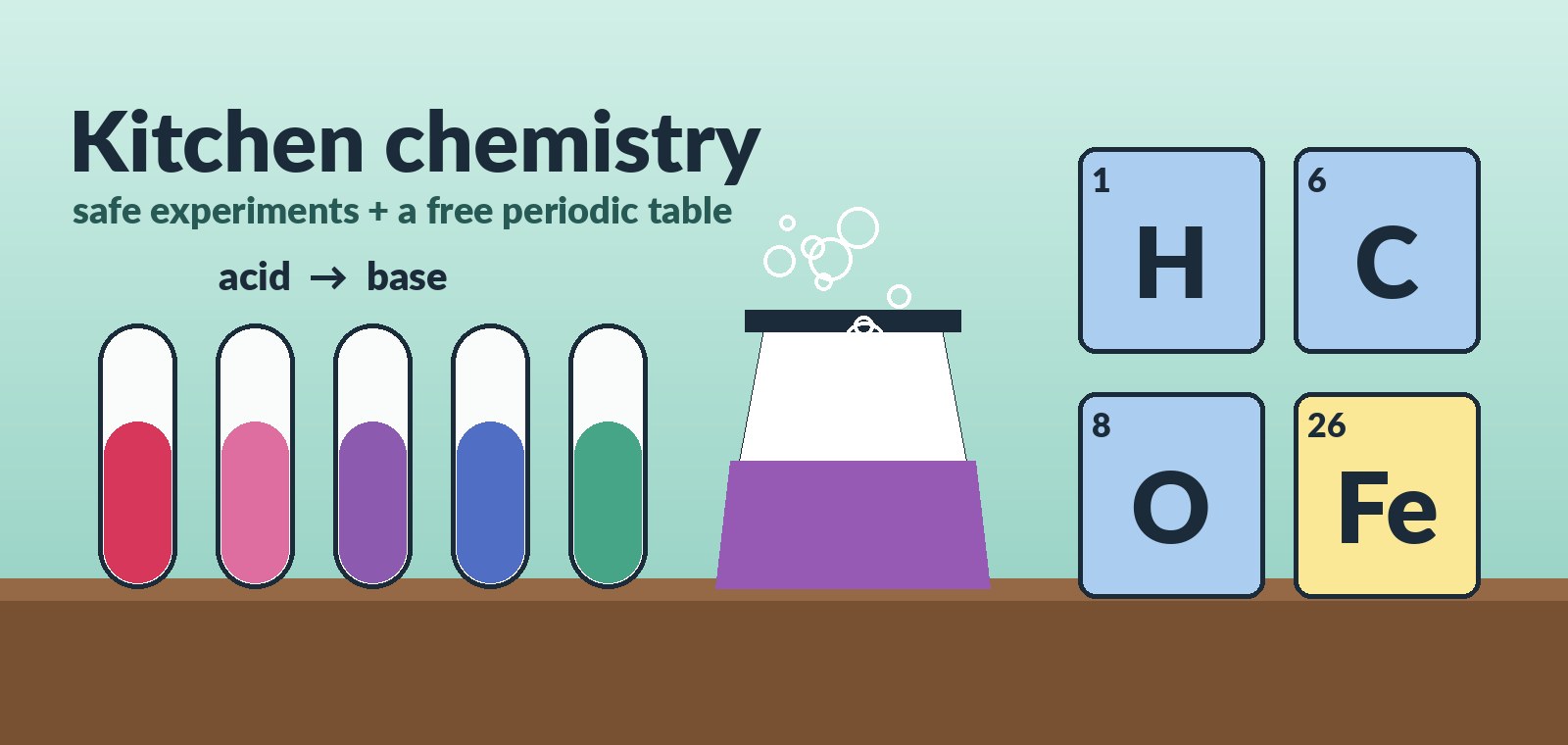
Kitchen Chemistry: A Free Periodic Table and Safe Experiments to Try at Home
A free color periodic table, 12 element spotlights and 12 kitchen experiments with safety notes. We walk through the red cabbage color test step by step.
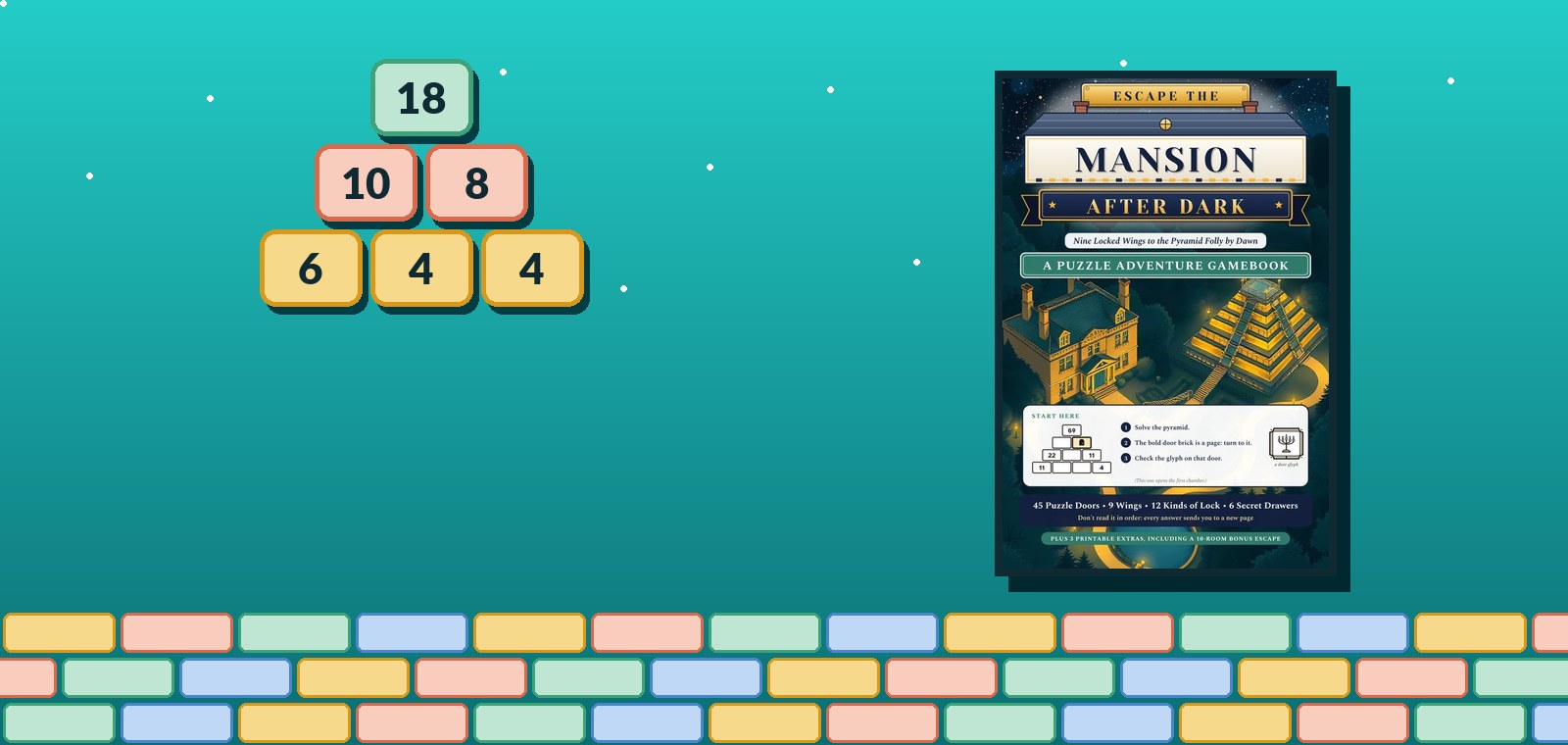
Escape the Mansion After Dark: The Story and a Look Inside
Escape the Mansion After Dark: the story, how a chamber plays and a look at a real page.
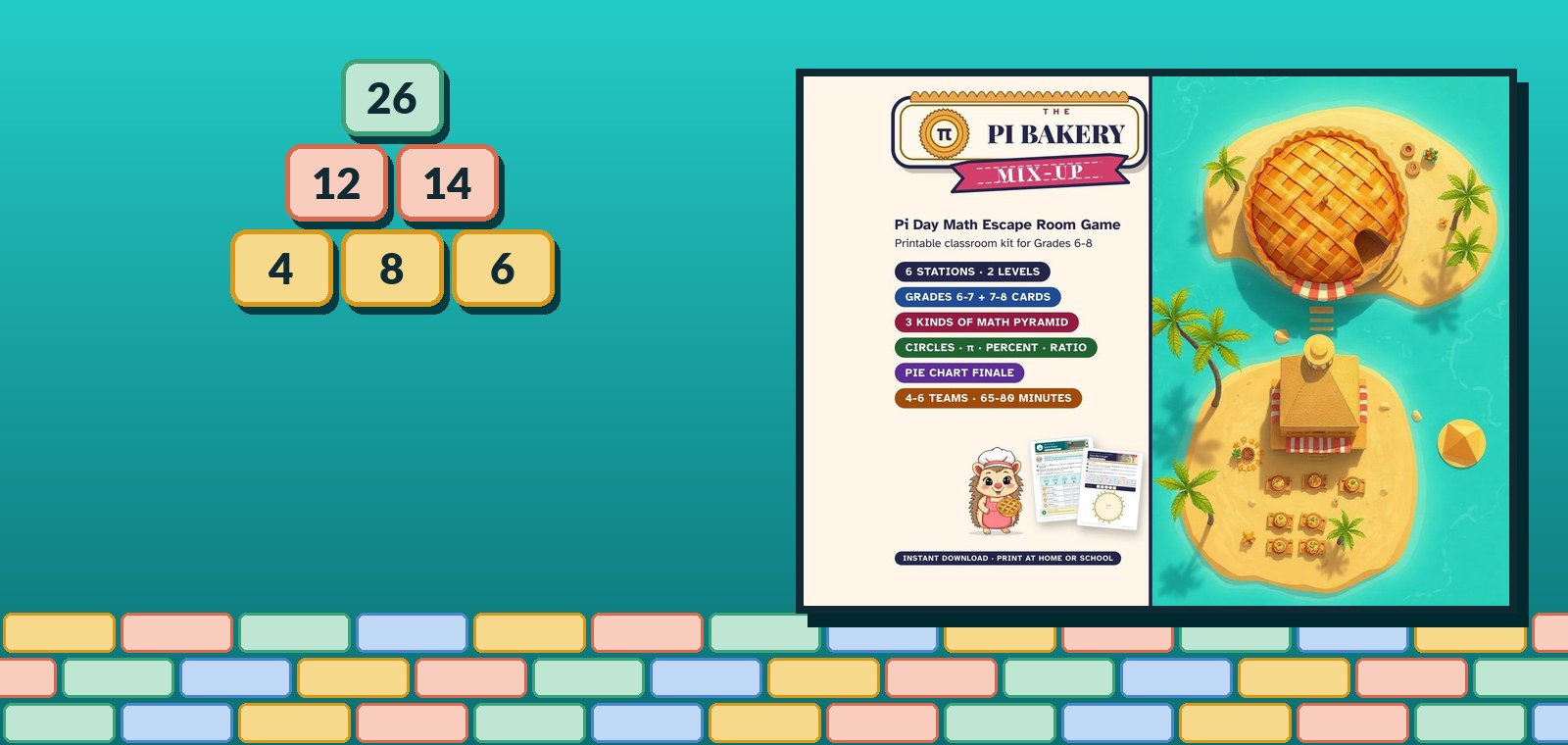
The Pi Bakery Mix-Up: What It Can Do for Players
The Pi Bakery Mix-Up (Grades 6 to 8): what is in it, what players can get out of it and how to run it.
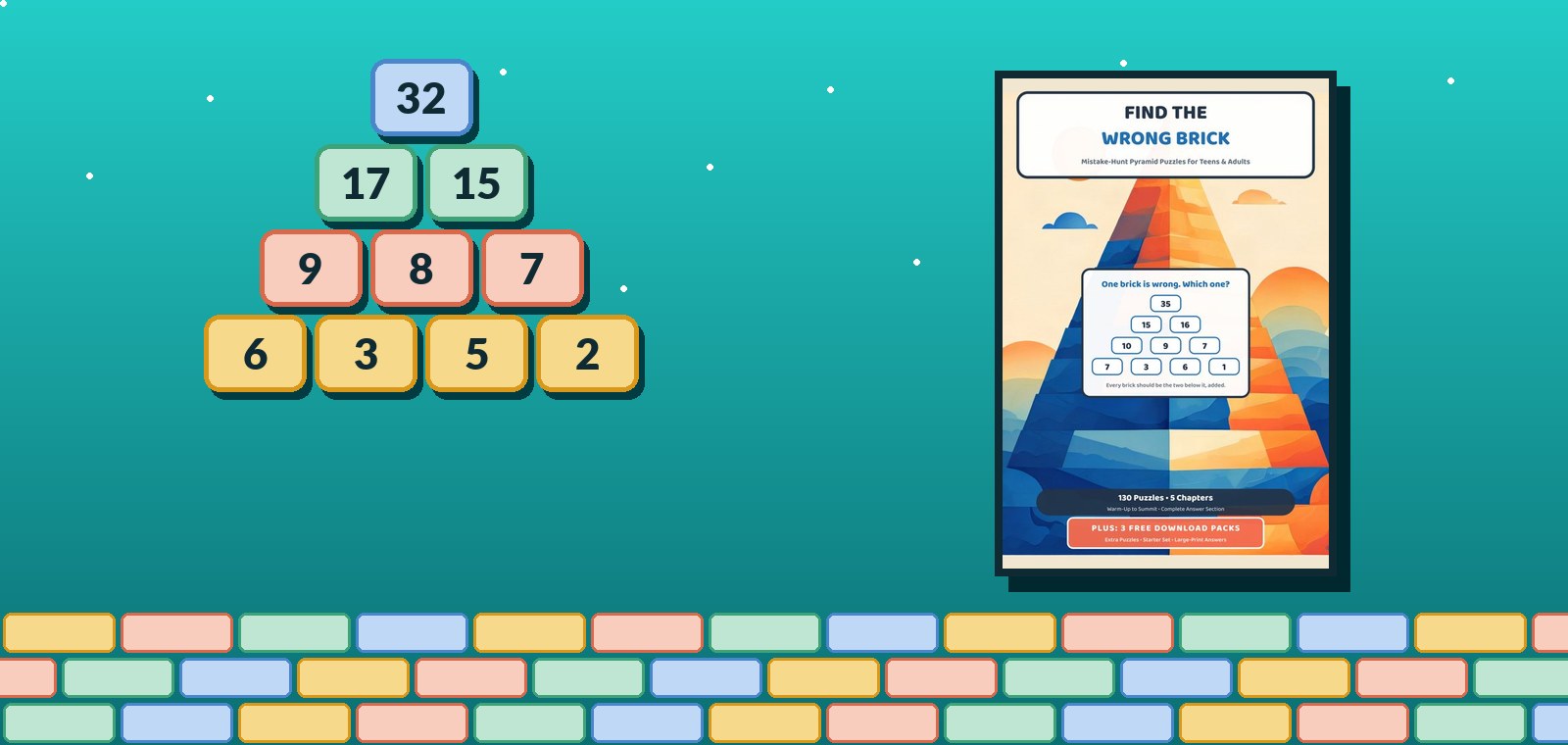
Find the Wrong Brick: Proofread a Math Pyramid
The whole pyramid is printed. One brick is wrong. You proofread it. A worked sample, a 20-second video and a pyramid to try yourself, with the one rule you need to read the hidden digits.
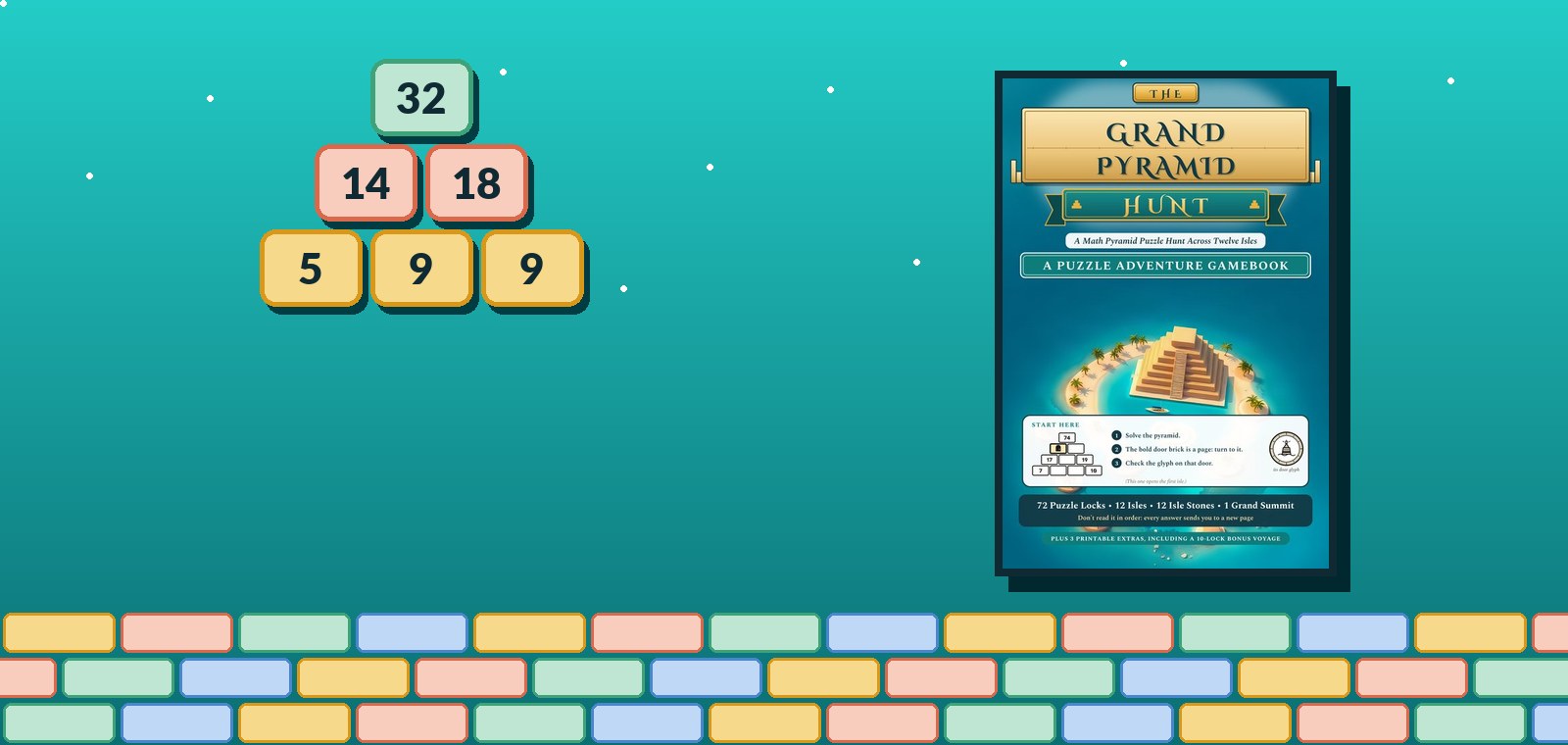
The Grand Pyramid Hunt: The Story and a Look Inside
The Grand Pyramid Hunt: the story, how a chamber plays and a look at a real page.
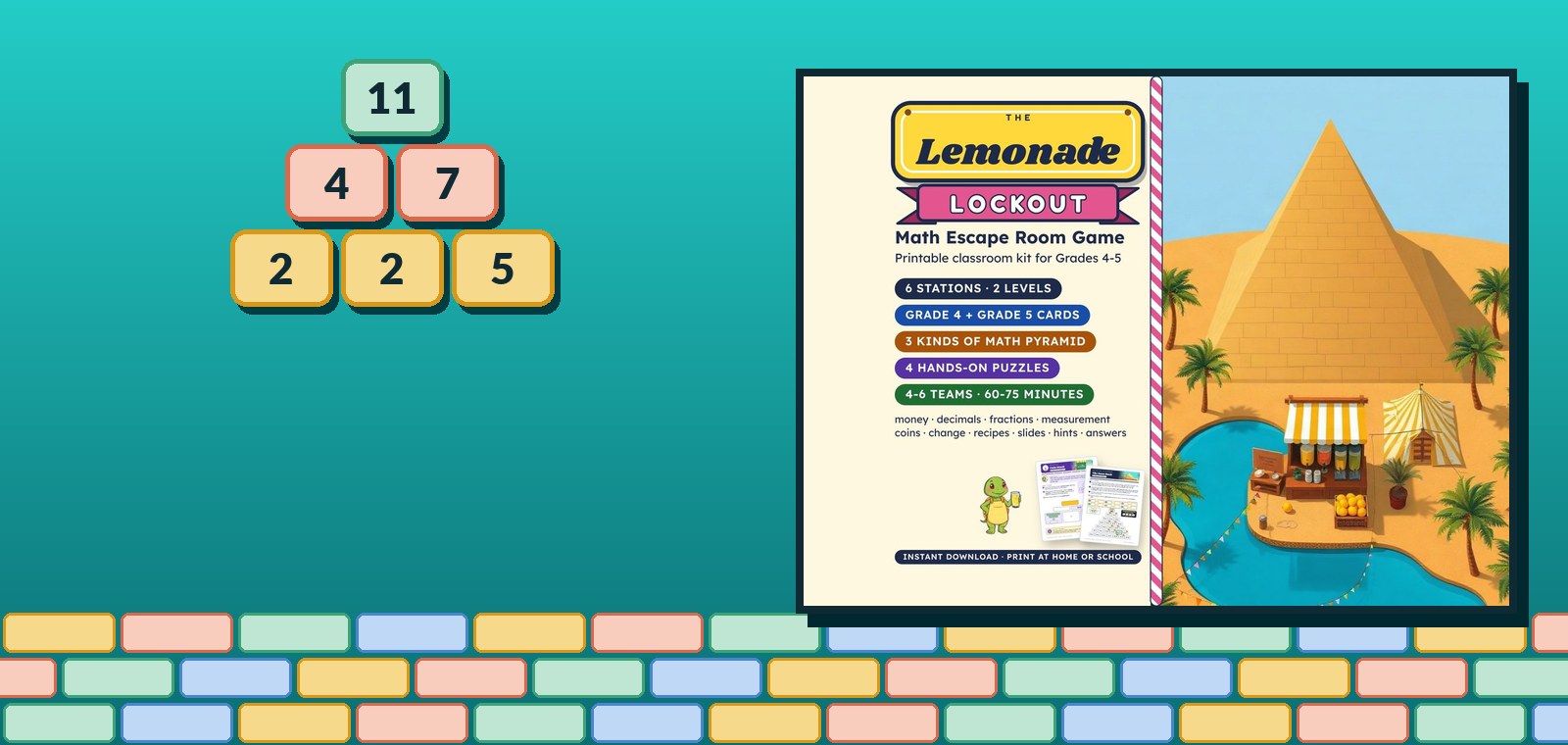
The Lemonade Lockout: What It Can Do for Players
The Lemonade Lockout (Grades 4 and 5): what is in it, what players can get out of it and how to run it.
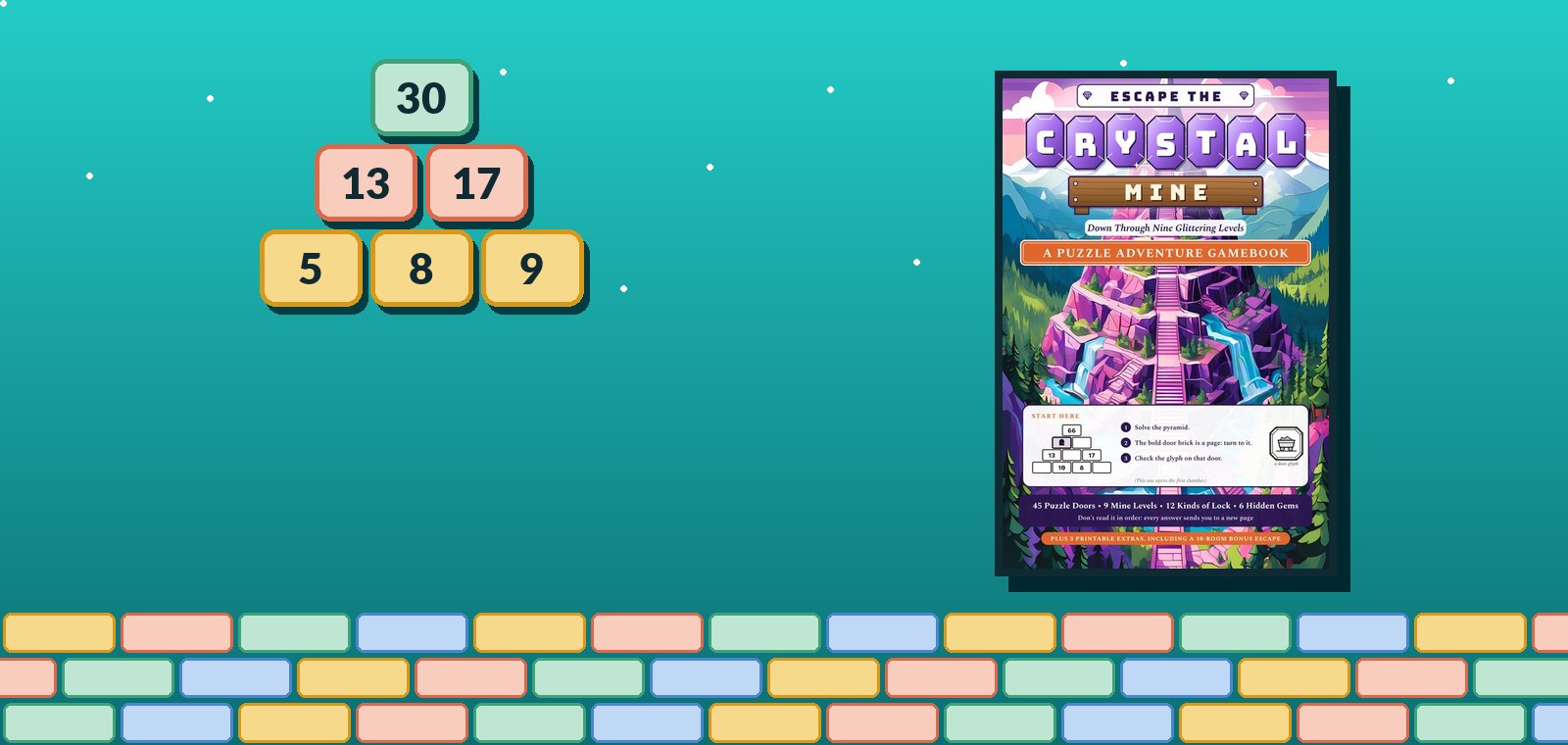
Crystal Clusters: A Lock That Only Tells You the Weight of the Group
Bricks that have grown together show only their combined weight. One cluster can give a hidden brick away, once you spot the shortcut.
Creouts Publishing
Puzzle books, printable games and, soon, games you can play here.
As an Amazon Associate we earn from qualifying purchases.
Amazon is a trademark of its owner. Creouts is not affiliated with Amazon.