
If maths makes you tense, you are in good company, and you did not do anything wrong. Researchers have studied how maths worries can pass between adults and children, and the findings point to something hopeful: how we do maths together matters more than whether we love it. Here is what each study found, and what we can try.
Why worry gets in the way
Ramirez and colleagues tested 88 first graders and 66 second graders on their maths, their working memory (the mental scratchpad we use to hold numbers while we work) and their maths anxiety. Among children with strong working memory, higher anxiety went with lower maths achievement, about half a school year behind their less anxious classmates. Children with weaker working memory were not affected in the same way, possibly because they tended to use simpler strategies such as counting on their fingers (Ramirez, Gunderson, Levine and Beilock, 2013). Worry can crowd the scratchpad, which is one reason a relaxed start helps.
Teachers and parents: a link, not blame
Beilock and colleagues followed 17 first and second grade teachers and their students (52 boys and 65 girls). At the start of the year, a teacher's maths anxiety was unrelated to her students' maths achievement. By the end of the year, the more anxious the teacher, the more her girls (not boys) believed that boys are good at maths and girls are good at reading, and the lower those girls' achievement (Beilock and colleagues, 2010). The study links the pattern to beliefs about who is good at maths, and it does not suggest teachers do not care.
Maloney and colleagues studied 438 first and second graders and their parents. Children of more maths-anxious parents learned less maths over the school year and became more maths anxious themselves, but only when those parents reported helping with maths homework often. When parents helped less often, there was no such link. Parents' maths anxiety did not predict reading results (Maloney and colleagues, 2015).
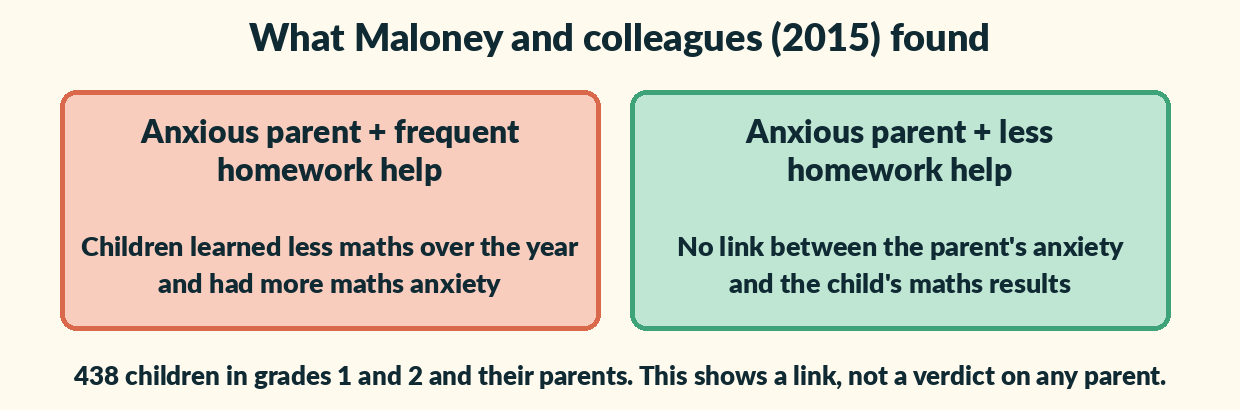
Read that carefully. It does not say anxious parents should stay away. The researchers said the same: we cannot simply tell anxious parents to get involved, we need better tools. They suggested things like maths books, board and computer games and apps that let parents and children enjoy maths together. It also shows a link in one group of families, not a rule for every family.
A gentler way in
In a study by Berkowitz and colleagues, 587 first graders from 22 schools in the Chicago area used a Bedtime Math app with their parents over a school year, with families doing maths together at home. Children who did the maths stories gained more than the comparison group, and the benefit was especially strong for children of the most maths-anxious parents (Berkowitz and colleagues, 2015). The idea is simple: relaxed, playful maths talk, a few minutes at a time, rather than homework rescue.
Try this
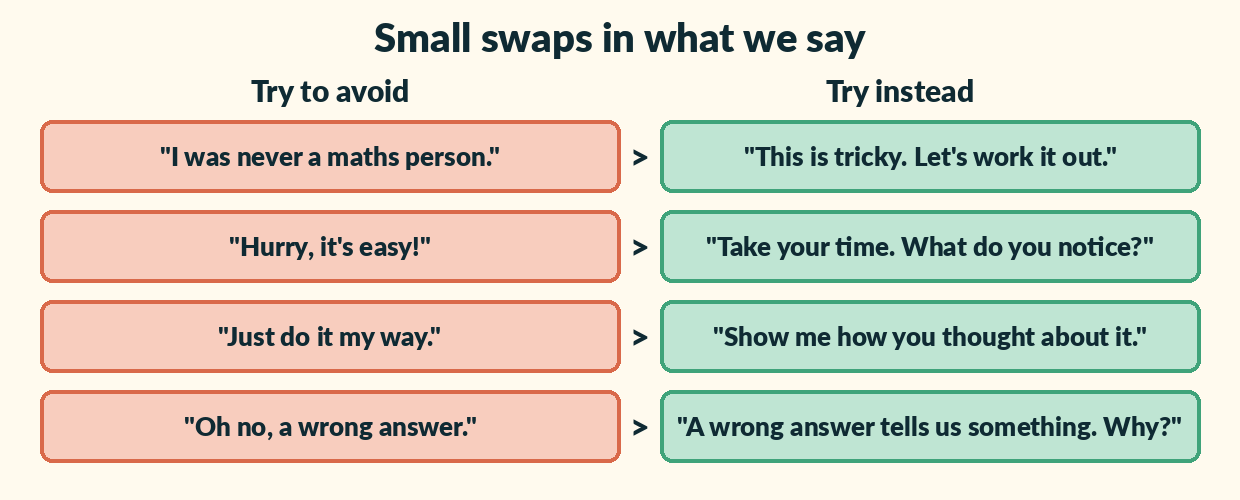
- Be curious, not quick. Ask "what do you notice?" before you show a method.
- Watch the labels. Remarks such as "I'm just not a maths person" are easy to pick up. Try "this is tricky, let's work it out".
- Let mistakes be useful. "A wrong answer tells us something" turns the mood around.
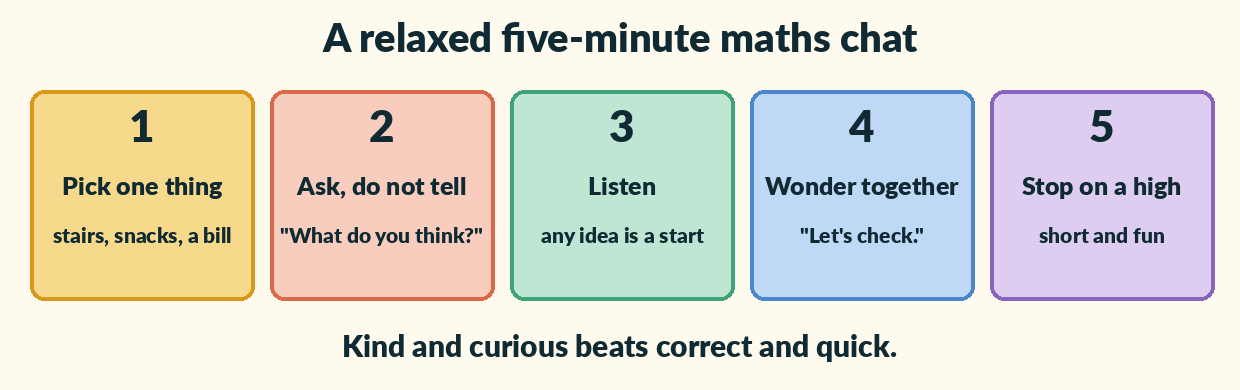
- Keep it short and playful. Stairs, snacks, shopping, a puzzle, then stop while it is still fun.
- Share the load. If maths homework is a stress for you both, tell the teacher. A real worry about your child's learning or wellbeing is a job for a teacher or doctor, not a blog post.
Where a puzzle adventure fits
Escape the Pyramid, Level 1 is a puzzle adventure gamebook, so you do not read it in order: each answer is the page number of your next door. It has 45 locked chambers and 6 treasure rooms, with hints and full answers in the back, so nobody has to be the expert. Parent and child can puzzle it out side by side, pencil in hand. It is a book of puzzles, not a course or a treatment for worry, and it was not part of any study mentioned here. Its easy level is aimed at teens and adults, so younger children may want a hand.
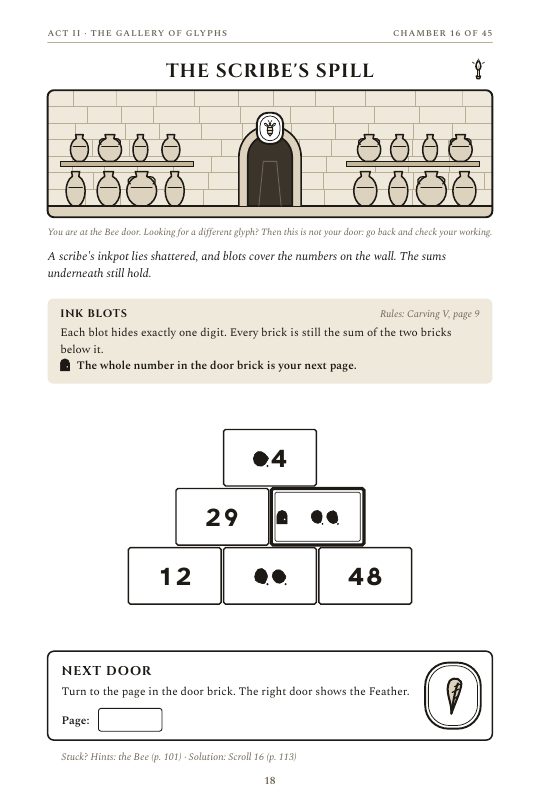
For classrooms and homes with younger learners, the Math Escape Room Bundle packs five printable rooms for Grades 1 to 7. Teams work together and talk it through, which is a low-pressure way to practise. It is a digital download you print yourself.
Books mentioned
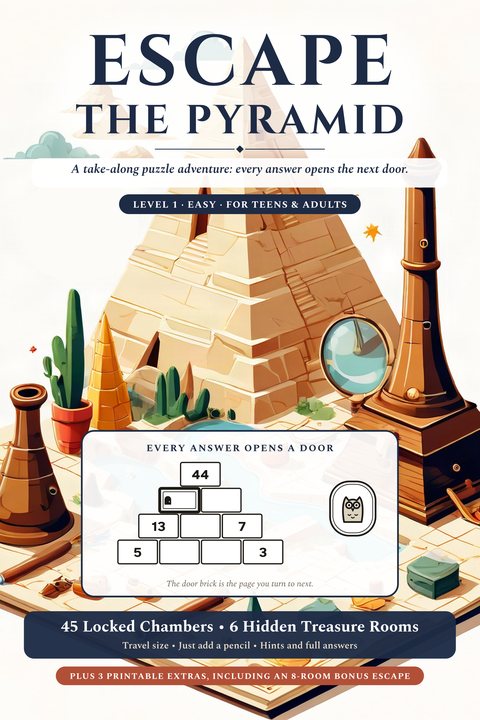
Escape the Pyramid, Level 1 (Easy)
A puzzle adventure gamebook with 45 locked chambers and 6 treasure rooms, hints and full answers in the back.
View on AmazonGames mentioned
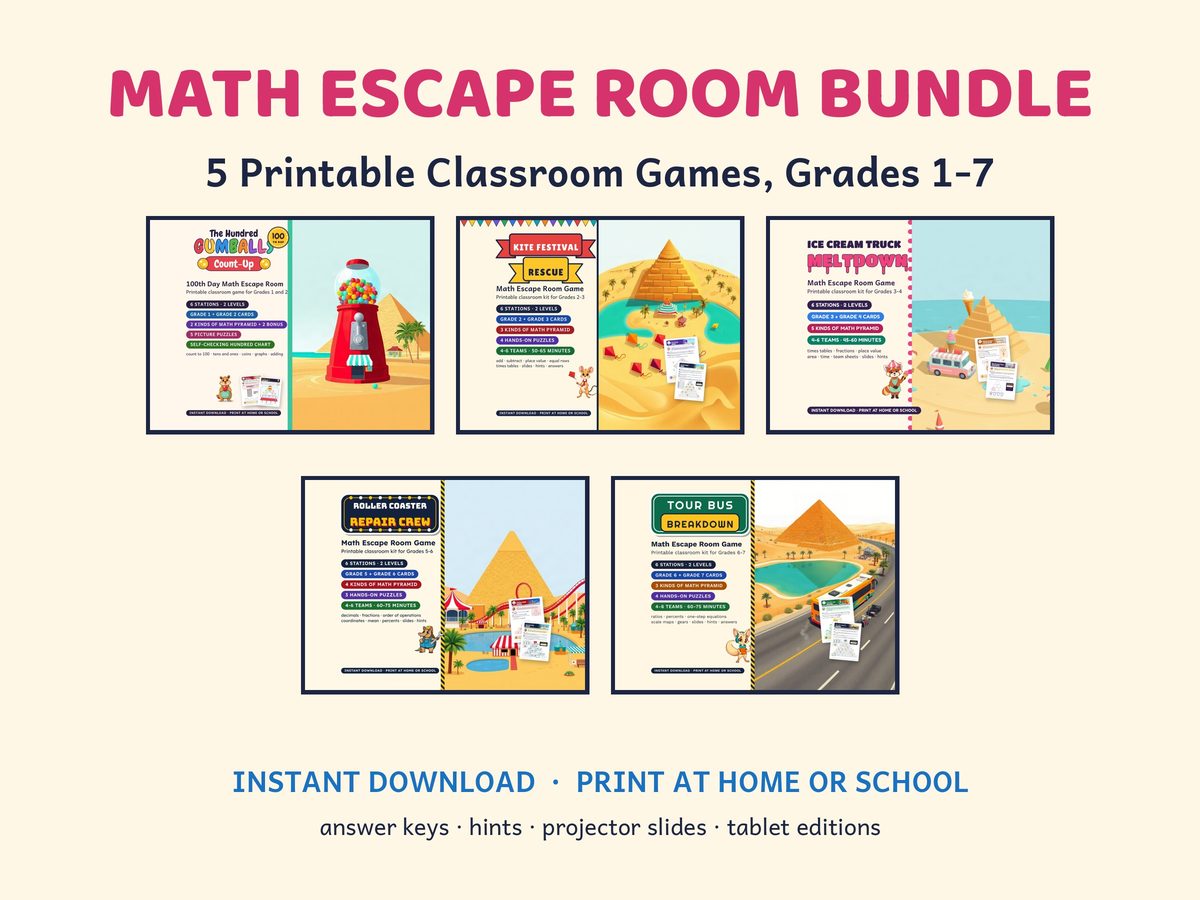
Math Escape Room Bundle, Grades 1 to 7
Five printable classroom math escape rooms in one download, from Grade 1 to Grade 7. Cheaper than buying them one by one.
See it on EtsyAs an Amazon Associate we earn from qualifying purchases. Cover images are the ones we have on file; the book you receive may show a slightly different cover.
Designed by Creouts Publishing using original prompts and AI (Claude by Anthropic). Illustrations made with AI image tools. Digital download: nothing is shipped.
More field notes
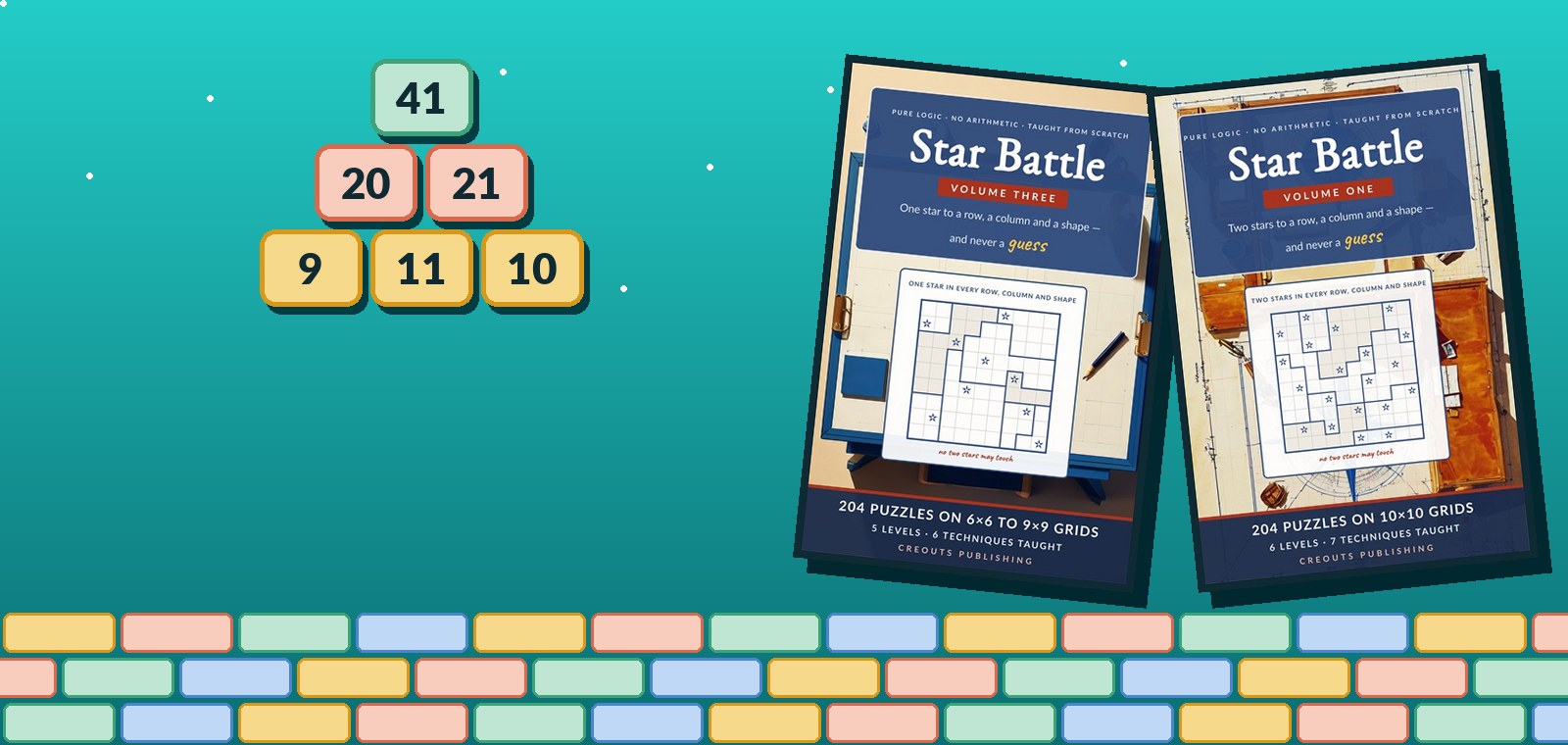
How to Solve a Star Battle Puzzle, One Star at a Time
Place stars so every row, column and region has one, and no two stars touch. A 5x5 puzzle solved in five moves, every move drawn.
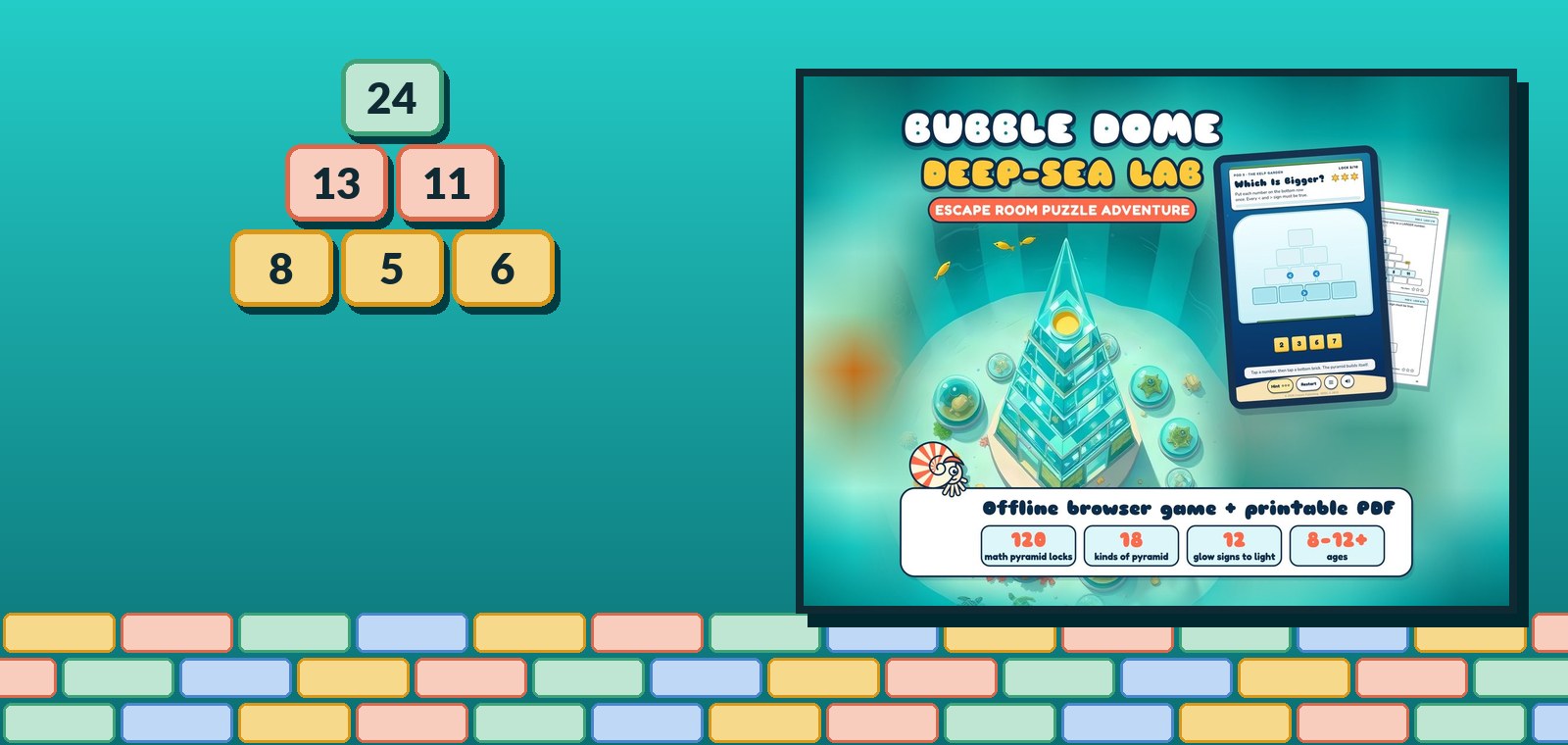
Bubble Dome Deep-Sea Lab: What It Can Do for Players
Bubble Dome Deep-Sea Lab (Ages 8 to 12): what is in it, what players can get out of it and how to run it.

The Great Zombie Snooze: A Mini Golf Course Full of Sleeping Zombies
The slush machine made a new flavour and everybody turned green. A funny, not scary, printable zombie escape room for ages 10 to 14 and the family.

Honeycomb Hive Rescue: What It Can Do for Players
Honeycomb Hive Rescue (Ages 7 to 10): what is in it, what players can get out of it and how to run it.

Winter Countdown Escape: The Story and a Look Inside
Winter Countdown Escape: the story, how a chamber plays and a look at a real page.

Catching Yawns: Doubling, Halving and a Counted-Twice Brick
In one lock a yawning brick counts twice. That means doubling on the way up and halving on the way down. Quick tricks for halving in your head, too.

Snow Owl Ice Camp: What It Can Do for Players
Snow Owl Ice Camp (Ages 8 to 12): what is in it, what players can get out of it and how to run it.
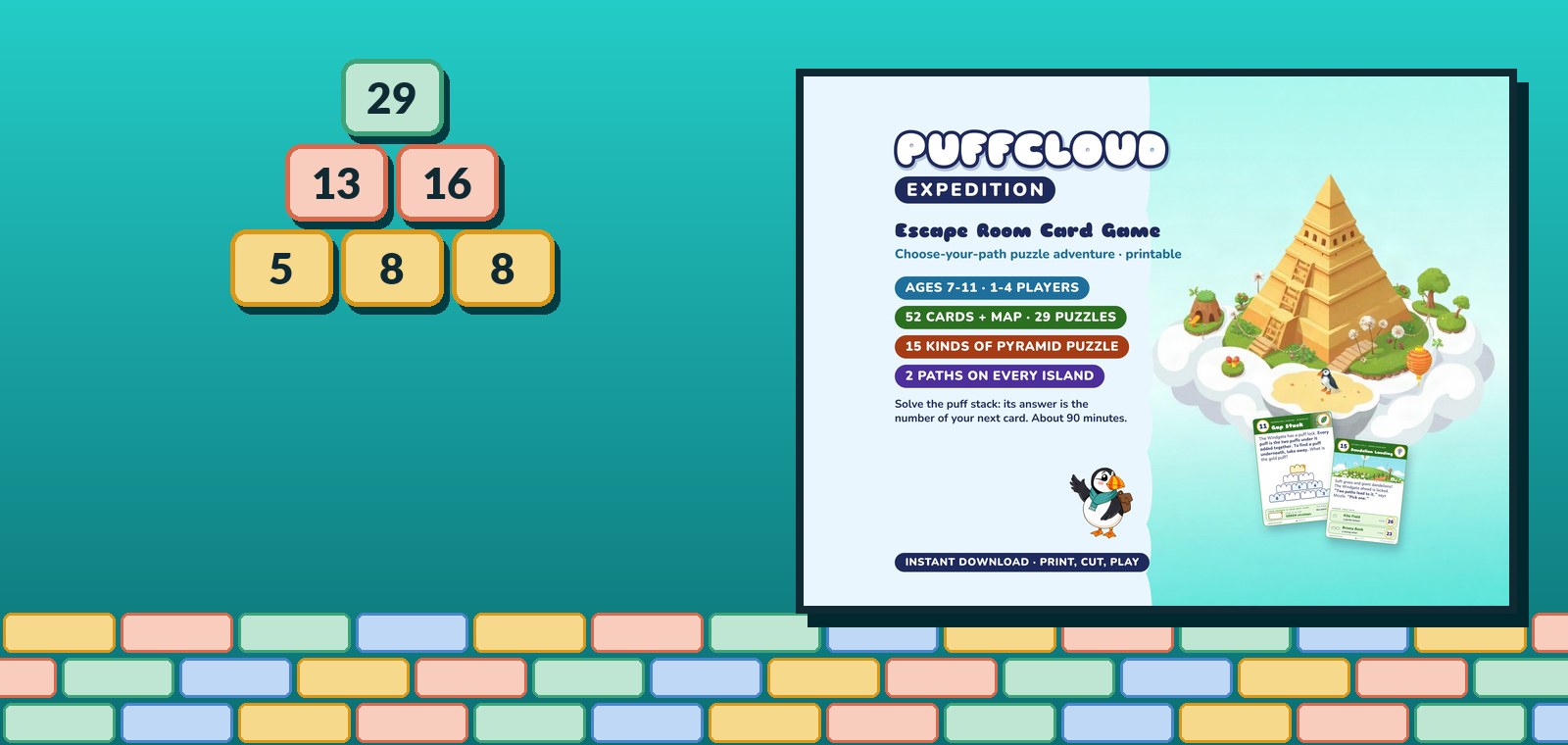
Puffcloud Expedition: An Escape Room You Play With 52 Cards
The answer is the number of the next card. How a printable escape room card game works, why every answer is checked twice, and how you choose your path.
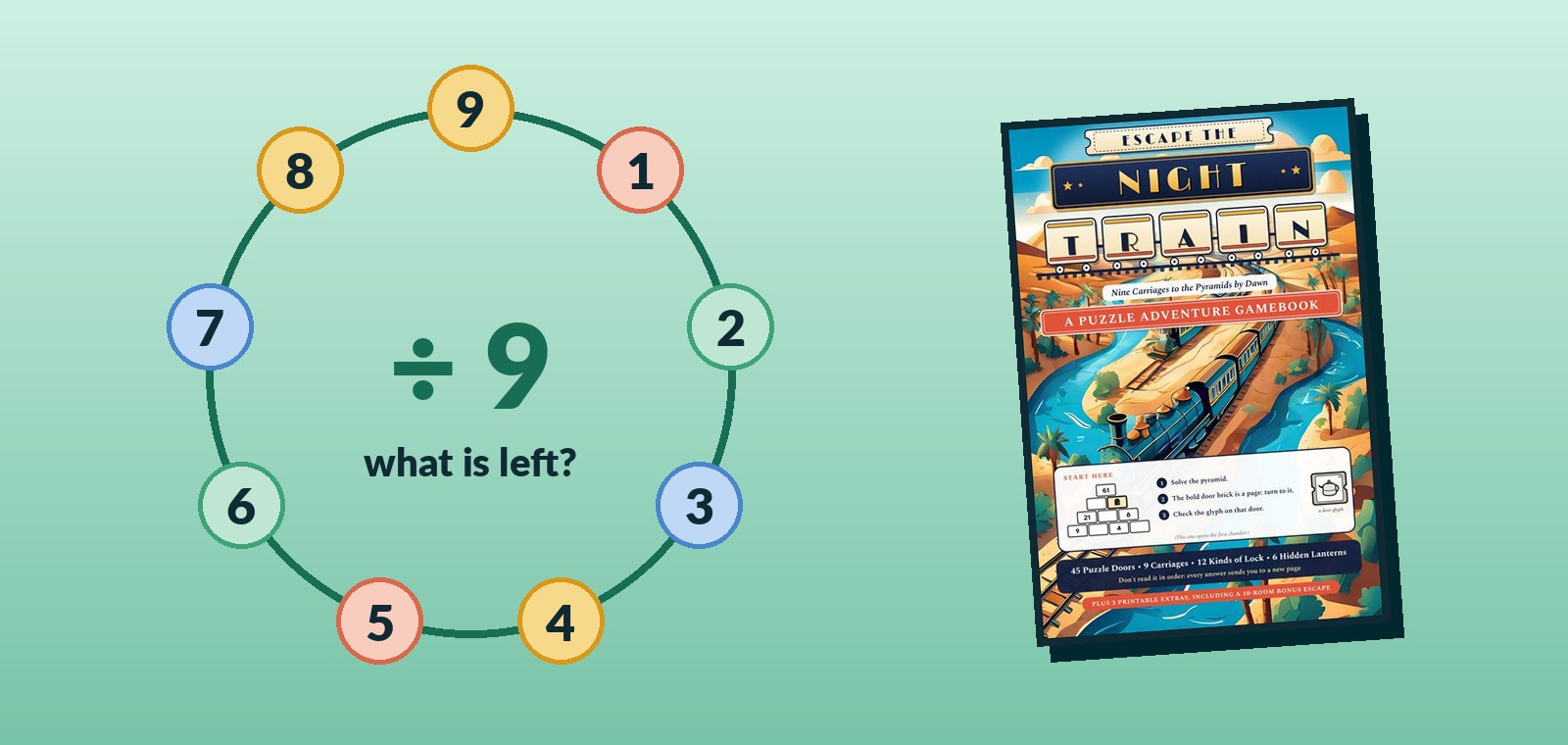
Casting Out Nines: Check Any Sum in Ten Seconds
Shrink every number to one digit, redo the sum on the small numbers, and compare. A fast check for adding, subtracting and multiplying, and the mistakes it cannot see.
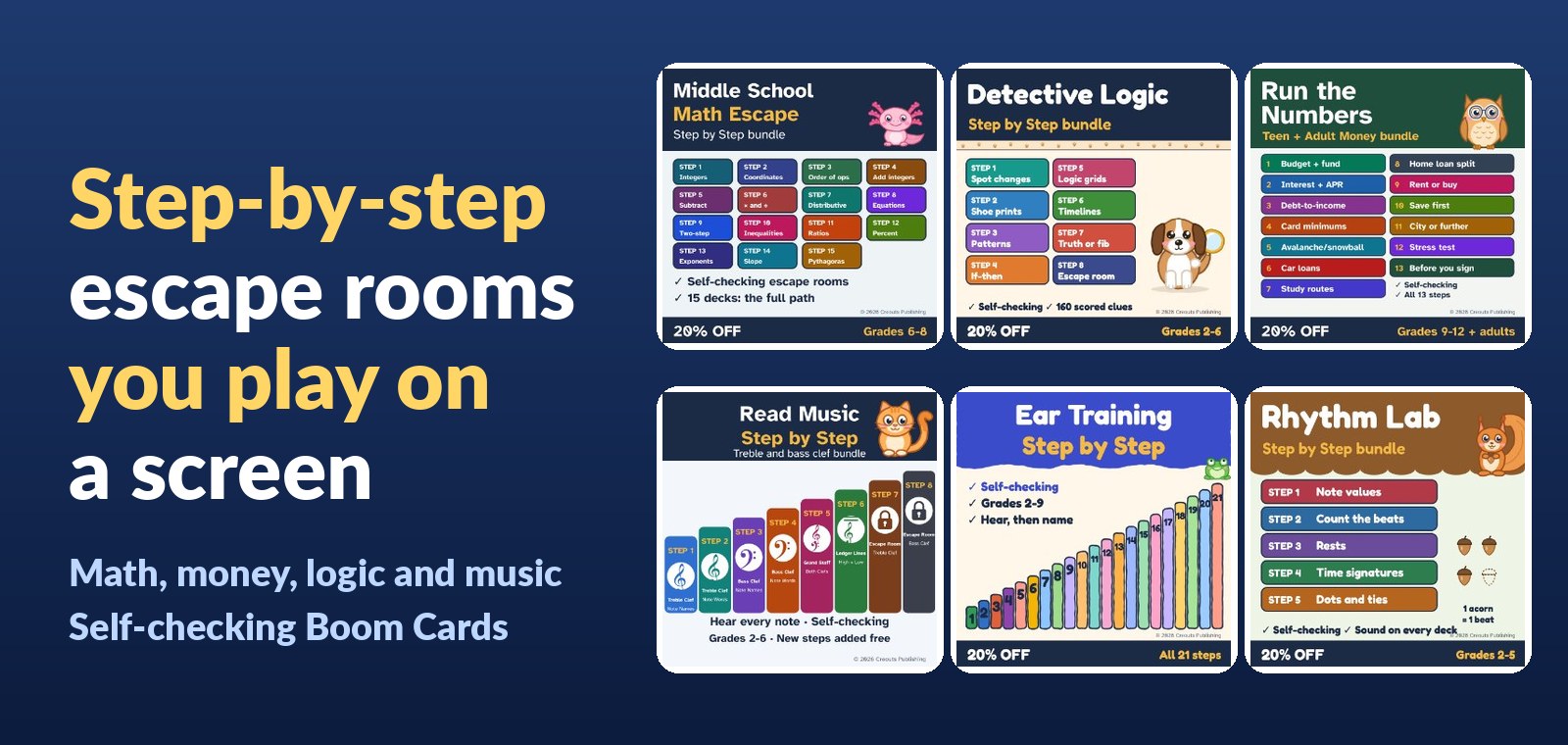
Our Boom Learning Store: Step-by-Step Escape Rooms for Math, Money, Logic and Music
A tour of our Boom Learning store: seven step-by-step bundles of self-checking escape-room decks, what a card looks like, and eight free samplers to try first.
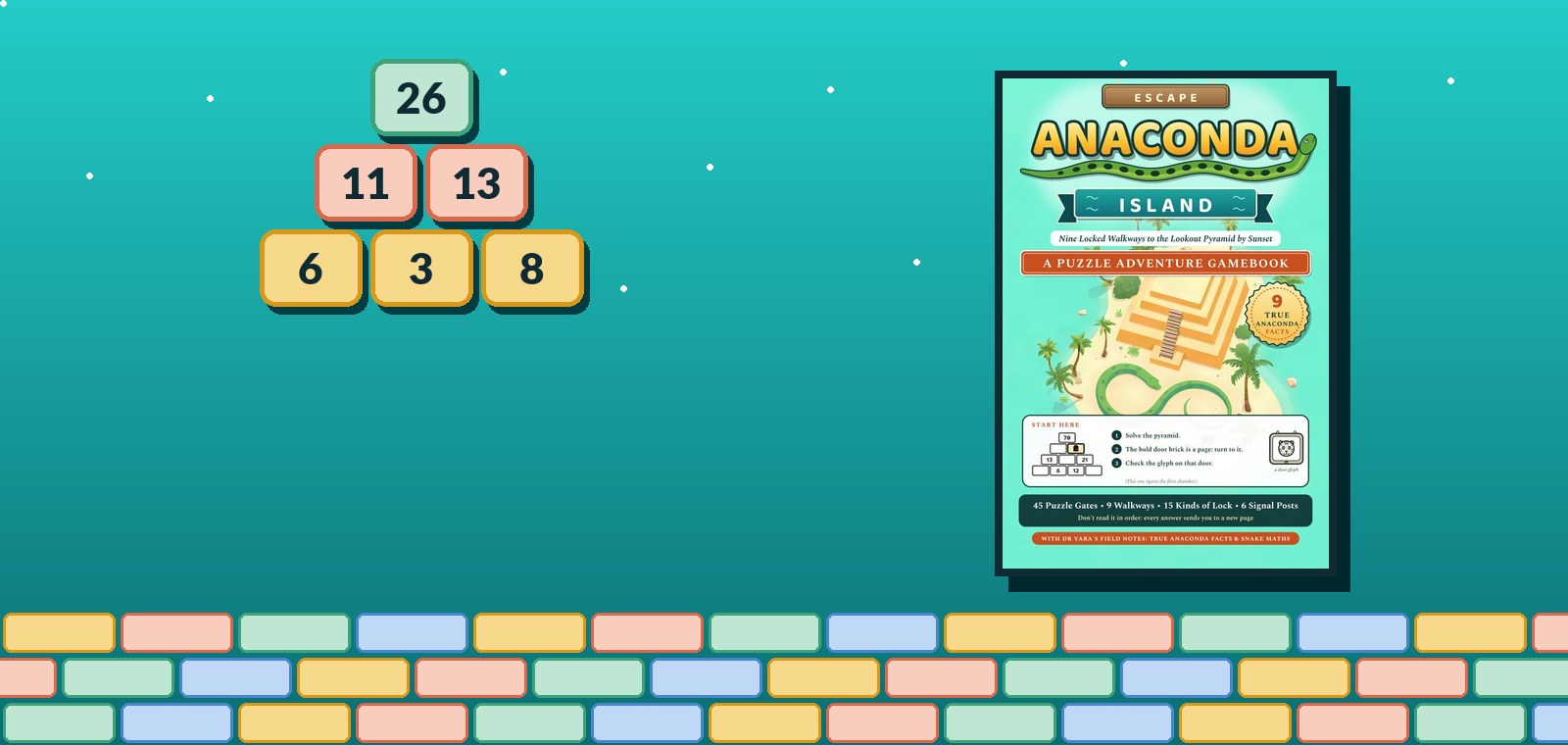
River Rise: Find the Rise, Then Climb the Pyramid
On a rising river every brick gets a little extra. When the gauge has no number, find the rise first. A lock from Escape Anaconda Island, in a made-up example.
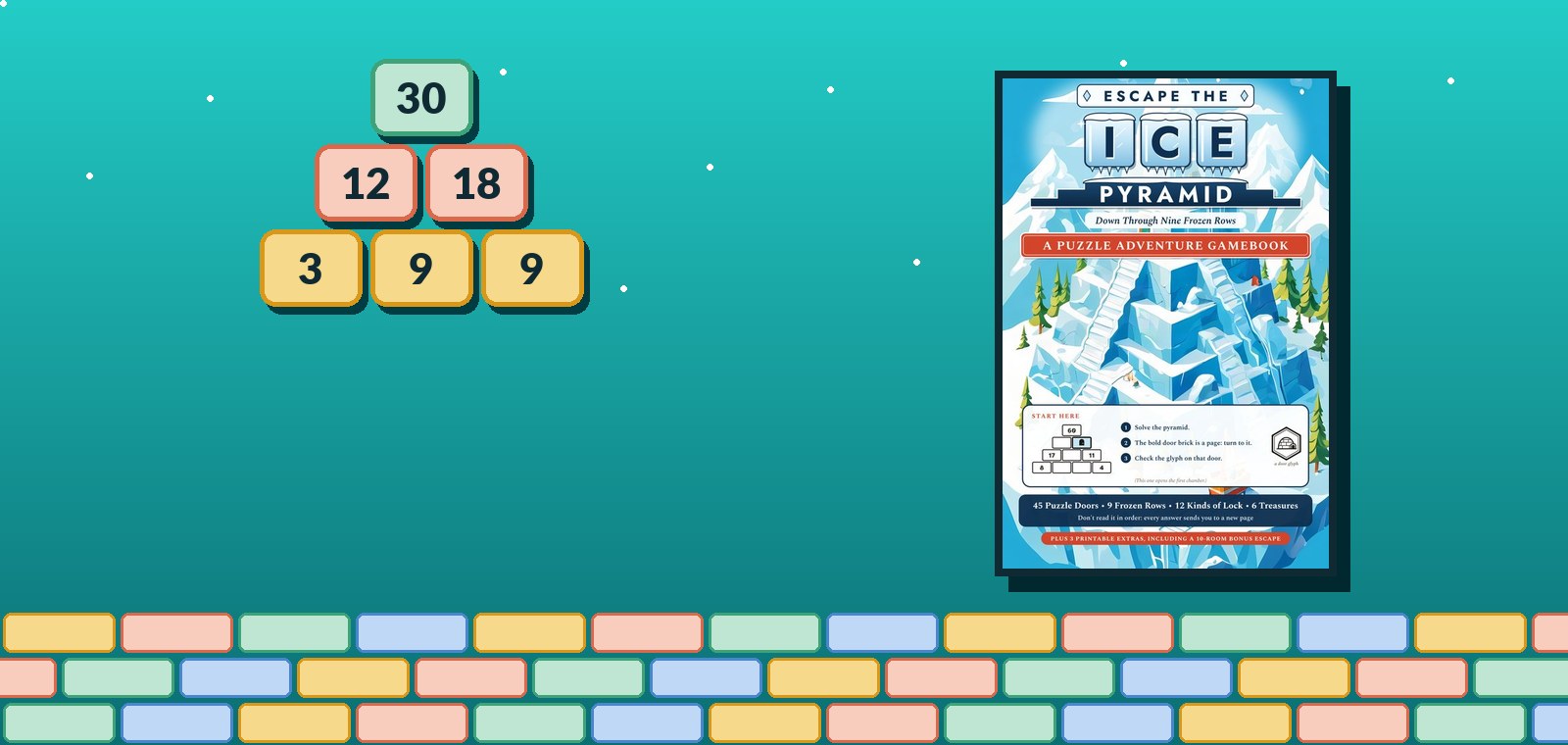
Escape the Ice Pyramid: The Story and a Look Inside
Escape the Ice Pyramid: the story, how a chamber plays and a look at a real page.
Creouts Publishing
Puzzle books, printable games and, soon, games you can play here.
As an Amazon Associate we earn from qualifying purchases.
Amazon and Etsy are trademarks of their owners. Creouts is not affiliated with Etsy.