
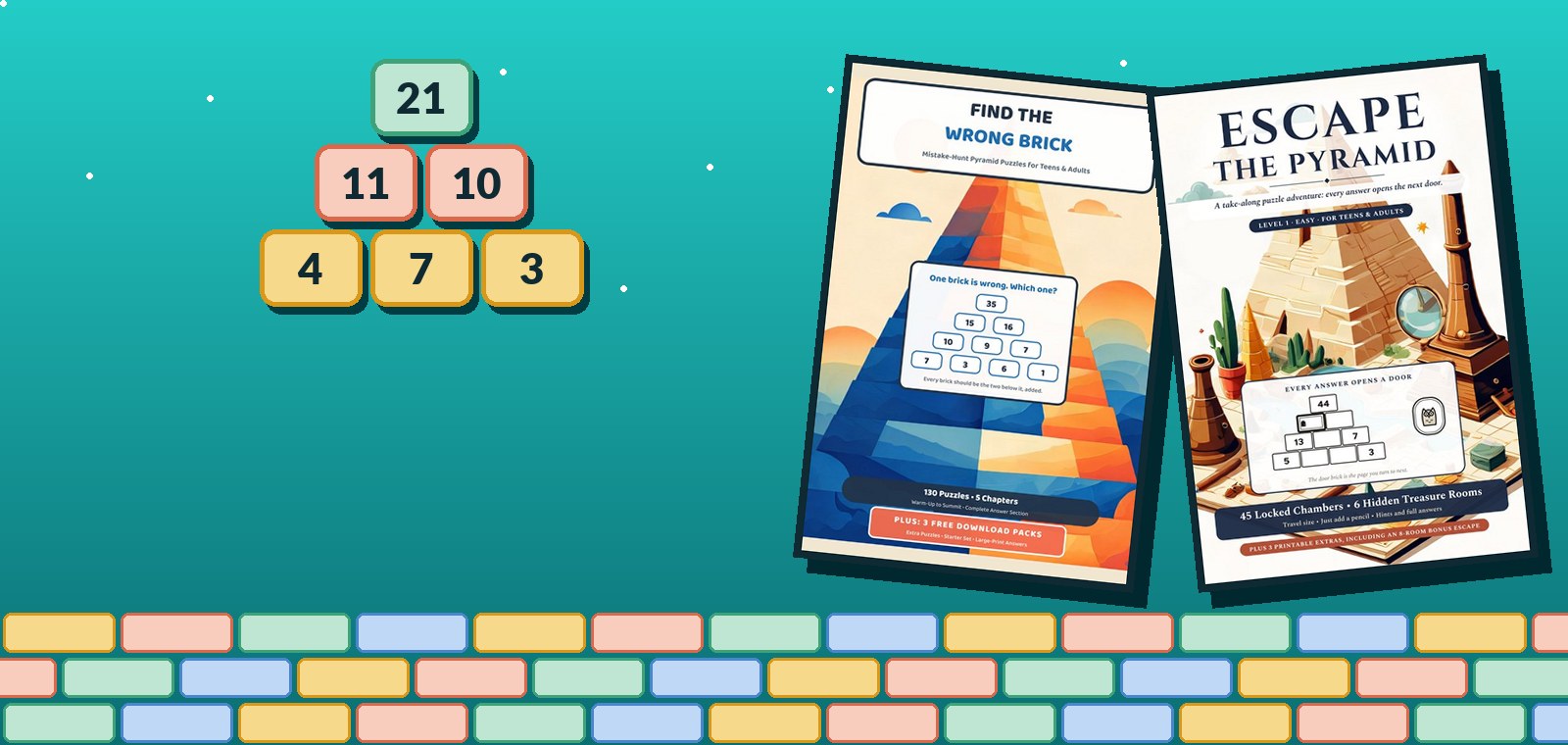
You have added a row of a pyramid and you are not sure. Adding it all again is slow. There is a faster test that takes about five seconds, and it only needs to know whether a number is odd or even.
Three facts
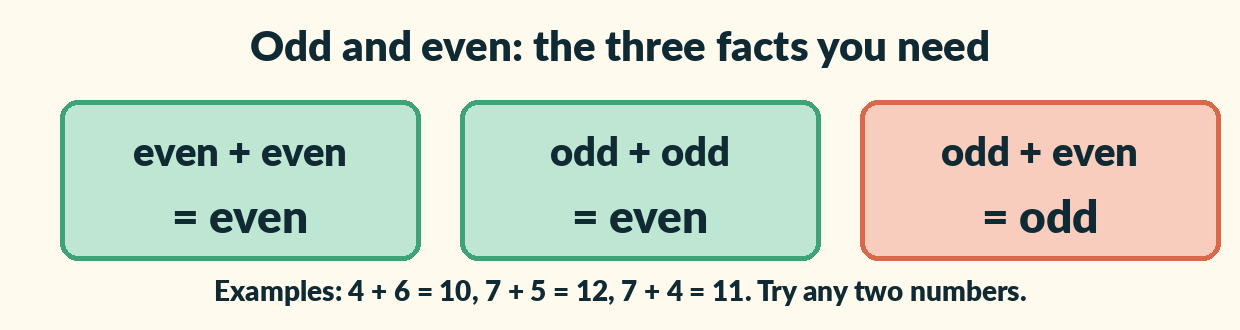
Even numbers end in 0, 2, 4, 6 or 8. Odd numbers end in 1, 3, 5, 7 or 9. Only the last digit matters, so 4,827 is odd however big it looks.
Using it on a pyramid
Here is a pyramid someone has filled in. One brick in the middle row is wrong. We will find it using only odd and even.
One brick may be off
The bottom row is 4, 7 and 3. The middle row says 11 and 9, and the top says 21.
Check the left brick
4 is even and 7 is odd. Even plus odd is odd, and 11 is odd. That fits.
Check the right brick
7 and 3 are both odd. Odd plus odd is even. But the brick says 9, which is odd. It cannot be right. (7 + 3 = 10.)
We found the mistake without adding anything. The check does not tell you the right number, only that this brick is wrong. For the right number, add it up: 7 + 3 = 10.
The limits of the check
The check catches a mistake only when the wrong answer has the wrong odd-or-even. If you are 2 out, or 10 out, the number is still the right kind, and the check says nothing. So a pass means probably fine and a fail means definitely wrong. It is a quick filter, not a proof.
Where else it helps
- Missing bricks. If the top is odd and one bottom brick is missing, work out the odd or even you need before you try numbers.
- Wrong-brick hunts. One brick in the wall is false. Run the check along each row to find the pair that disagrees.
- Everyday sums. 37 + 48 cannot end in an even number. It must be odd. 85 is, so you are on track.
Books mentioned
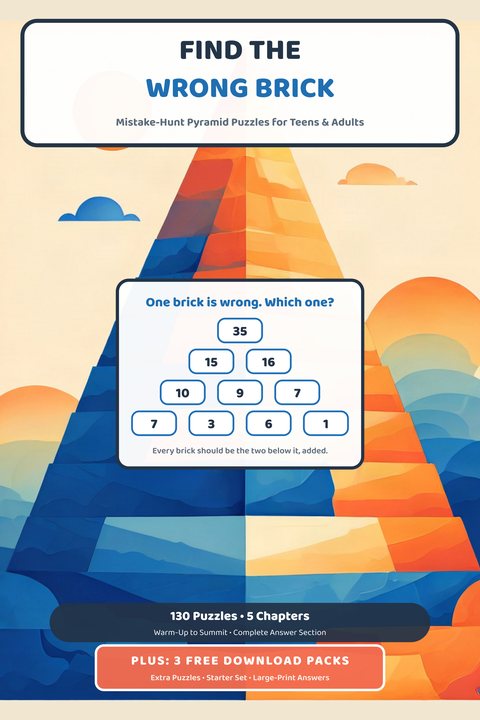
Find the Wrong Brick
130 mistake-hunt puzzles for teens and adults: one brick in each pyramid is wrong, and you find it. The whole book is this one kind of puzzle.
View on Amazon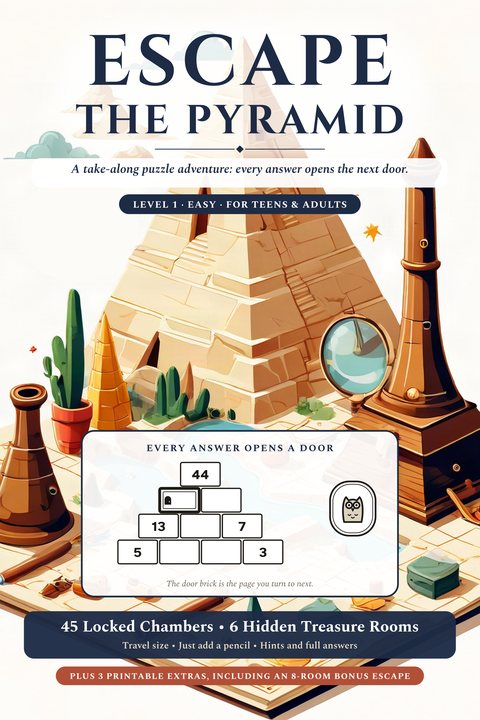
Escape the Pyramid, Level 1
A math escape book with 45 locked chambers. Number pyramids and wrong-brick hunts are two of its 5 puzzle kinds, so the book is not all pyramids.
View on AmazonAs an Amazon Associate we earn from qualifying purchases. Cover images are the ones we have on file; the book you receive may show a slightly different cover.
More field notes
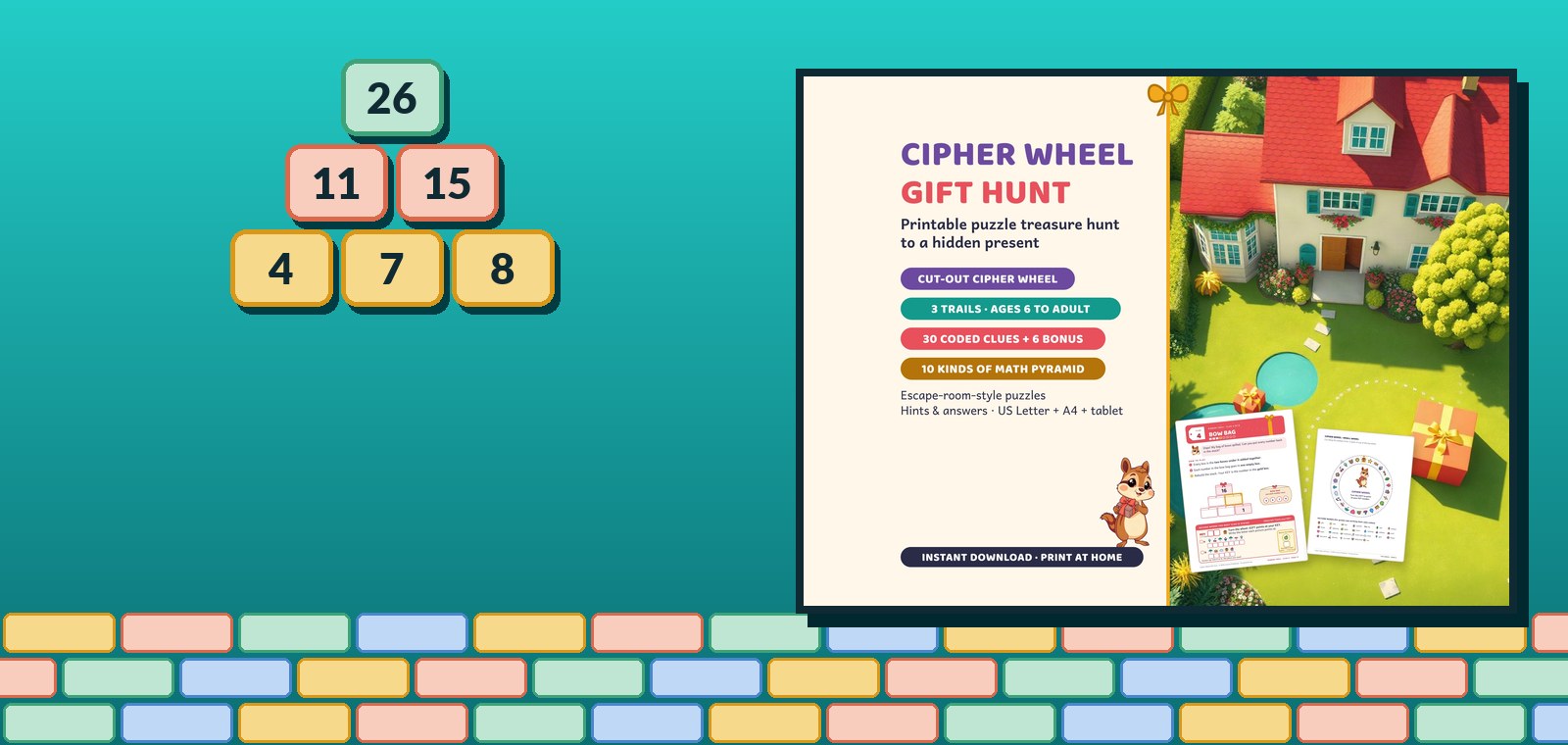
Cipher Wheel Gift Hunt: How a Present Becomes a Puzzle Trail
Solve a puzzle, set a cut-out wheel, decode where the next clue hides. Here is how the Cipher Wheel Gift Hunt works, with its 15-second video.
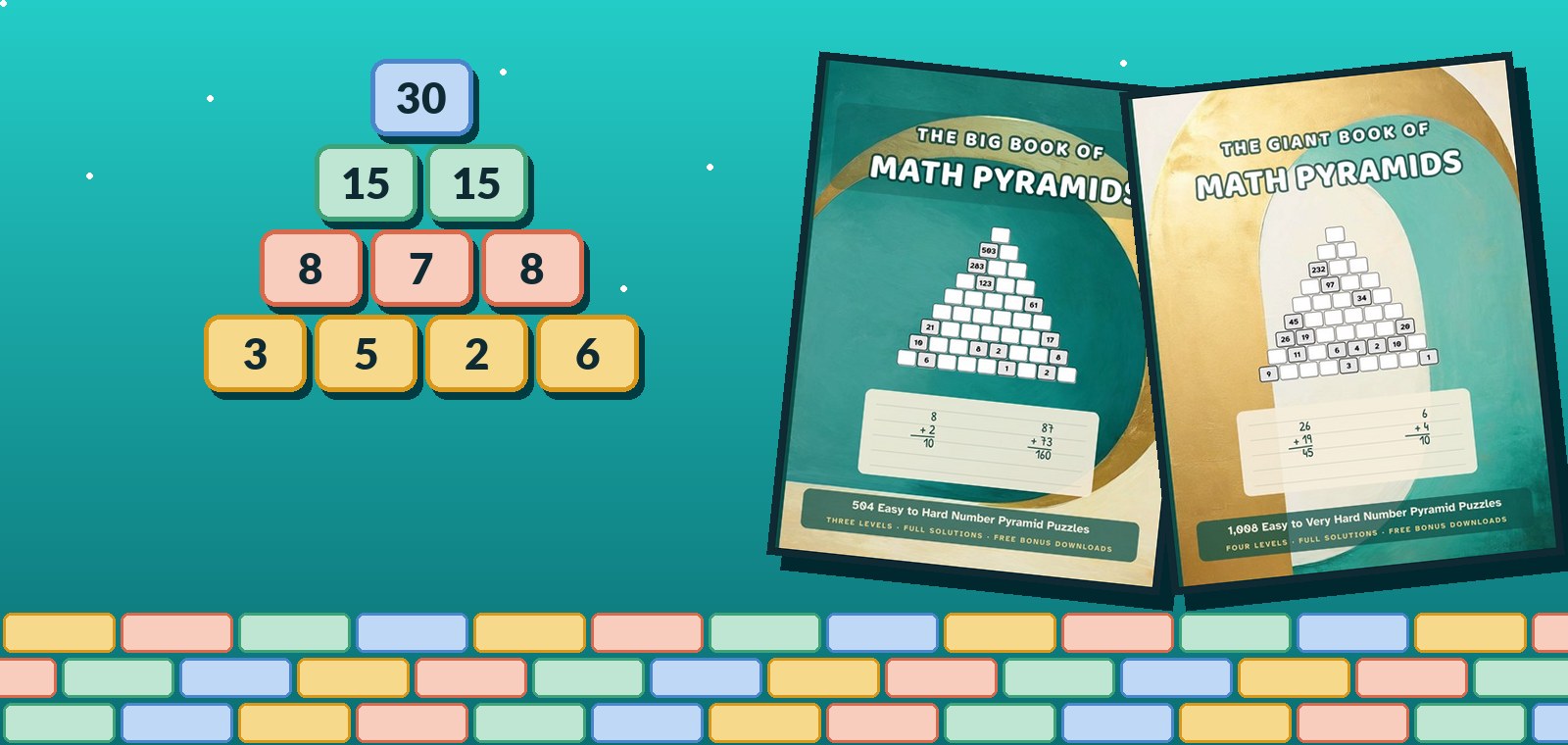
The Top-Brick Shortcut: Why 1, 3, 3, 1 Makes Pyramids Easy
Skip the middle rows. In a four-row pyramid the top is 1, 3, 3 and 1 times the bottom bricks. Why it works, and how to use it.
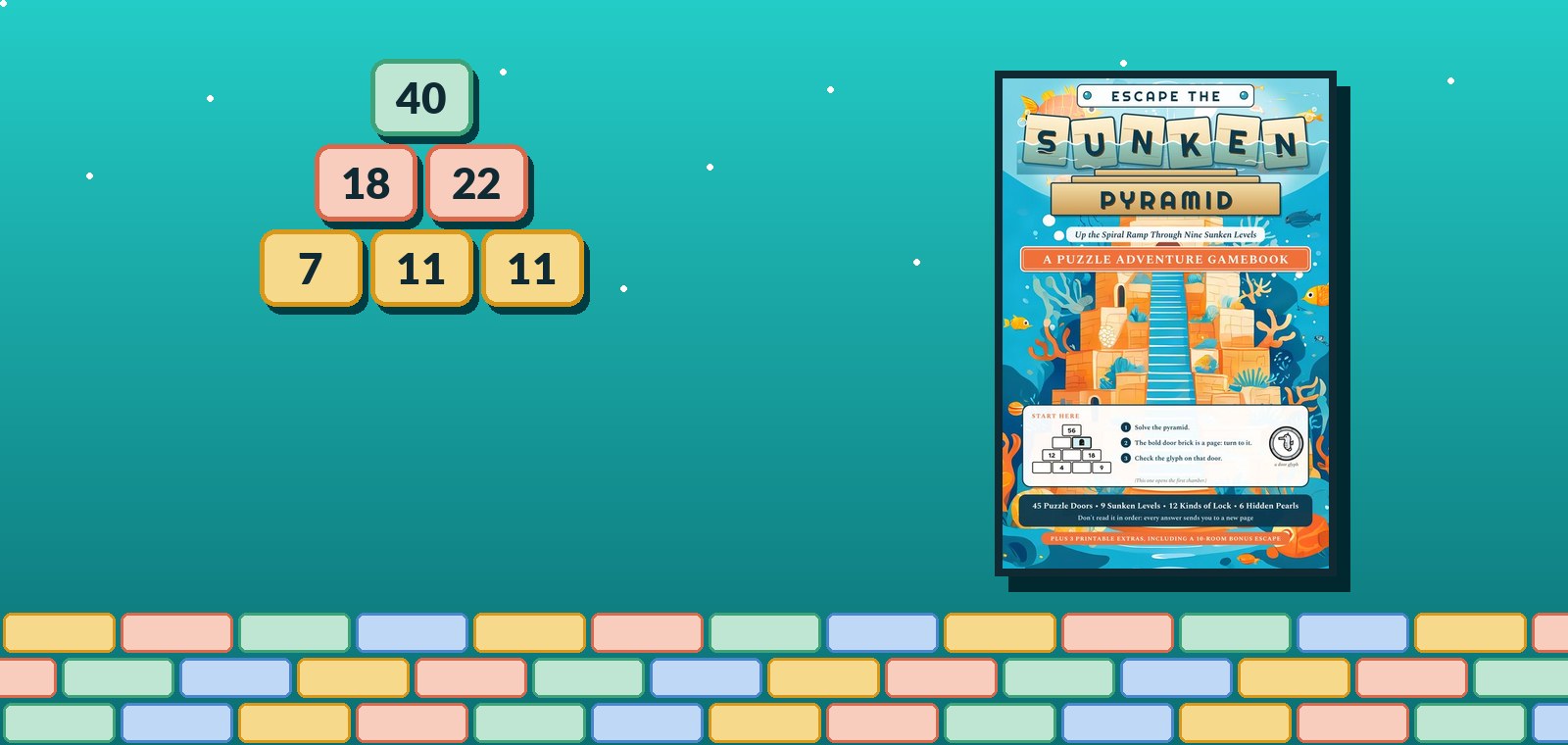
Sonar Echoes: The Buoy Lock That Gives You the Gap
In Escape the Sunken Pyramid some bricks carry a sonar buoy that shows the gap between two bricks. How to use a gap and a sum together.
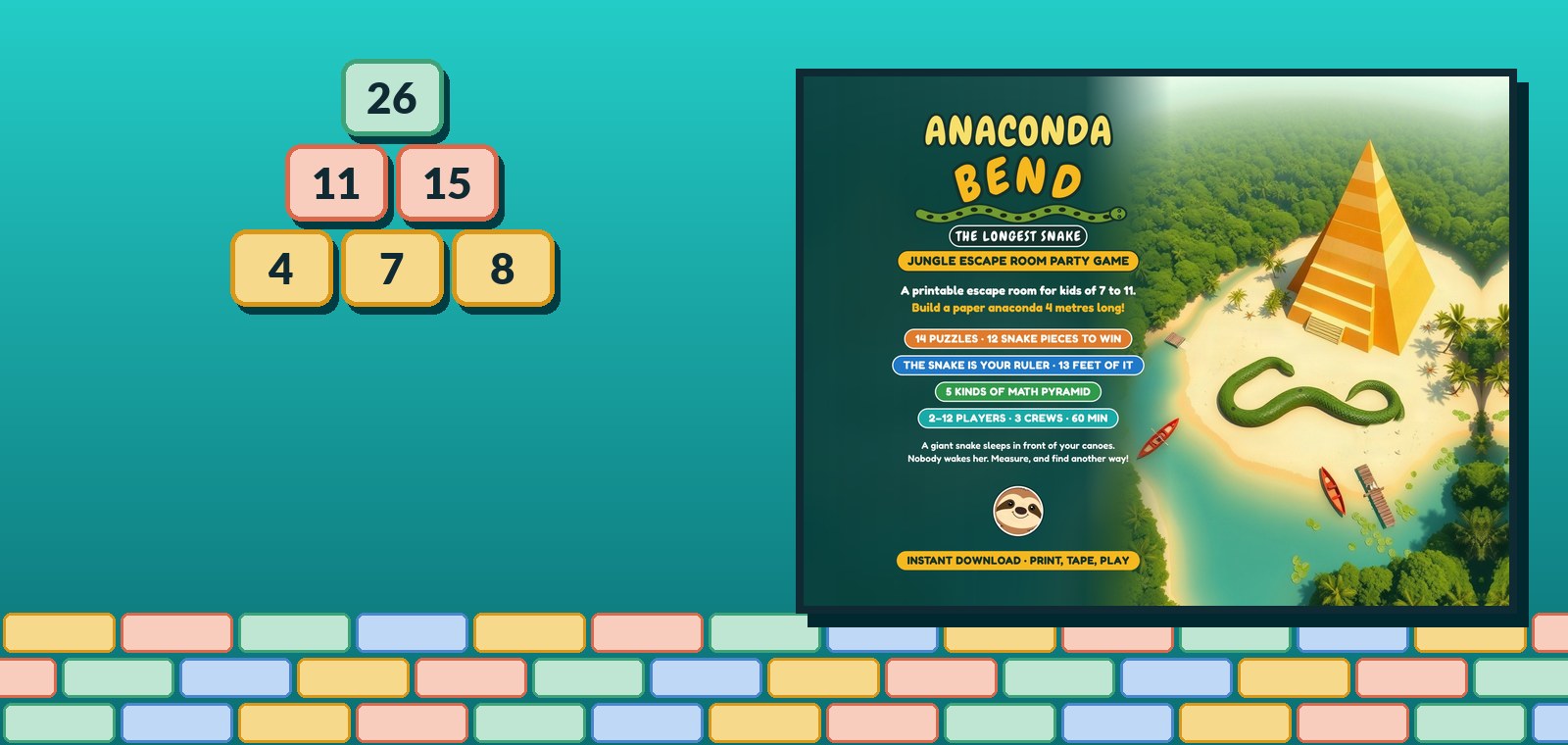
Anaconda Bend: Build a Paper Snake 4 Metres Long, Then Measure With Her
A giant anaconda sleeps across the river, and the only way home is a lock opened by measuring. A tour of the Anaconda Bend kit for ages 7 to 11, with its video.
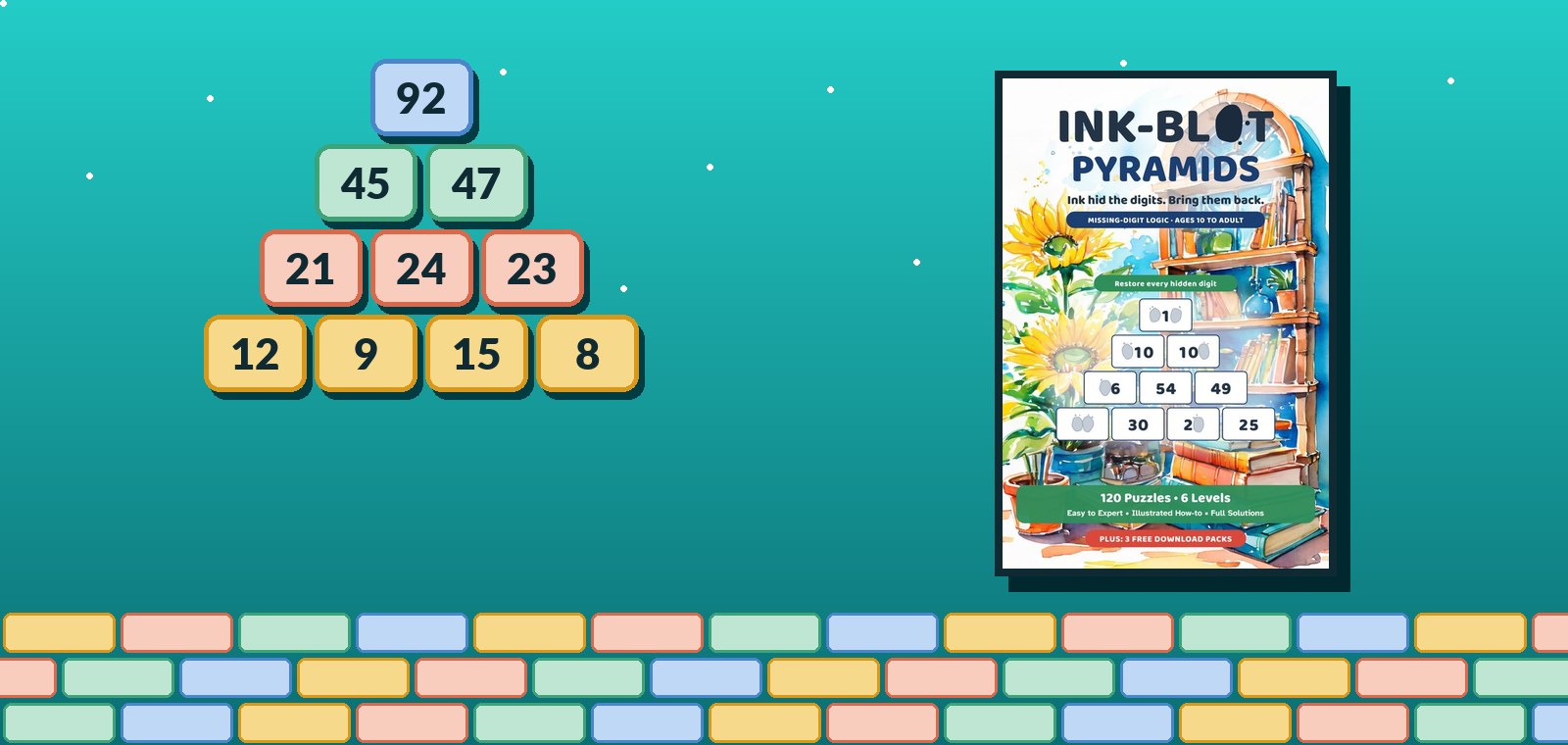
Ink-Blot Pyramids: Find the Digit Under the Ink
Every brick is printed, but ink has covered some of the digits. A worked sample, a 20-second video and a pyramid to try yourself, with the one rule you need to read the hidden digits.
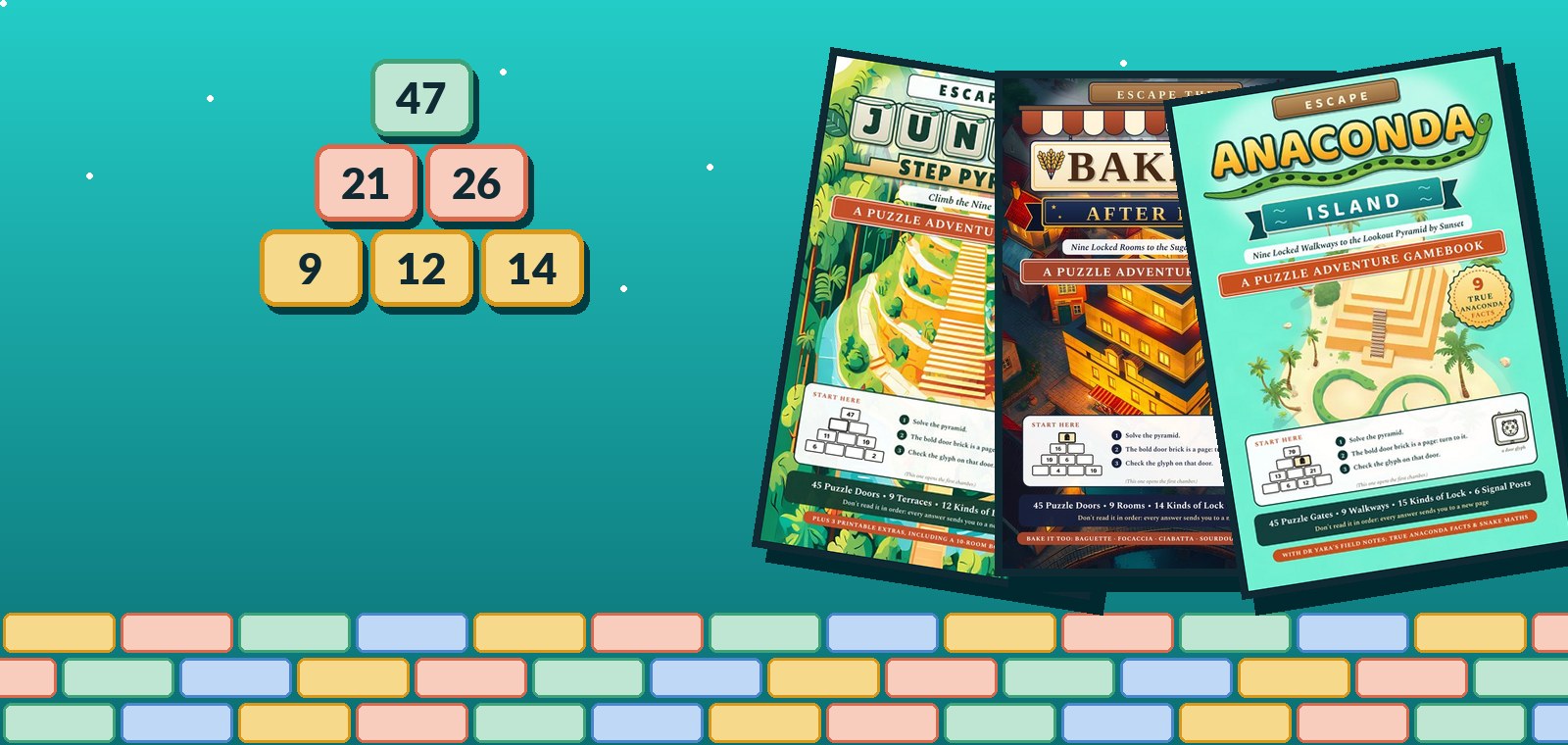
How a Puzzle Adventure Gamebook Works (and Why You Don't Read It in Order)
Solve the puzzle, read the door brick, turn to that page. Here is the whole game of a puzzle adventure gamebook in three moves, with a worked example.
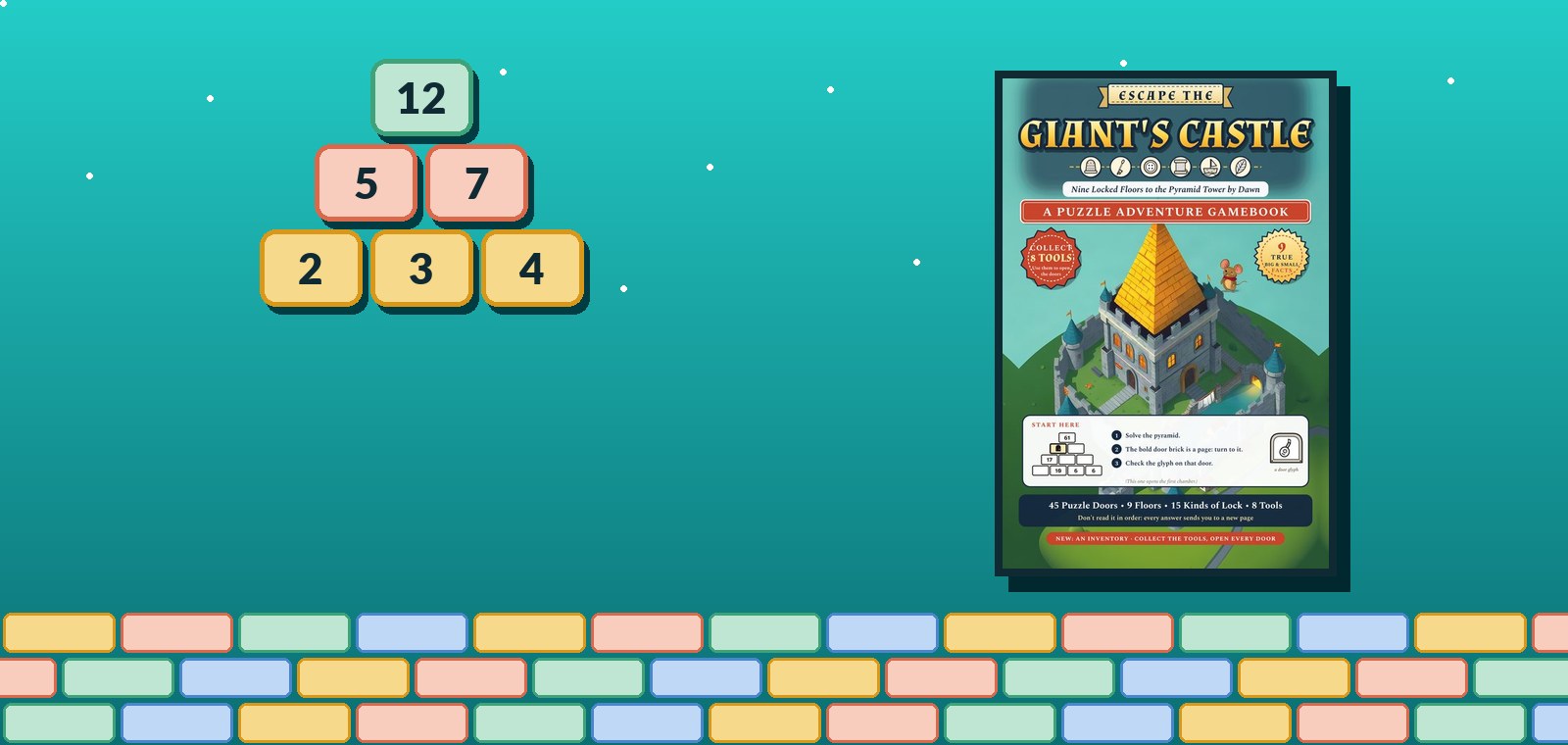
Tool Doors: How the Inventory Works in Escape the Giant's Castle
Six castle mice lend you numbered tools, and some doors open only when you add a tool's number. Learn the new rule with a drawn, step-by-step example.
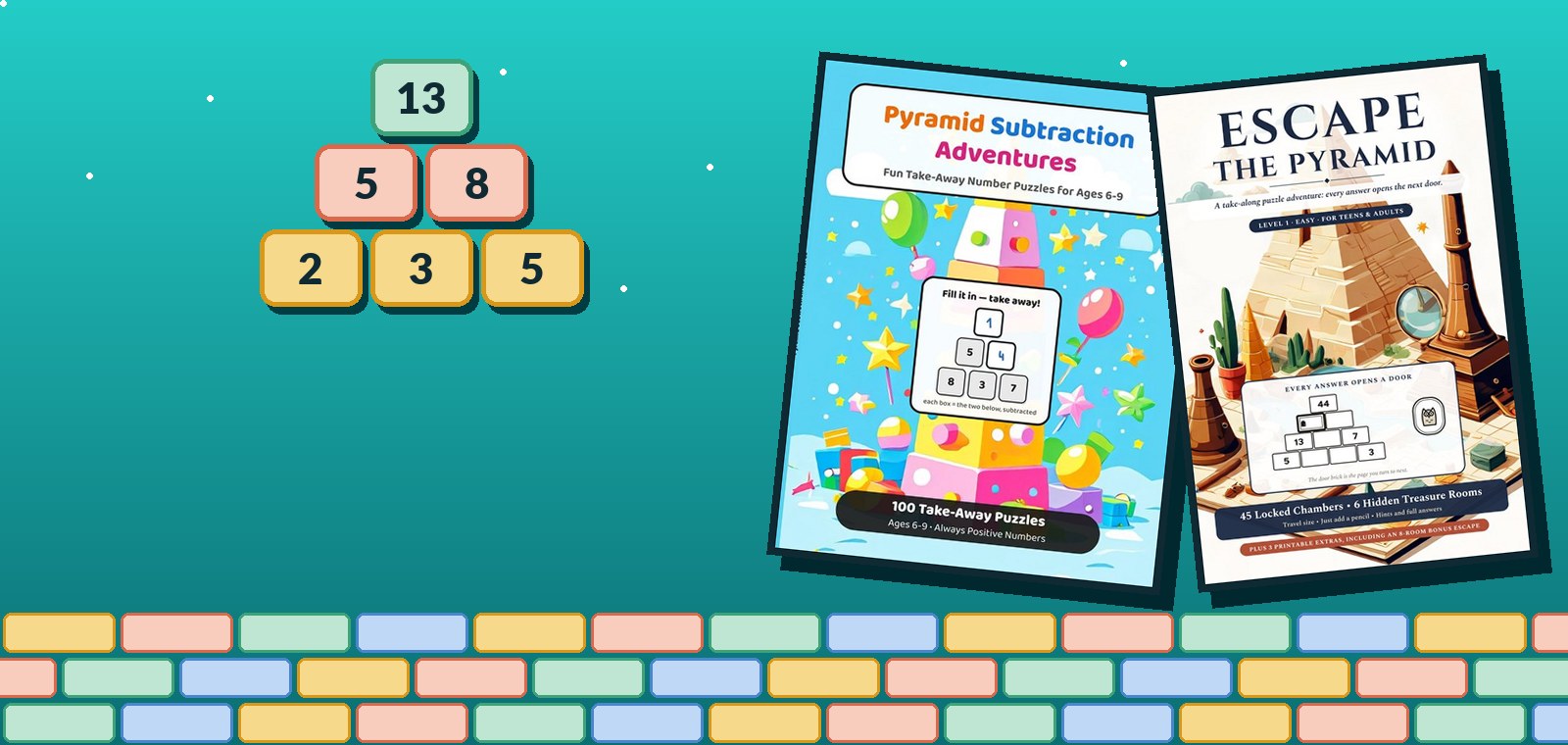
Better Ways to Learn Addition and Subtraction
Flashcards have their place, but understanding comes first. Five friendly strategies, drawn step by step, plus how puzzles make the practice stick.
How to Solve a Number Pyramid, Step by Step
Two moves are all you need: add up and subtract down. Follow one real puzzle from the first brick to the top, with every step drawn.