
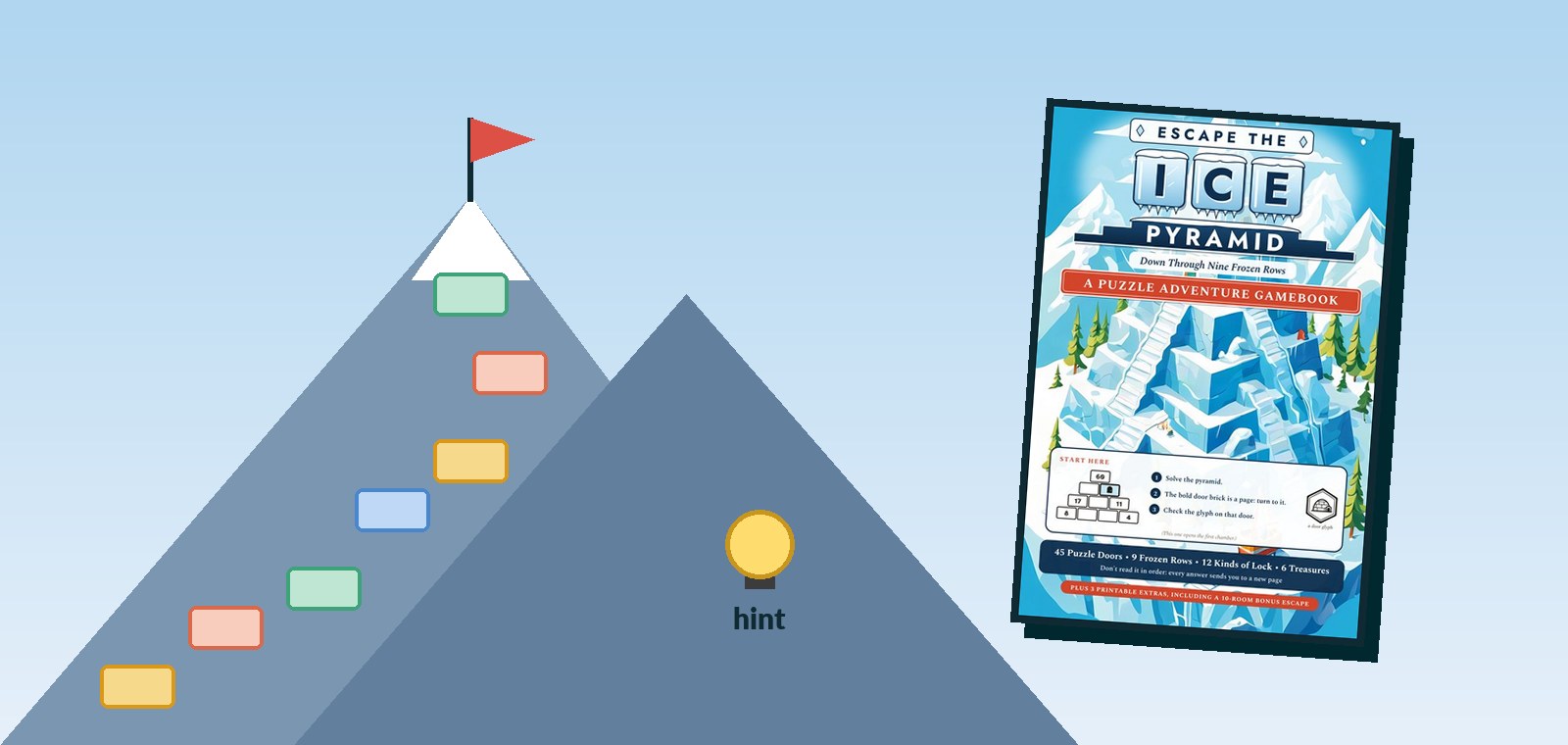
You stare at a puzzle. Nothing fits. It feels like a sign that you are bad at maths. Learning researchers see it differently: some stuck time is where learning happens. But not all of it. Here is what the studies say, and where they stop.
Hard, in a good way
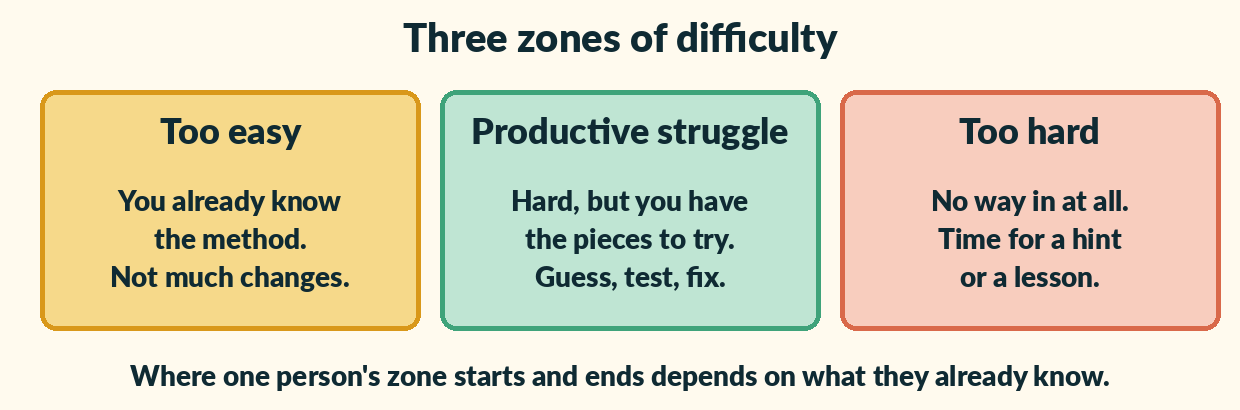
Elizabeth and Robert Bjork use the phrase desirable difficulties for things that make learning feel harder but help it last: spacing practice out, mixing kinds of problem, and testing yourself instead of rereading. They add an important warning: if a learner does not have the background knowledge or skills to respond to a difficulty successfully, it becomes an undesirable difficulty (Bjork and Bjork, 2011).
Even a wrong guess can help
Kornell, Hays and Bjork (2009) gave people questions they could not answer, such as made-up general-knowledge questions, and then showed the answer. A second group saw the question and answer together without guessing first. The guessing group learned the answers better, even though their guesses were wrong. The authors suggest that taking challenging tests, instead of avoiding errors, may be one key to effective learning (Kornell, Hays and Bjork, 2009). Note what happened next in that study: the right answer was shown.
Try first, then be taught
Manu Kapur and colleagues call it productive failure: students attempt a hard problem on a topic they have not been taught yet, usually fail to reach the standard method, and then a teacher builds on their attempts and shows the method. In 2021 Sinha and Kapur combined the results of 53 studies with 166 comparisons, mostly in mathematics and science, in a meta-analysis in the Review of Educational Research. As reported by phys.org, problem solving before instruction tended to beat instruction first.
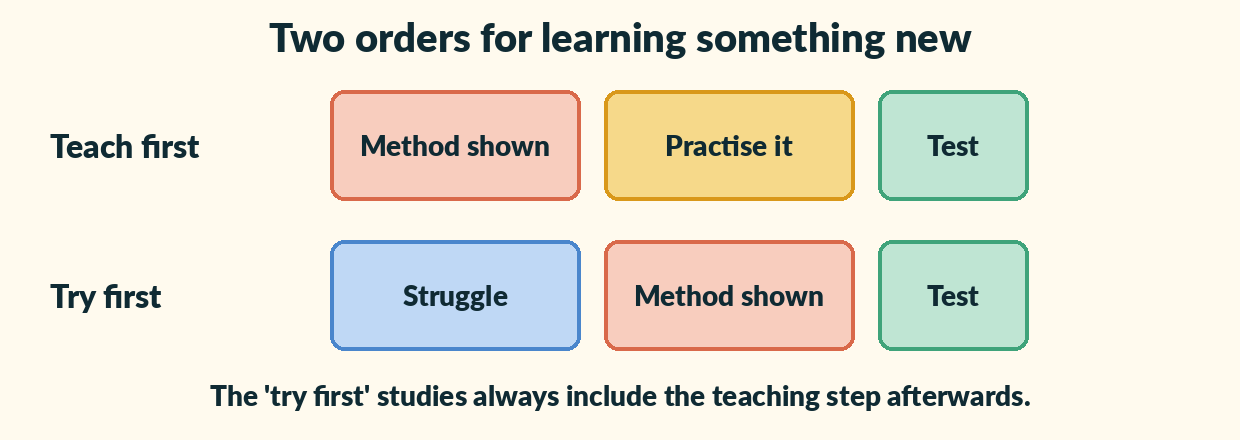
The same report states the limits plainly. The approach needs some prior knowledge, it showed smaller benefits for primary school students than for secondary students and undergraduates, and instruction has to follow, showing why the students' own solutions missed the target. Most of the studies covered science, maths and medicine, not every subject. So the research does not say that more struggle is always better.
A hint ladder
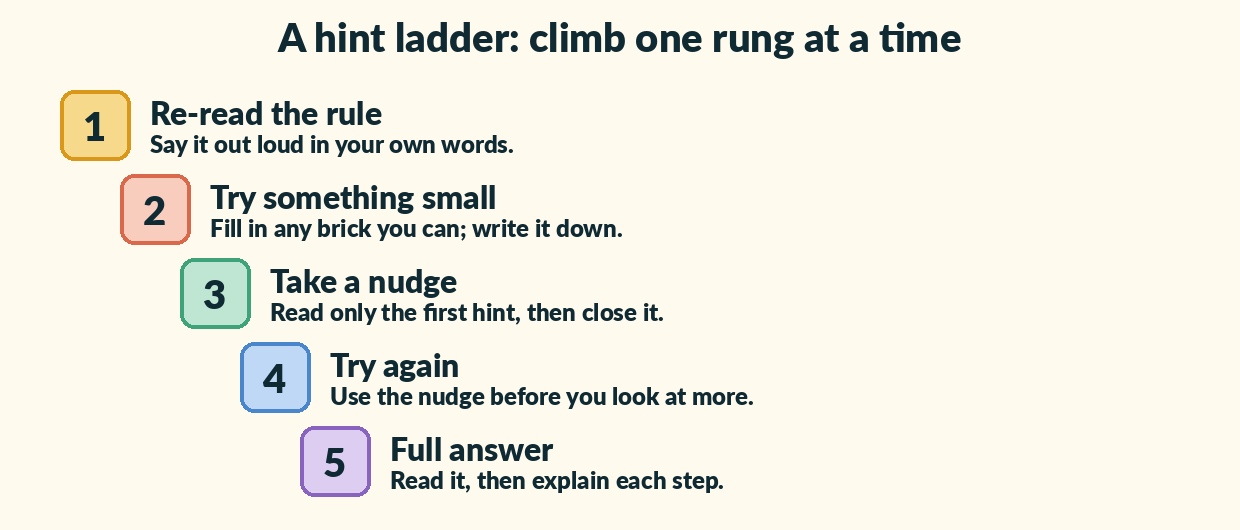
None of these studies measured how many minutes to stay stuck, so there is no magic number. The ladder below is our practical suggestion, built on the ideas above: try something real first, take the smallest help that works, and finish by making sense of the answer.
- Set a timer. A few minutes of real trying, pencil moving. Many families pick five to ten for a puzzle, and a younger child may need less. Adjust it to the person.
- Stuck with no ideas at all? That is the too-hard zone. Take a hint sooner. Frustration without a foothold is not productive.
- Take the smallest hint first, then try again before reading the next one.
- Read the full answer when you must, then explain each step in your own words, and come back to a similar puzzle a few days later.
- For grown-ups helping: ask what they have tried, rather than giving the method.
Where a puzzle adventure fits
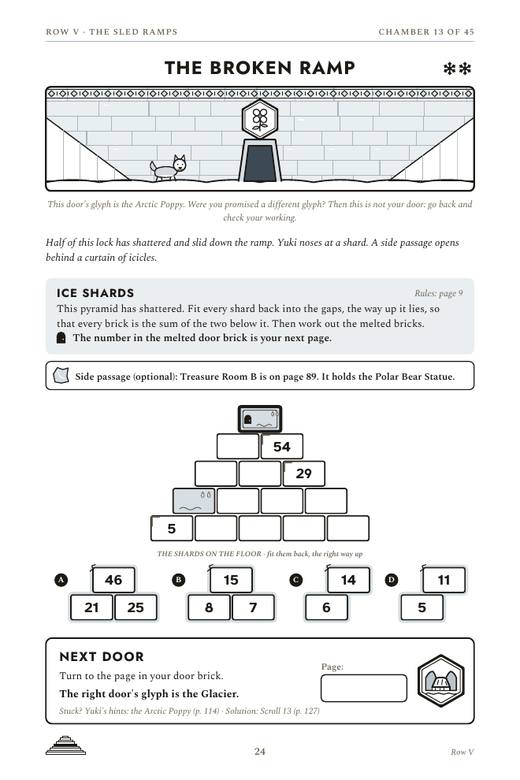
Escape the Labyrinth and Escape the Pyramid, Level 1 are puzzle adventure gamebooks, so you do not read them in order. Each chamber is a locked number-pyramid puzzle, and the answer tells you which page to turn to. The Pyramid book has 45 locked chambers and 6 treasure rooms, with hints and full answers in the back; the Labyrinth has 45 chambers and varies the puzzle kind from door to door. In the Labyrinth and the Ice Pyramid, the box at the bottom of each chamber page points to hint and solution pages, so you can take help in small steps. They are puzzle books, not a course, and they will not replace a teacher.
Books mentioned
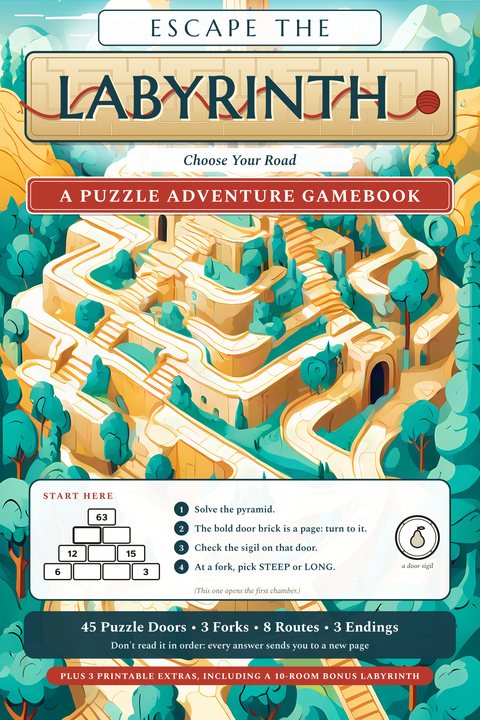
Escape the Labyrinth
A puzzle adventure gamebook with 45 locked chambers. You choose your road, and the puzzle kind changes from door to door.
View on Amazon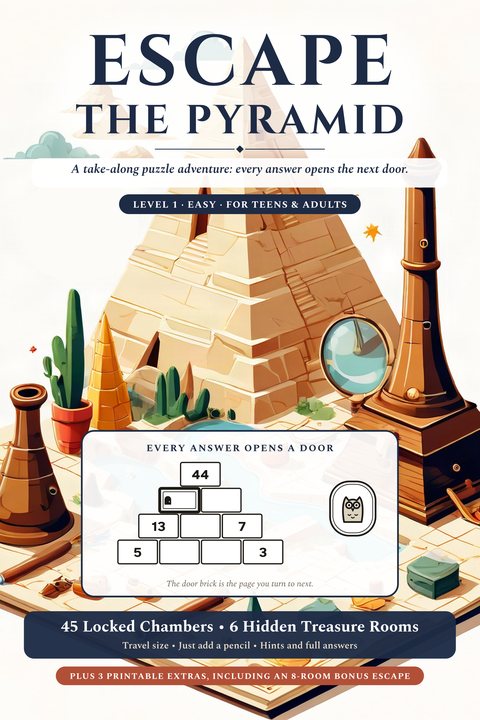
Escape the Pyramid, Level 1 (Easy)
A puzzle adventure gamebook with 45 locked chambers and 6 treasure rooms, hints and full answers in the back.
View on Amazon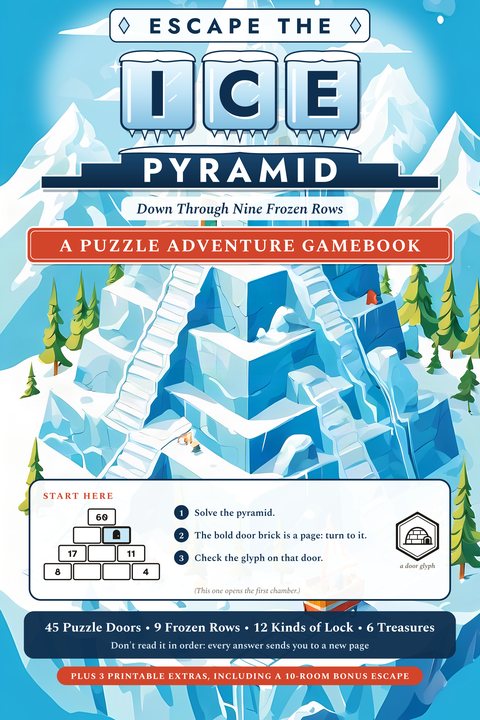
Escape the Ice Pyramid
Go down nine frozen rows through 45 locked chambers. A puzzle adventure gamebook.
View on AmazonAs an Amazon Associate we earn from qualifying purchases. Cover images are the ones we have on file; the book you receive may show a slightly different cover.
More field notes
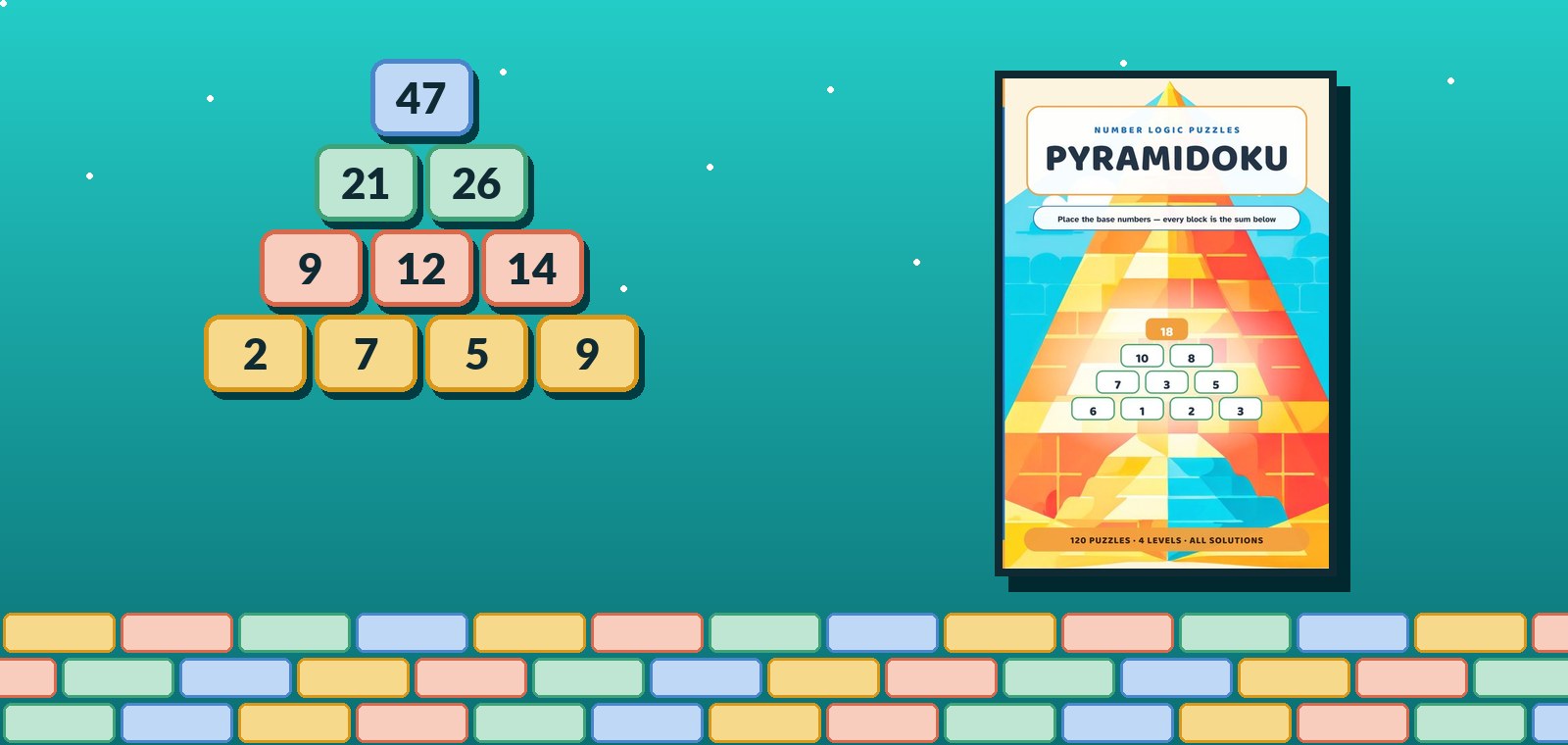
Pyramidoku: Sudoku Logic Meets a Pyramid
Place a set of different numbers along the base, each once, so the pyramid above adds up. Sudoku logic, no guessing. A worked sample, a 20-second video and a pyramid to try yourself, with the one rule you need to read the hidden digits.
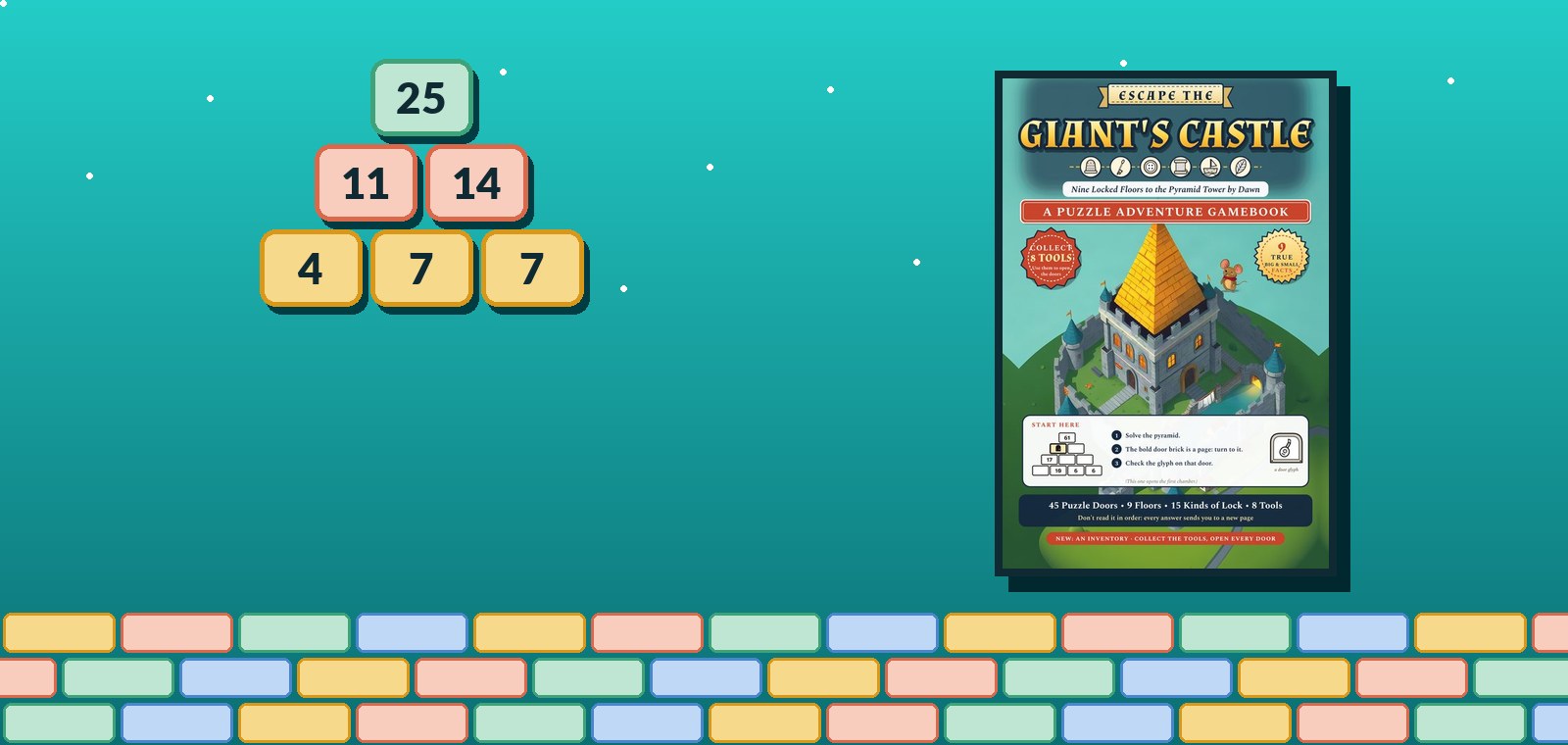
Escape the Giant's Castle: The Story and a Look Inside
Escape the Giant's Castle: the story, how a chamber plays and a look at a real page.
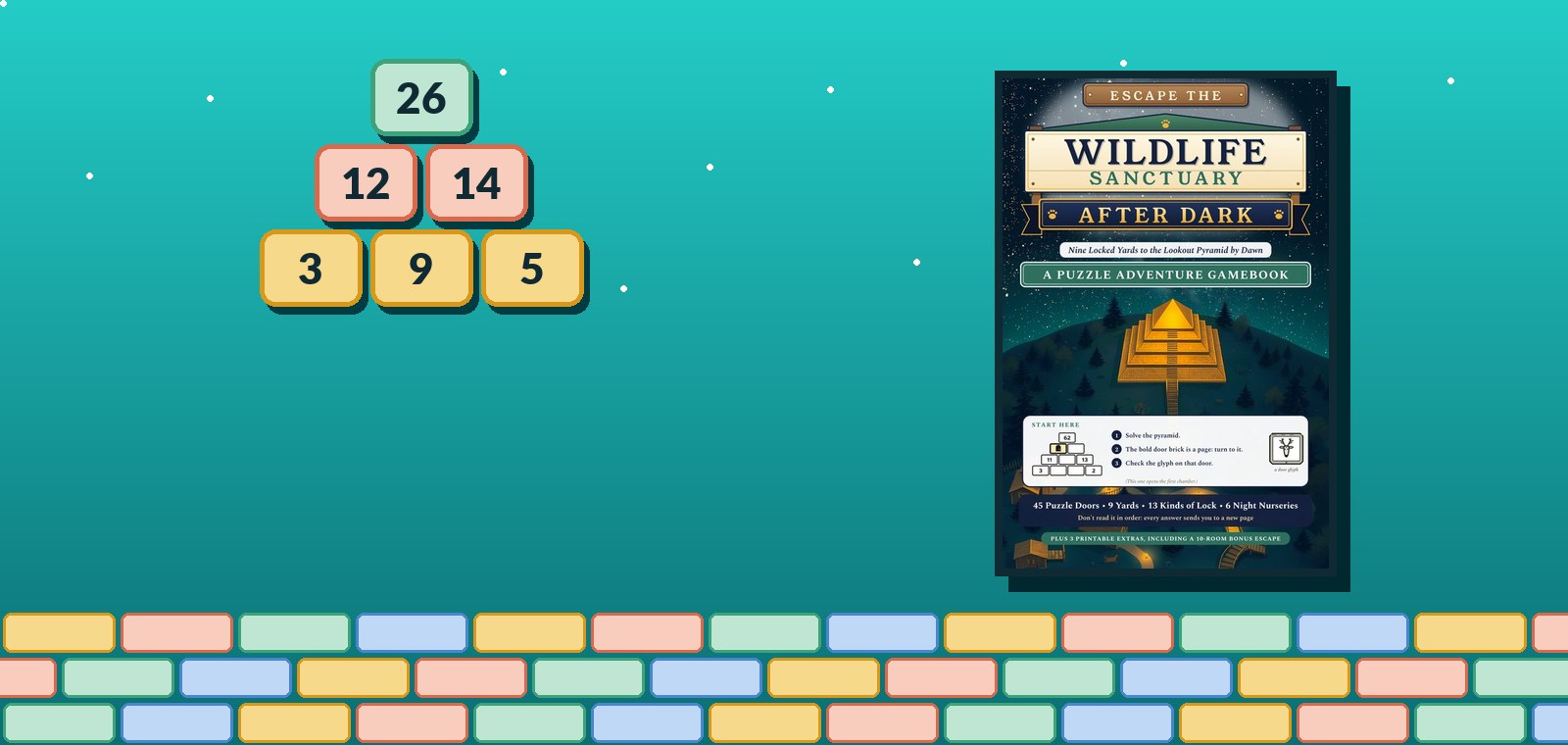
The Weigh-In: A Lock Where the Dial Says How Many Times Heavier
A tray holds two bricks and its dial says one is 3 times the other. Think in parts and the pyramid solves itself. A lock from Escape the Wildlife Sanctuary After Dark.
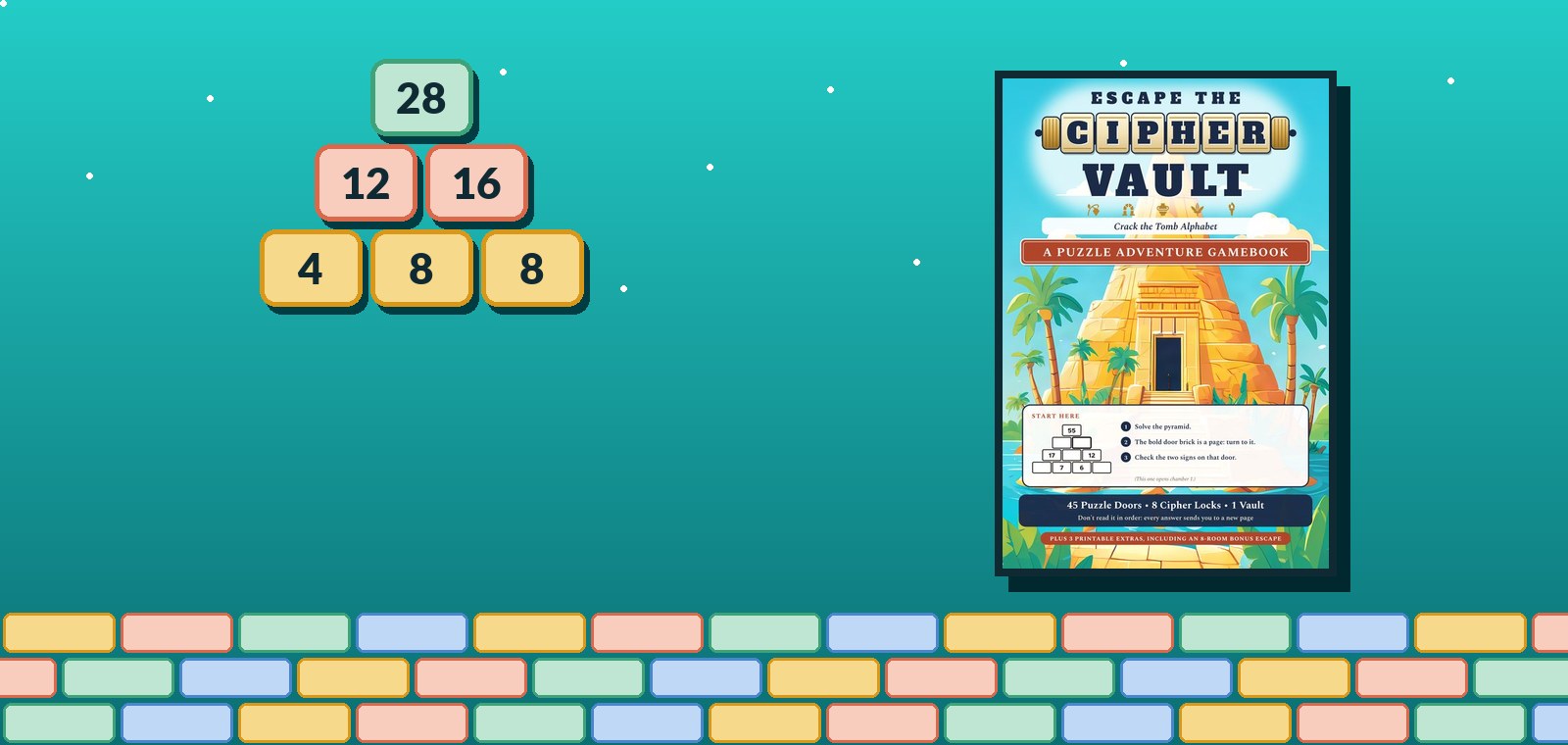
Escape the Cipher Vault: The Story and a Look Inside
Escape the Cipher Vault: the story, how a chamber plays and a look at a real page.
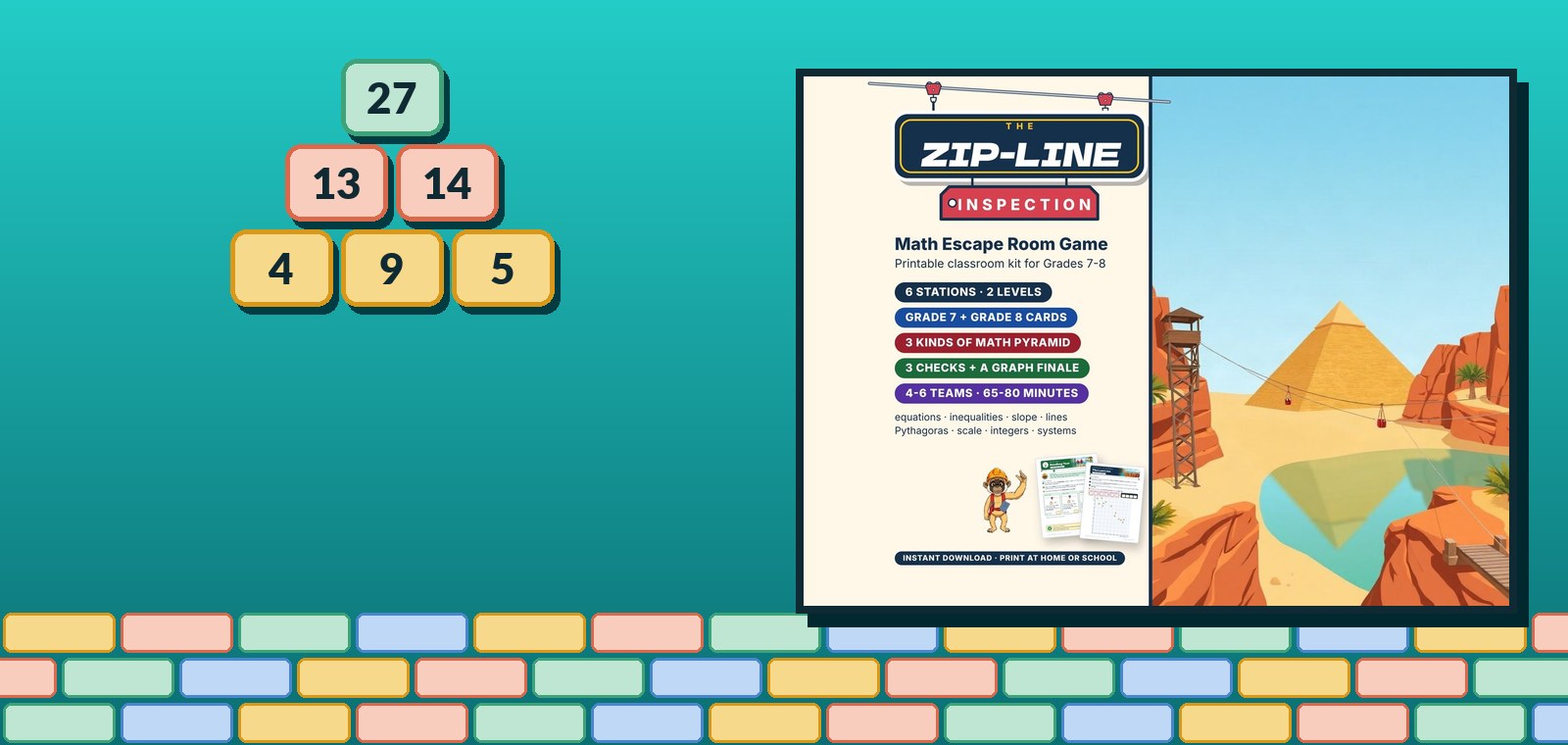
The Zip-Line Inspection: What It Can Do for Players
The Zip-Line Inspection (Grades 7 and 8): what is in it, what players can get out of it and how to run it.
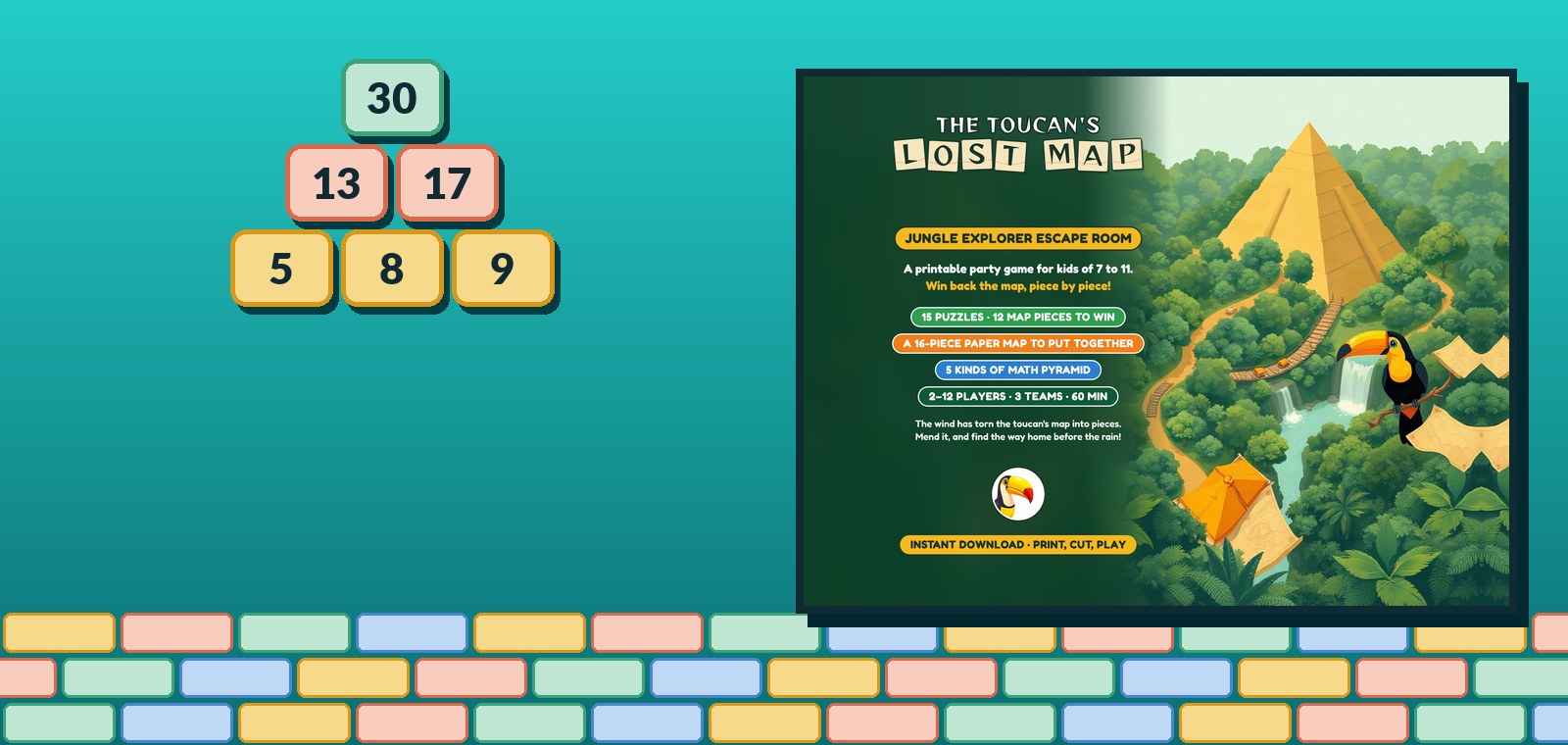
The Toucan's Lost Map: Win Back 16 Squares, Mend the Map, Walk Home
A toucan says “Look!” and the wind tears his map into sixteen squares. A tour of The Toucan's Lost Map, a jungle explorer escape room for ages 7 to 11, with its video.
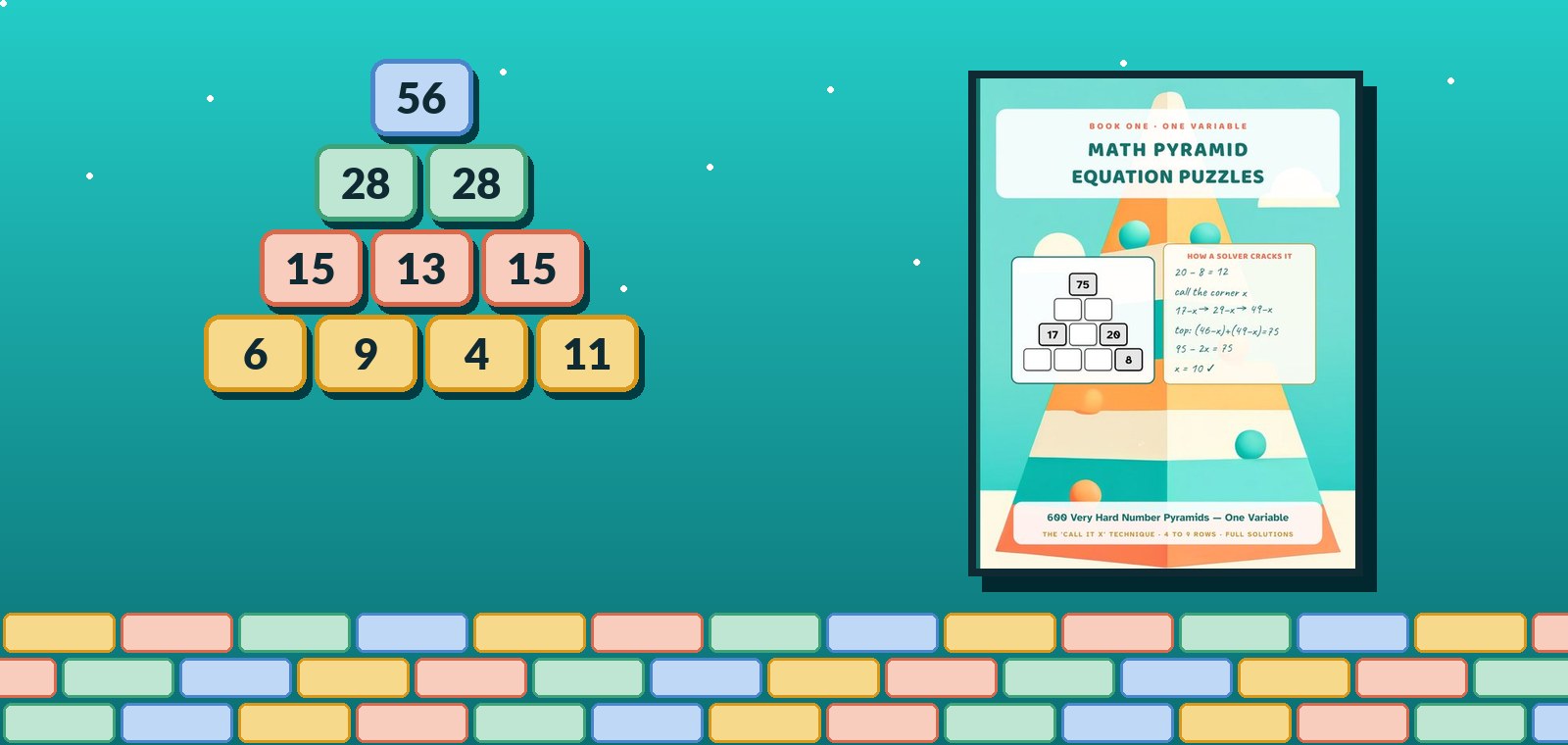
Equation Pyramids: When to Call It x
Stuck? Call a brick x. Equation pyramids are built so that the 'call it x' move is the way in. A worked sample, a 20-second video and a pyramid to try yourself, with the one rule you need to read the hidden digits.
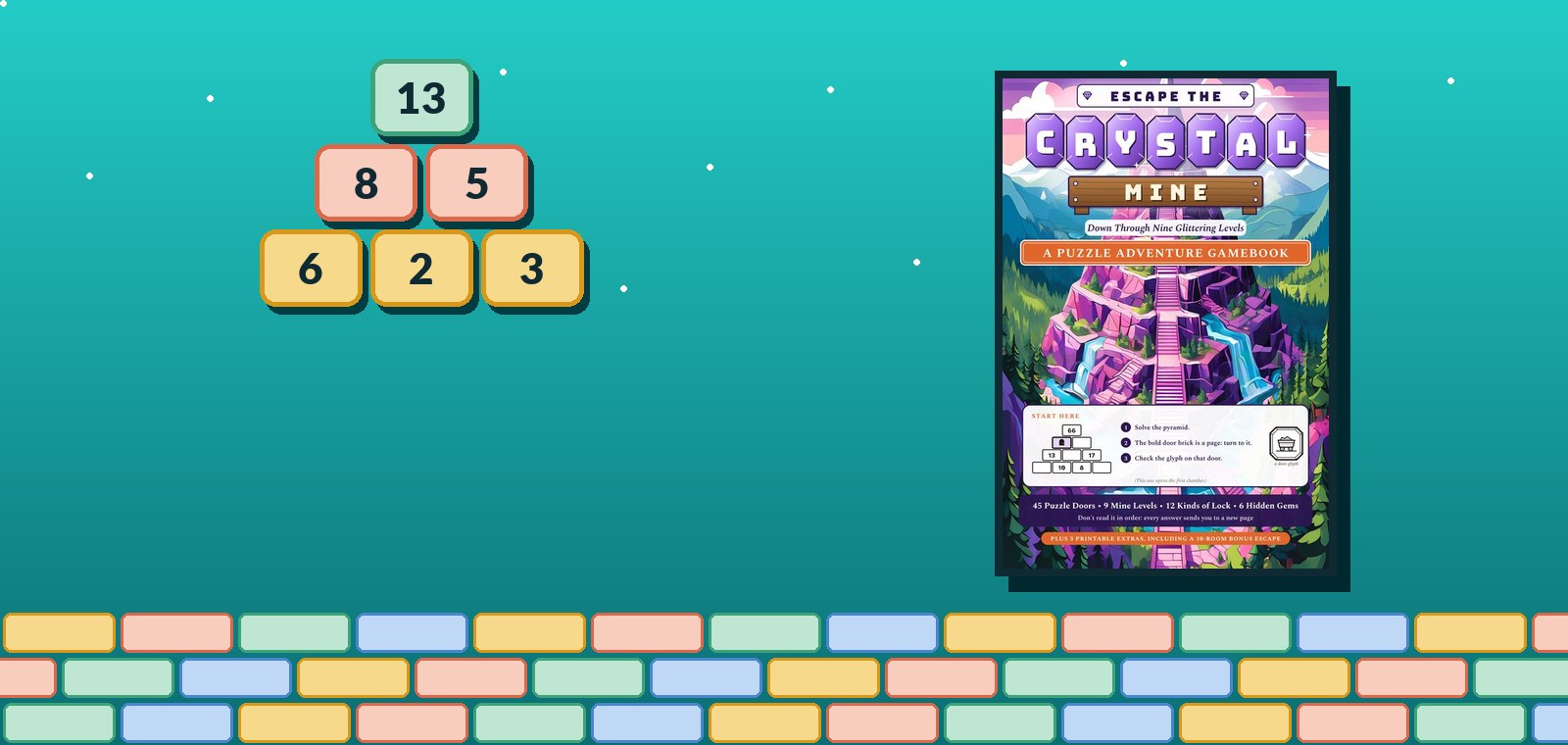
Escape the Crystal Mine: The Story and a Look Inside
Escape the Crystal Mine: the story, how a chamber plays and a look at a real page.
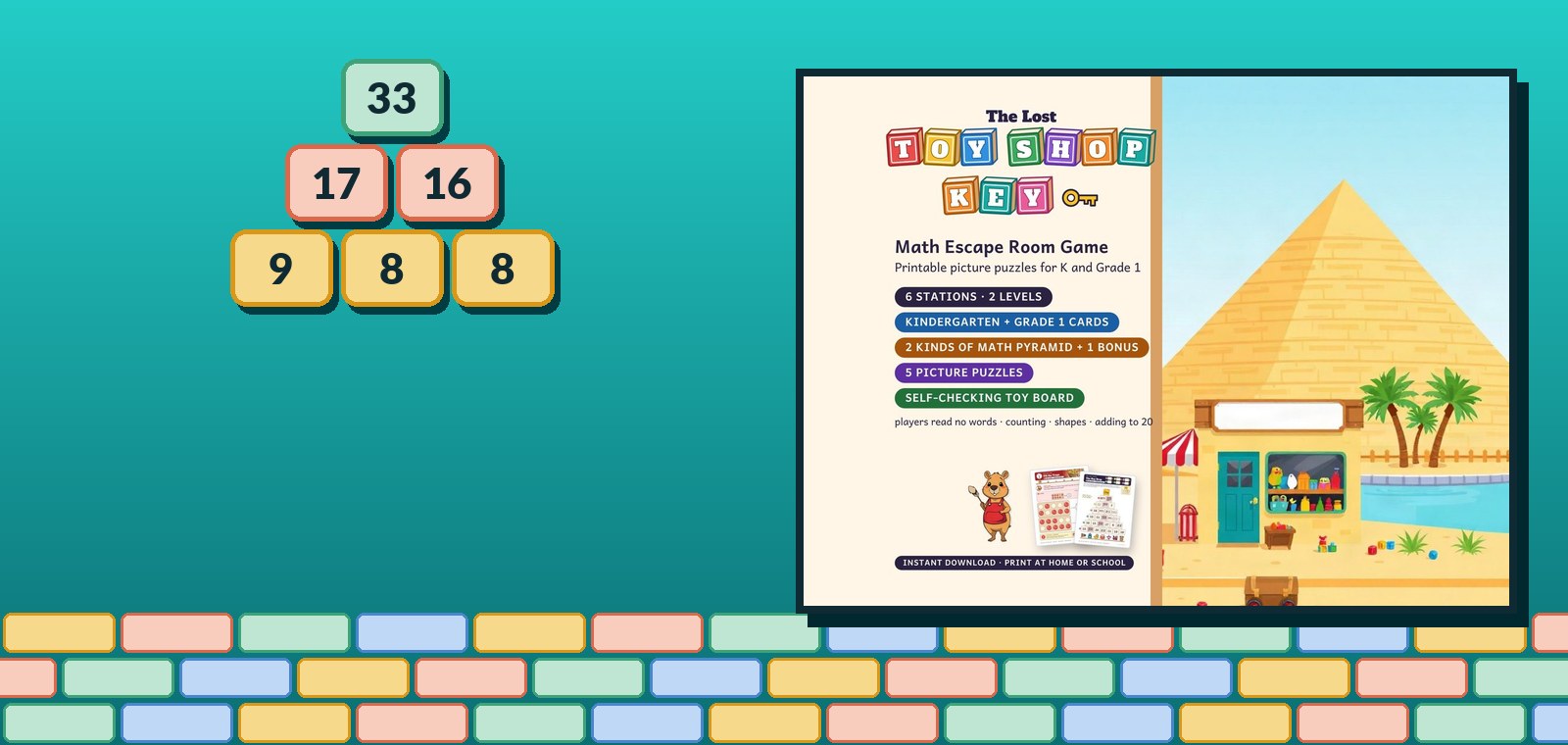
The Lost Toy Shop Key: What It Can Do for Players
The Lost Toy Shop Key (Kindergarten and Grade 1): what is in it, what players can get out of it and how to run it.
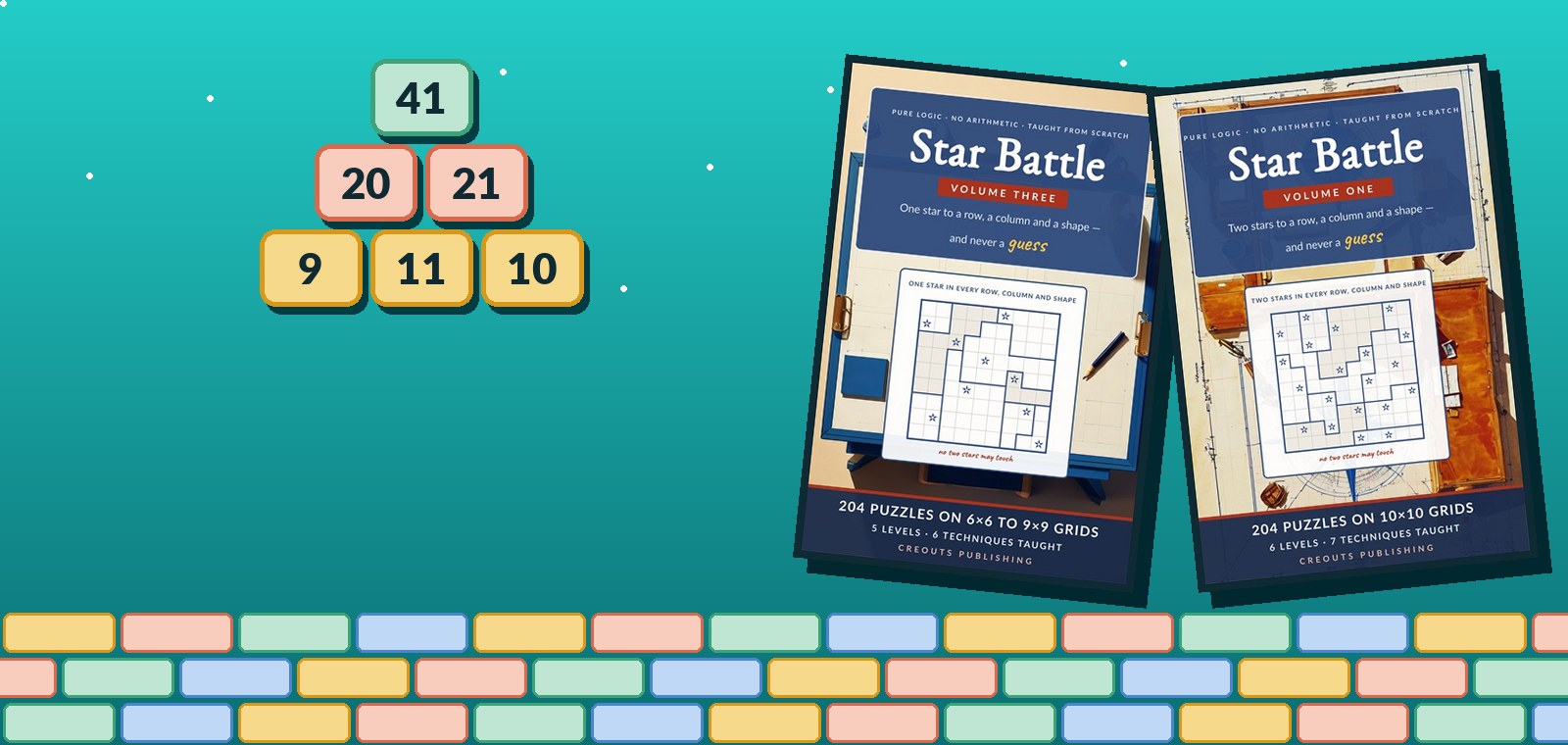
How to Solve a Star Battle Puzzle, One Star at a Time
Place stars so every row, column and region has one, and no two stars touch. A 5x5 puzzle solved in five moves, every move drawn.
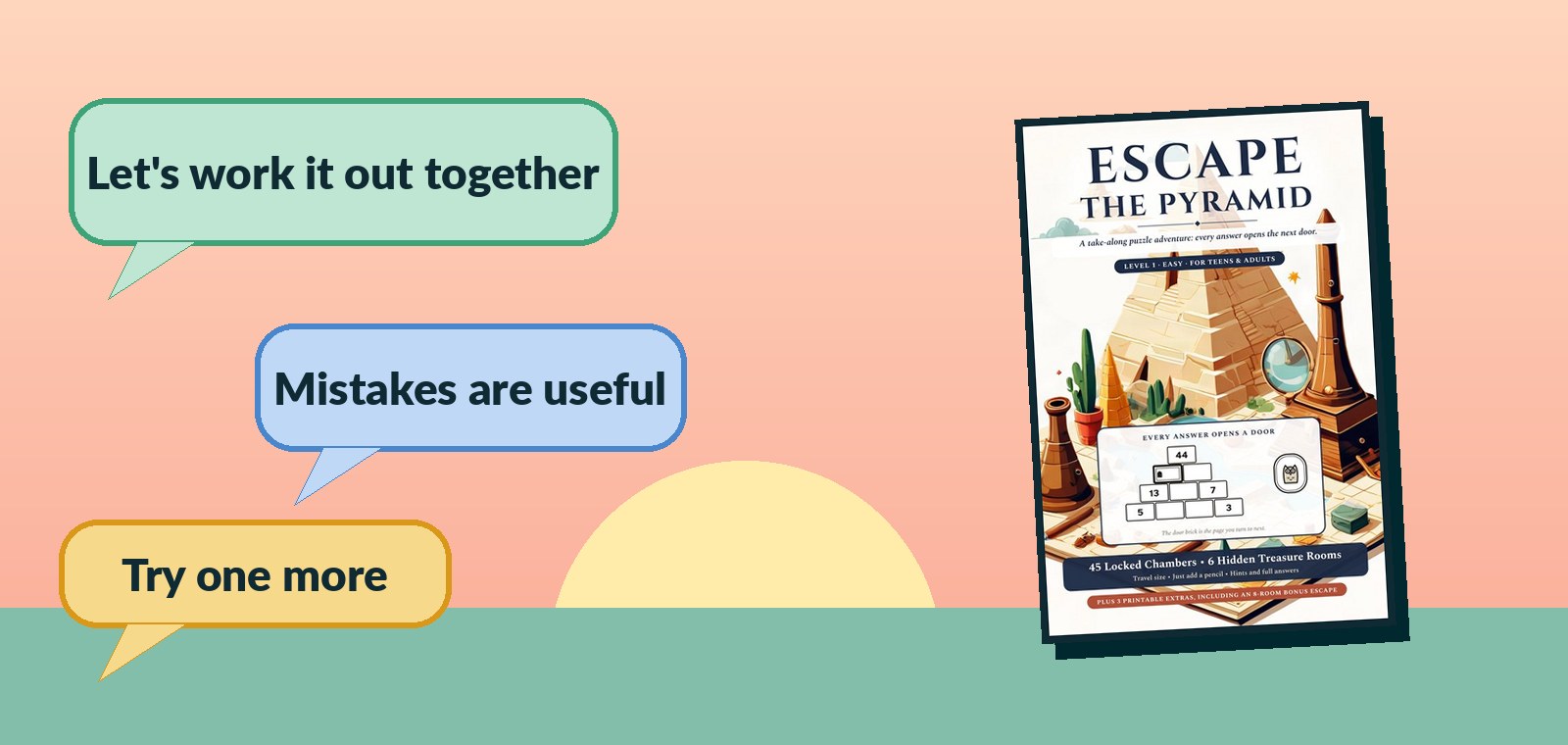
Maths Anxiety: How Parents Can Help (and What to Avoid)
What four studies found about parents, teachers and maths worries in young children, and some kind, practical things to try at home.
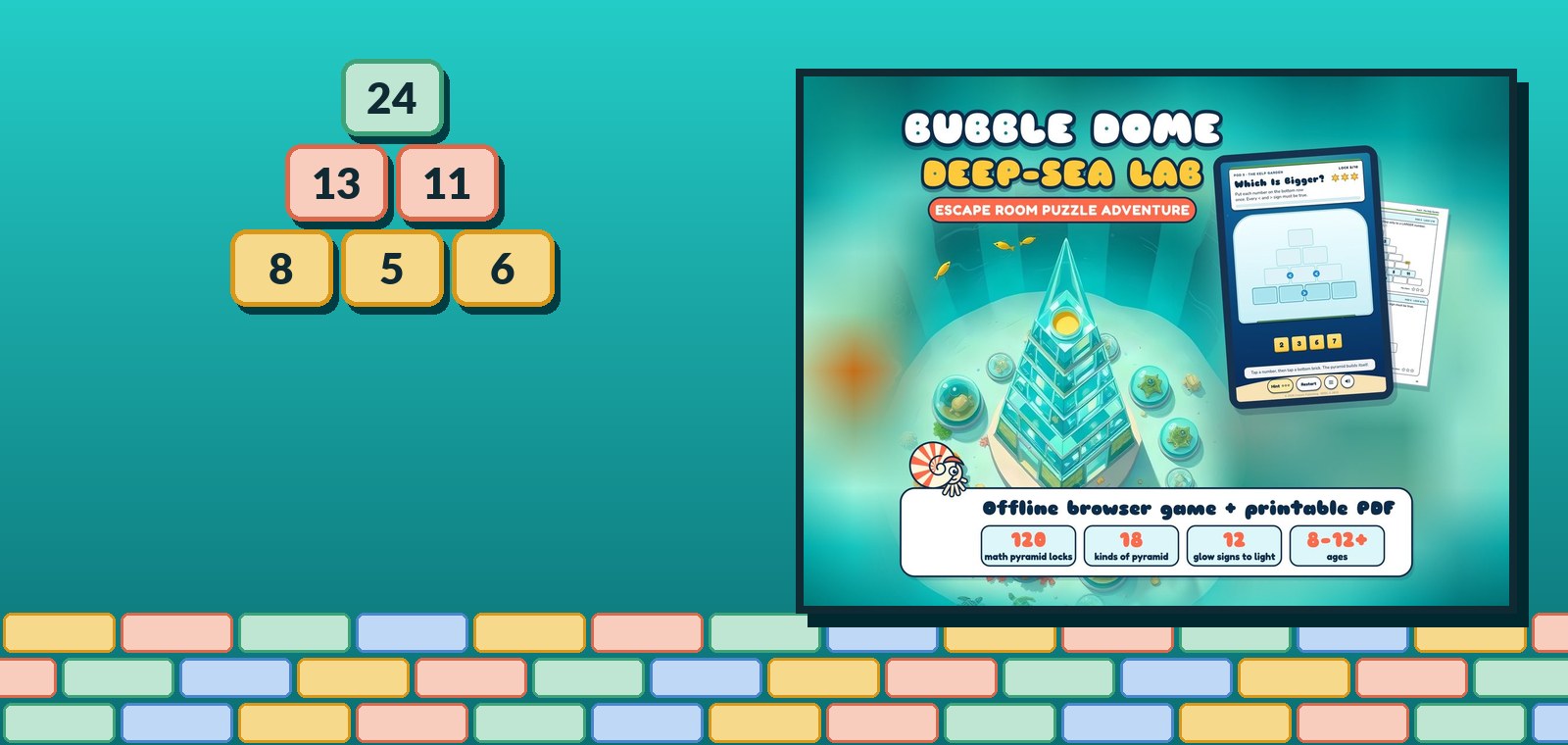
Bubble Dome Deep-Sea Lab: What It Can Do for Players
Bubble Dome Deep-Sea Lab (Ages 8 to 12): what is in it, what players can get out of it and how to run it.
Creouts Publishing
Puzzle books, printable games and, soon, games you can play here.
As an Amazon Associate we earn from qualifying purchases.
Amazon is a trademark of its owner. Creouts is not affiliated with Amazon.