
Pyramidoku: Place a set of different numbers along the base, each once, so the pyramid above adds up. Sudoku logic, no guessing. This is one of the many kinds of math pyramid we make, and here is how it works, with a video, a worked sample and a pyramid you can try right on this page.
The rule
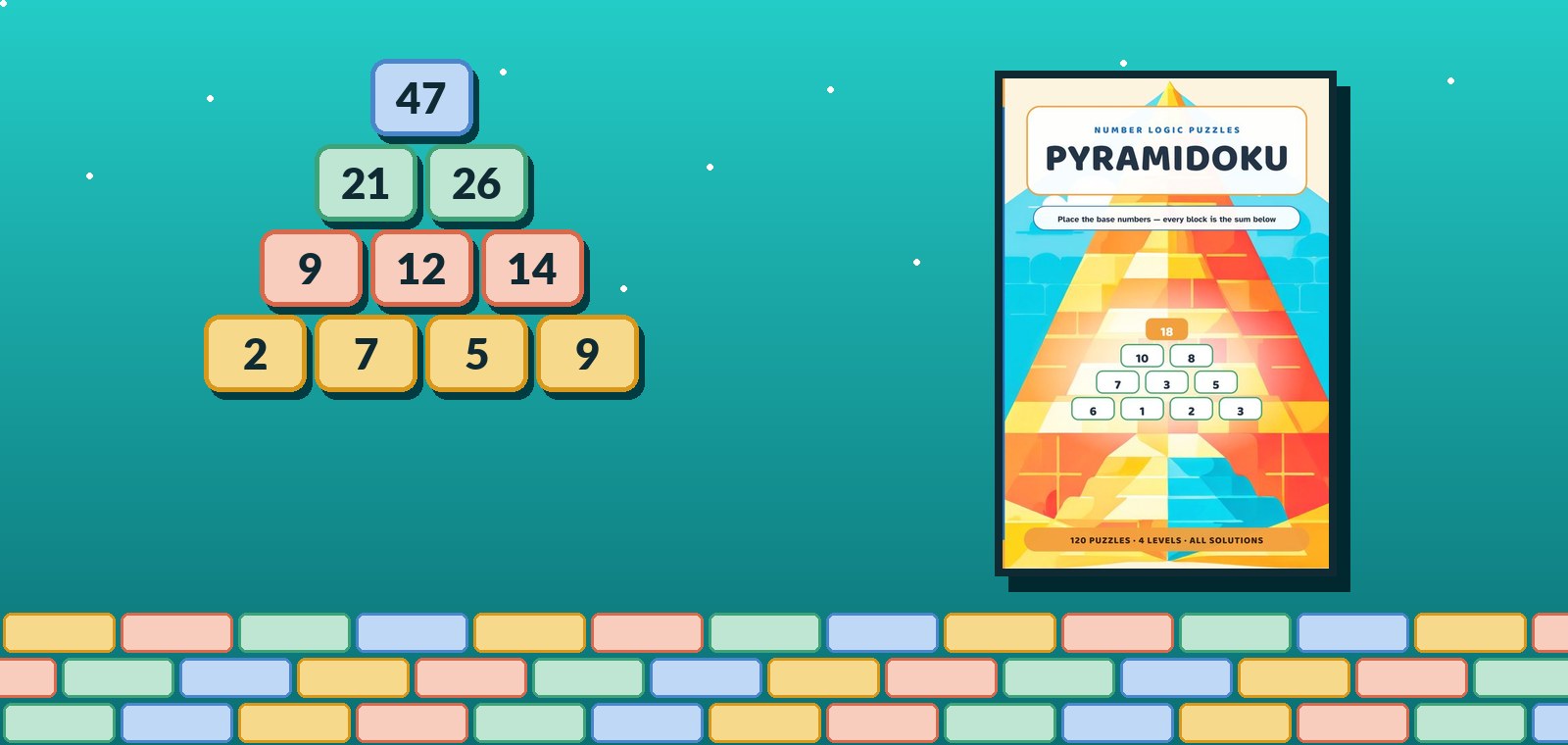
The base holds the numbers shown, each used exactly once, in the right order. Every brick above is the sum of the two bricks below it.
A worked sample
Weigh the base
In the top brick the two middle base numbers count three times each and the ends once. So 47 = (2 + 5 + 7 + 9) + 2 × (the middle two). That is 23 + 2 × middle = 47, so the middle two add to 12: they are 5 and 7. The ends are 2 and 9.
Use the clue
The brick 21 is left end + 2 × (second) + (third). Try 7 second and 5 third: left end + 14 + 5 = 21, so the left end is 2. It exists. The other order would need a 4, which is not in the set, so 7 comes second.
Add up
Now just add: 9, 12 and 14, then 21 and 26, then 47. The top matches, and only one order of the four numbers could do it.
Your turn
Try it: place the numbers
Use the base numbers once each. Work out the base first, then fill every brick above, and press Check.
Base numbers to place, each once
Why it is worth doing
Like Sudoku, every number goes in one place only, and you find it by elimination. Unlike Sudoku, the pyramid sum tells you which numbers cannot fit.
How a page looks in the book
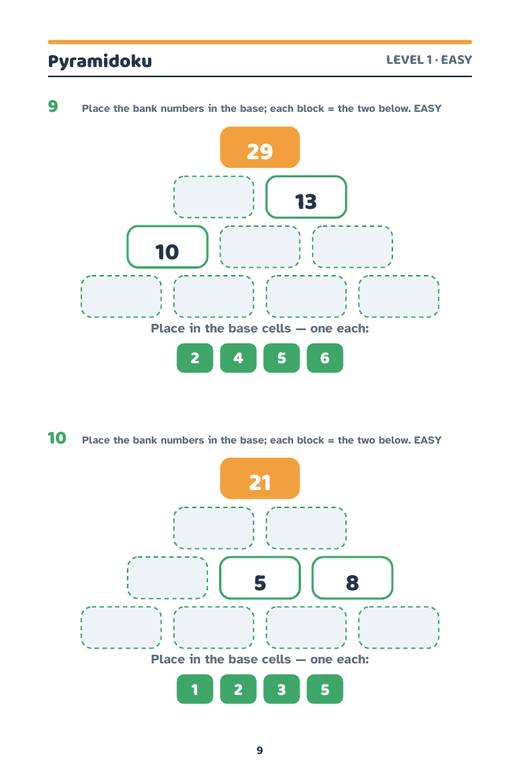
A low-resolution page from Pyramidoku, so you can see the layout. Nothing on it is solved.
Books mentioned
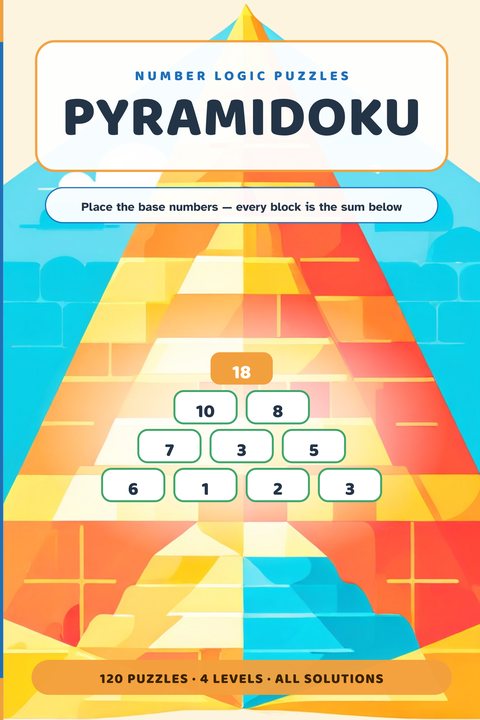
Pyramidoku
120 number logic puzzles: place the numbers so every block is the sum of the two below it.
View on AmazonAs an Amazon Associate we earn from qualifying purchases. Cover images are the ones we have on file; the book you receive may show a slightly different cover.
More field notes
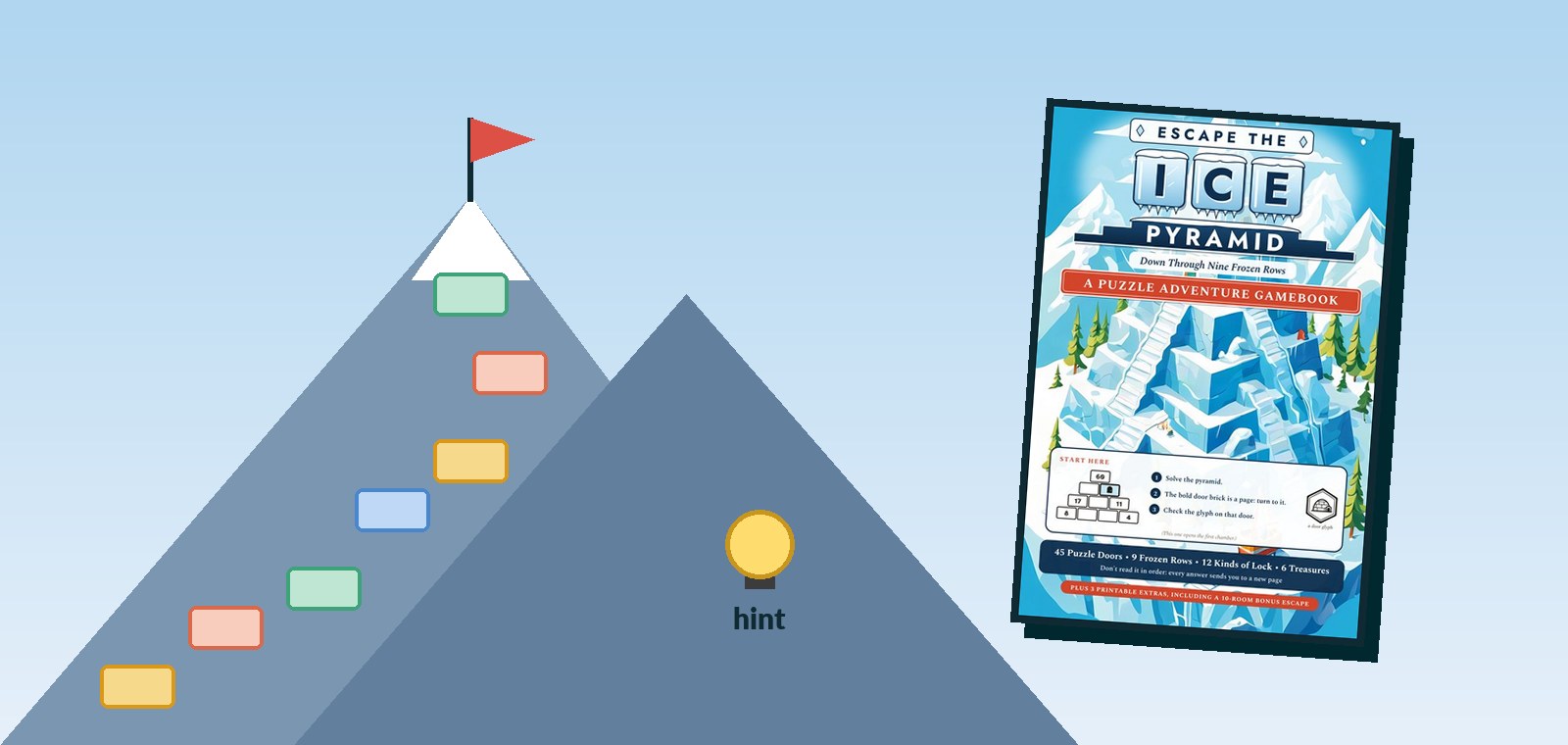
Productive Struggle: Why Getting Stuck Is Part of Learning Maths
What research says about getting stuck before you learn, where it stops helping, and a simple hint ladder for puzzles and homework.
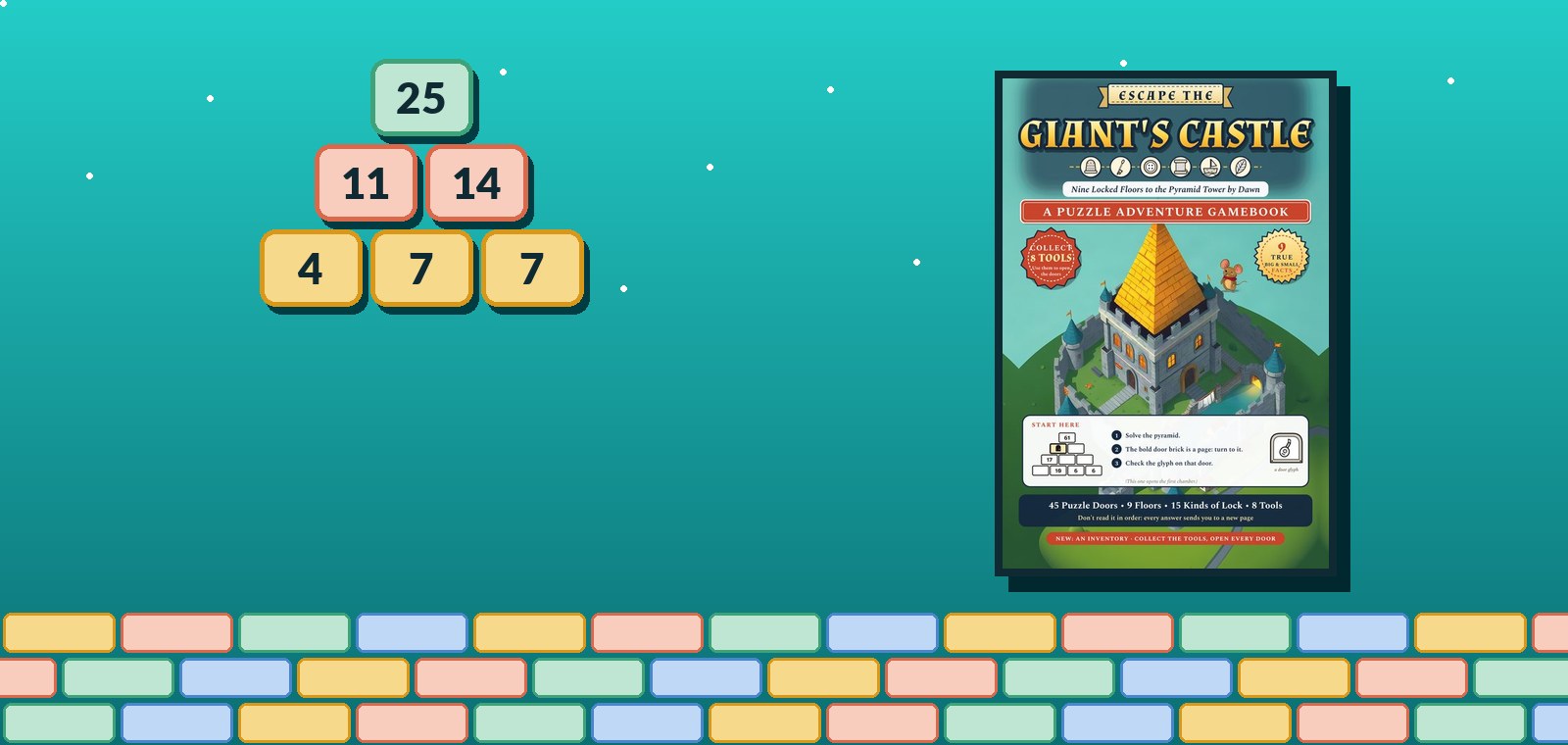
Escape the Giant's Castle: The Story and a Look Inside
Escape the Giant's Castle: the story, how a chamber plays and a look at a real page.
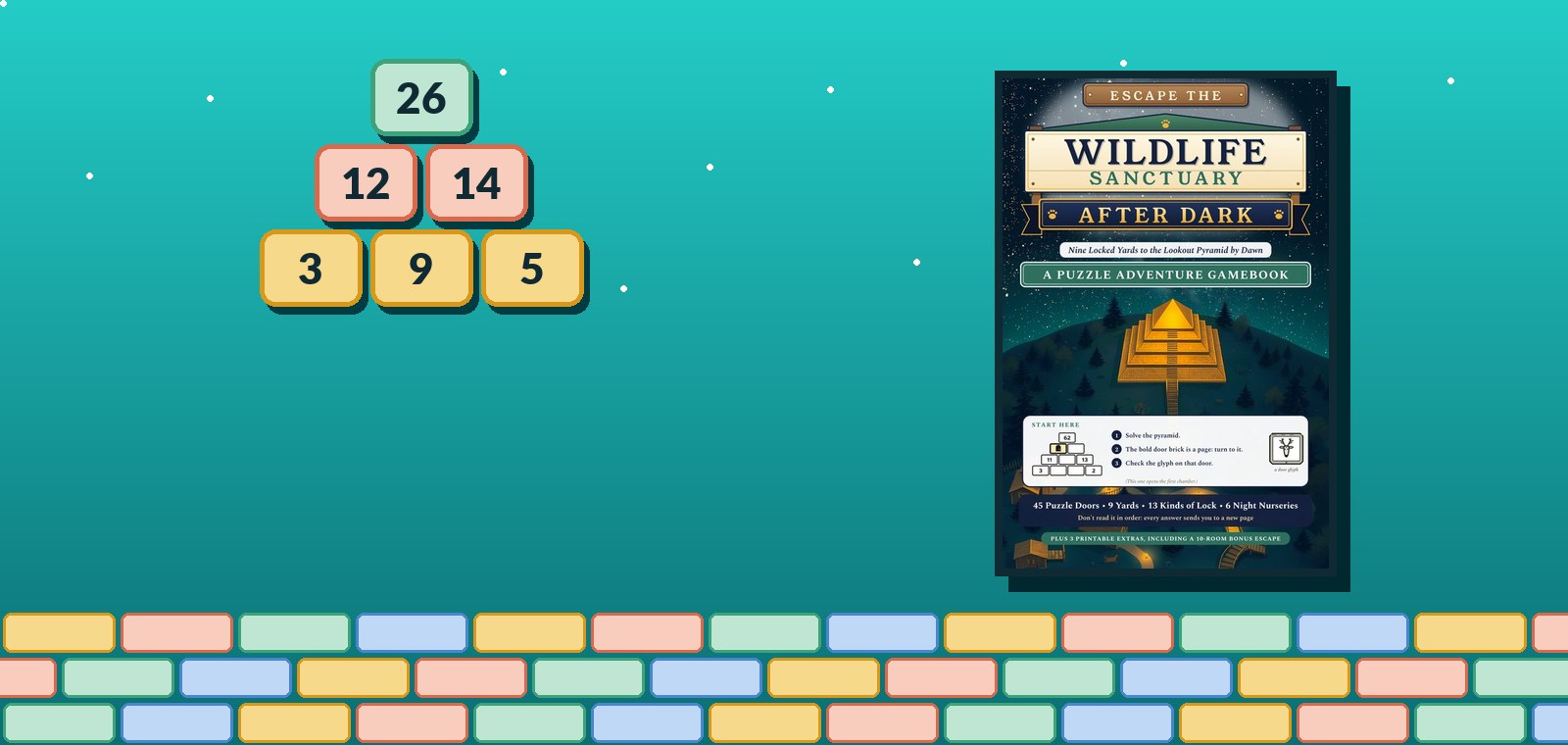
The Weigh-In: A Lock Where the Dial Says How Many Times Heavier
A tray holds two bricks and its dial says one is 3 times the other. Think in parts and the pyramid solves itself. A lock from Escape the Wildlife Sanctuary After Dark.
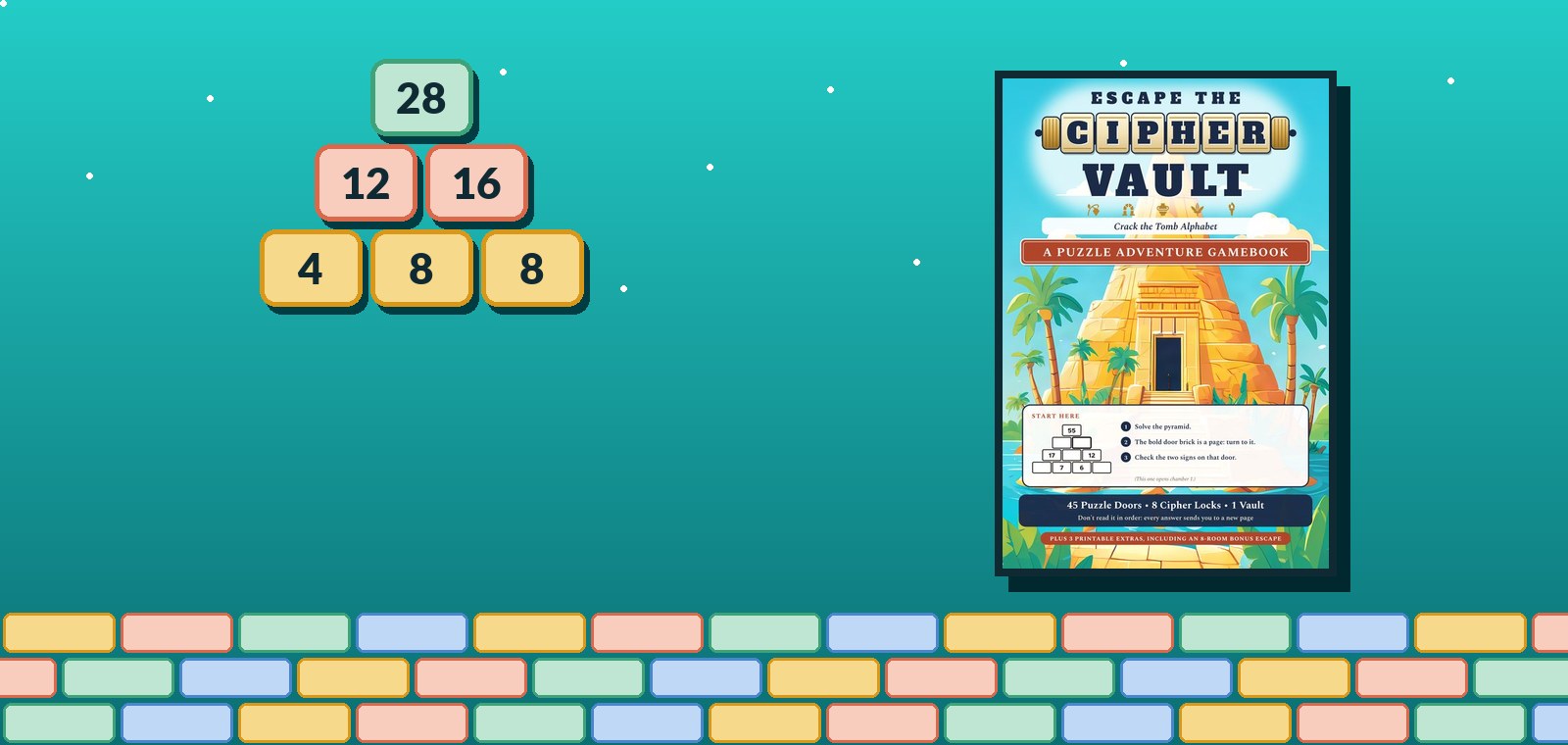
Escape the Cipher Vault: The Story and a Look Inside
Escape the Cipher Vault: the story, how a chamber plays and a look at a real page.
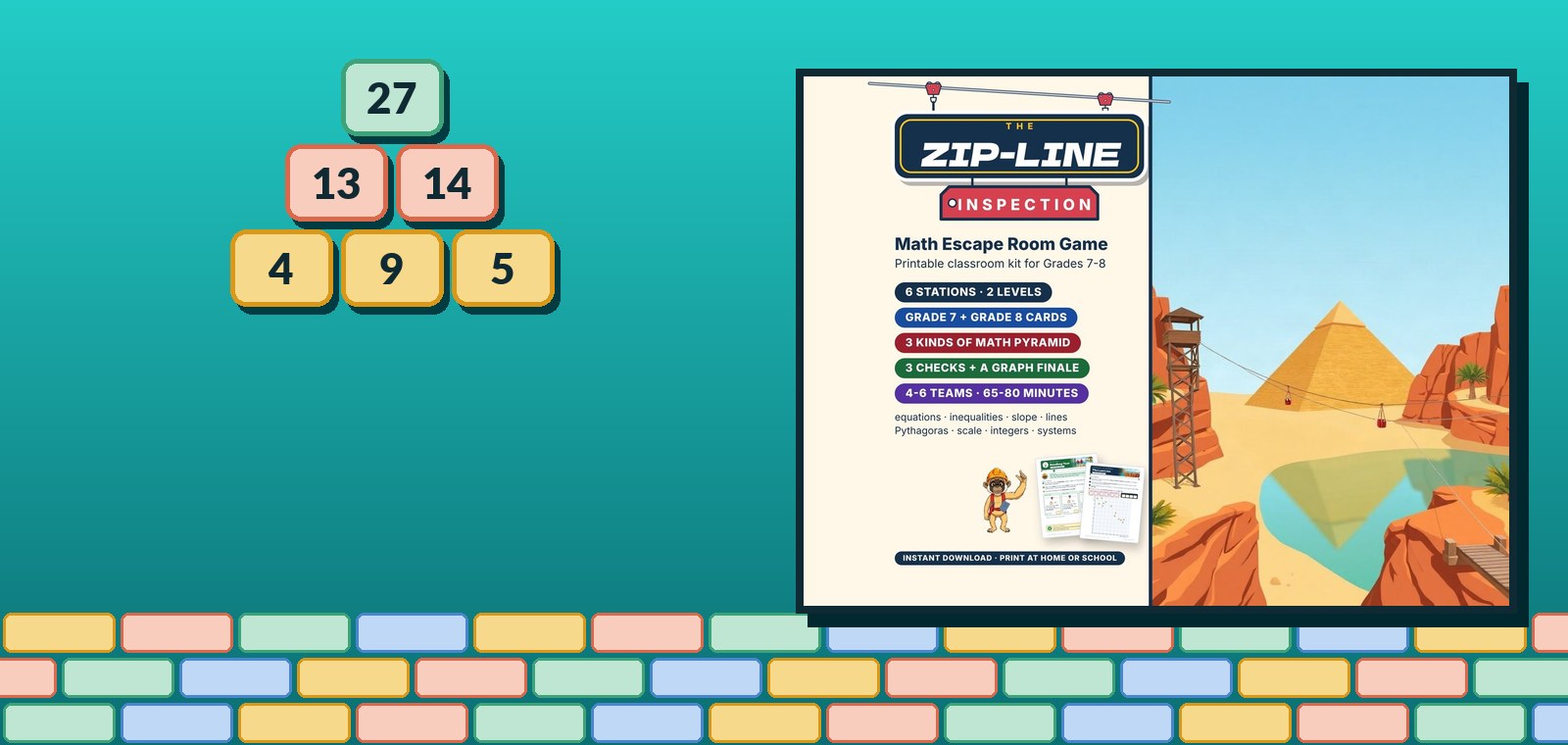
The Zip-Line Inspection: What It Can Do for Players
The Zip-Line Inspection (Grades 7 and 8): what is in it, what players can get out of it and how to run it.
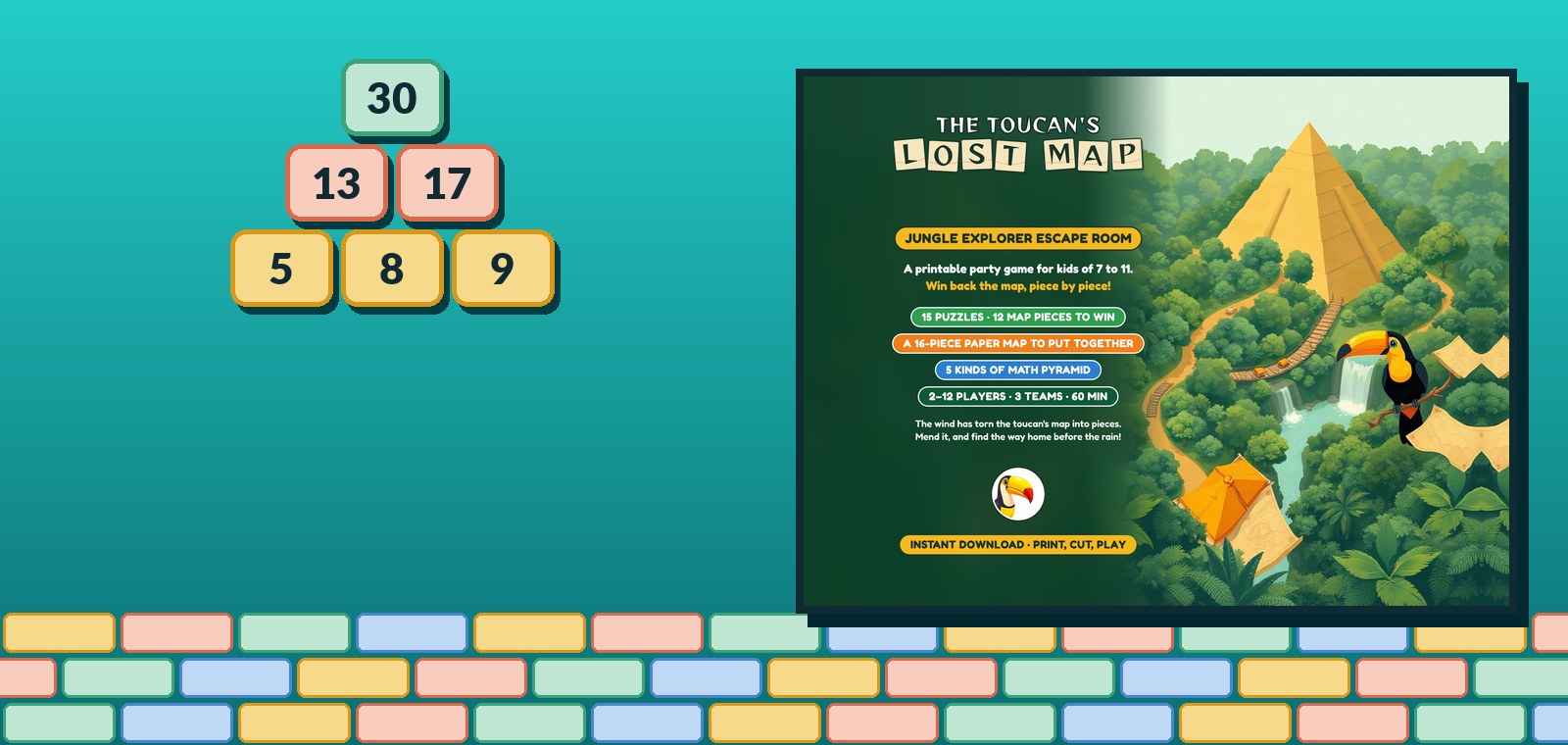
The Toucan's Lost Map: Win Back 16 Squares, Mend the Map, Walk Home
A toucan says “Look!” and the wind tears his map into sixteen squares. A tour of The Toucan's Lost Map, a jungle explorer escape room for ages 7 to 11, with its video.
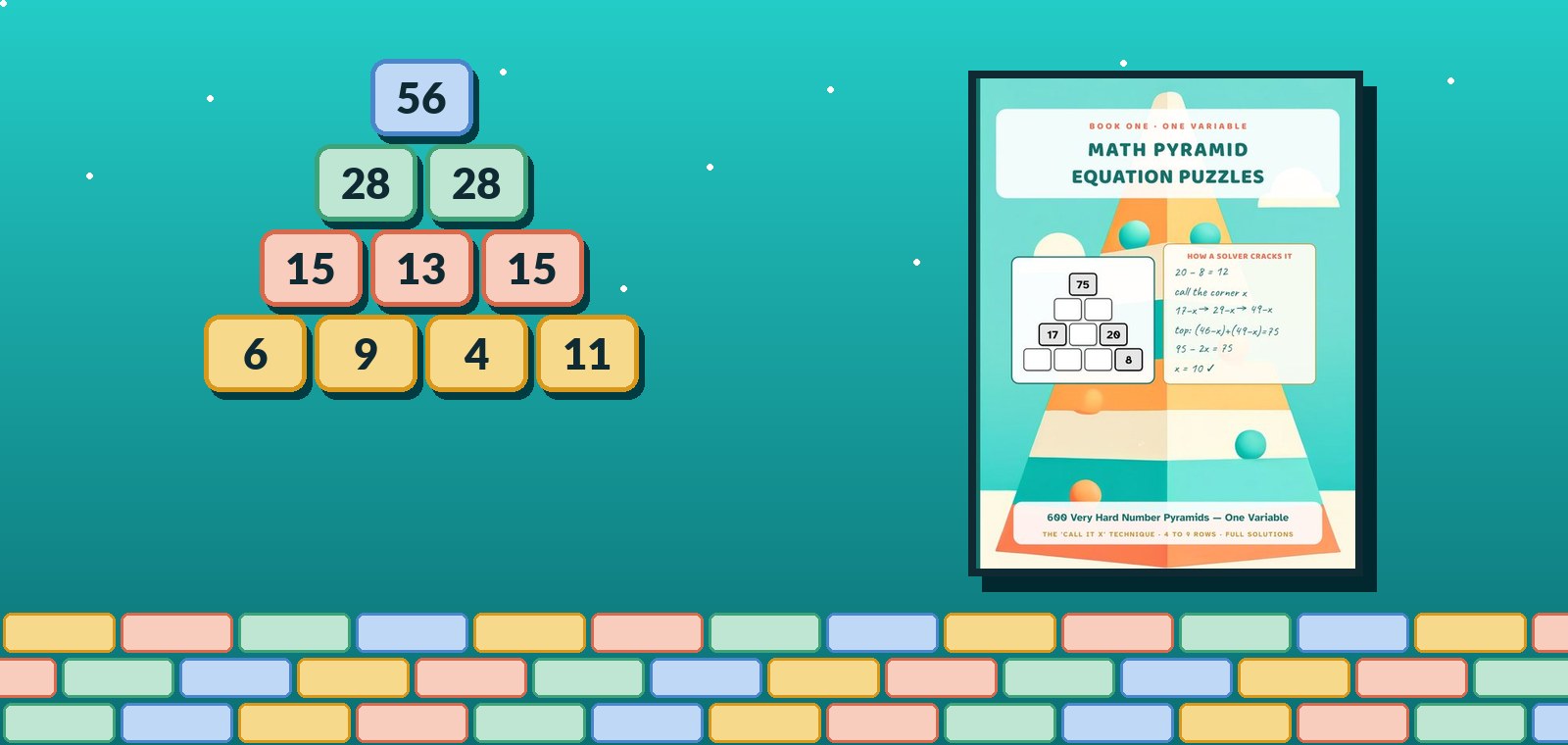
Equation Pyramids: When to Call It x
Stuck? Call a brick x. Equation pyramids are built so that the 'call it x' move is the way in. A worked sample, a 20-second video and a pyramid to try yourself, with the one rule you need to read the hidden digits.
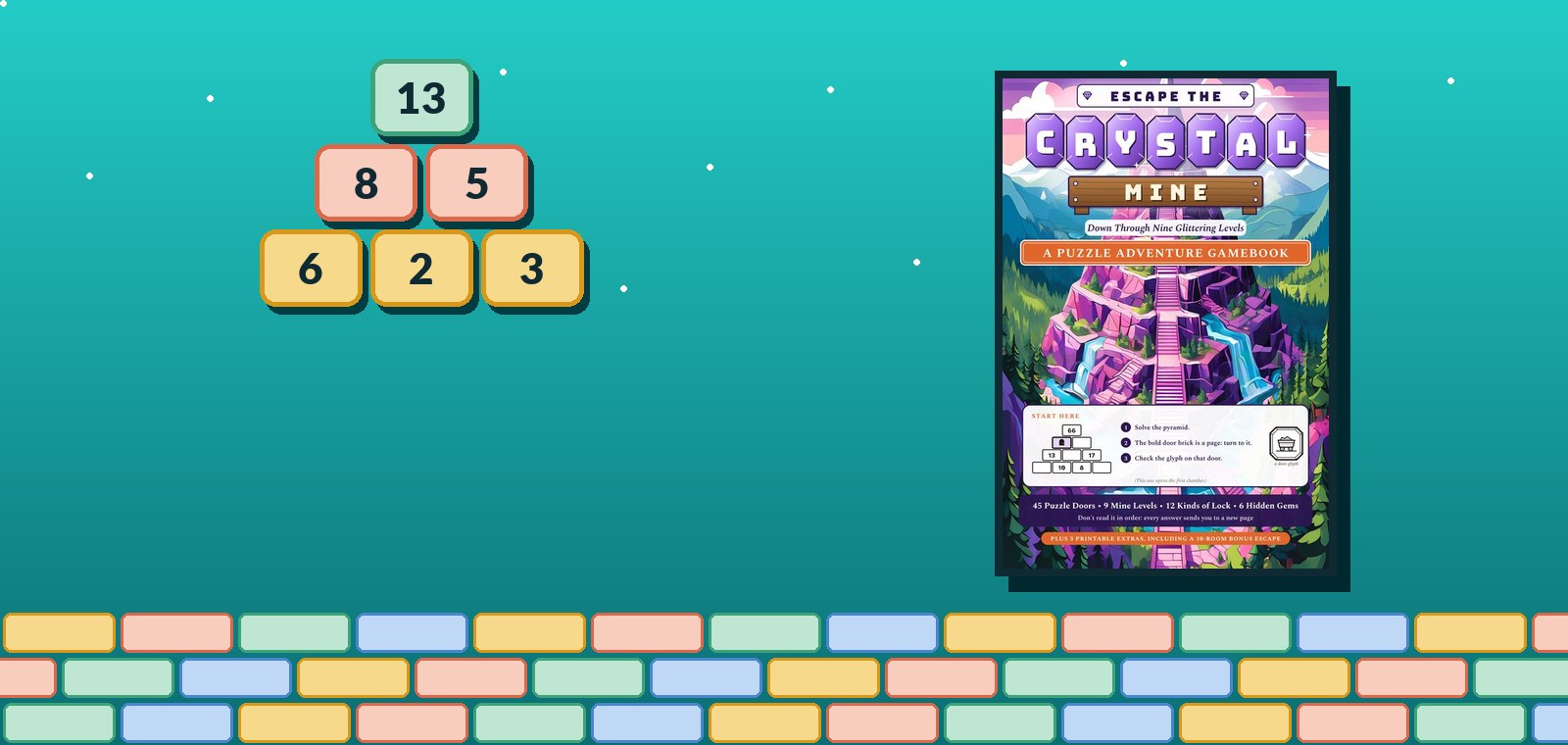
Escape the Crystal Mine: The Story and a Look Inside
Escape the Crystal Mine: the story, how a chamber plays and a look at a real page.
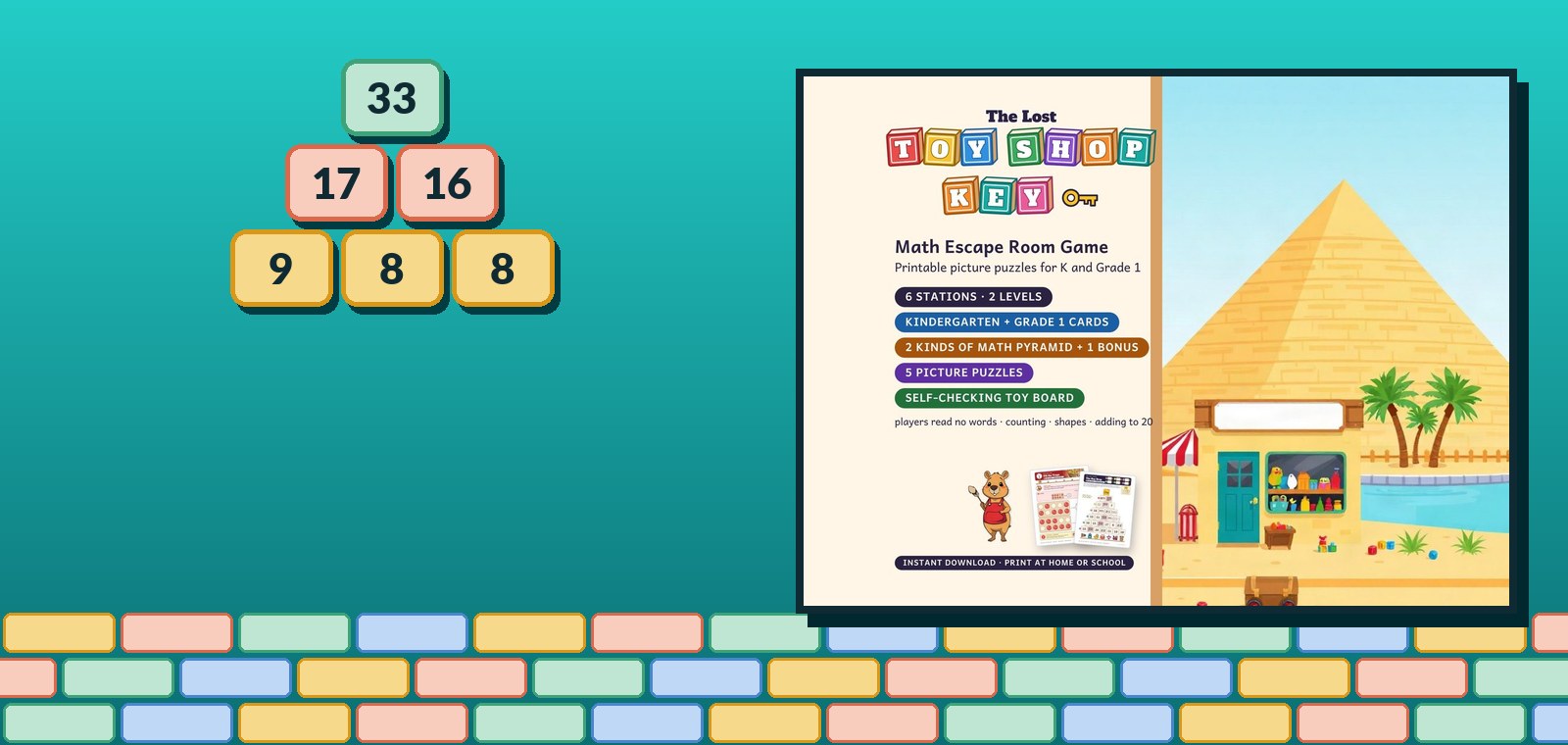
The Lost Toy Shop Key: What It Can Do for Players
The Lost Toy Shop Key (Kindergarten and Grade 1): what is in it, what players can get out of it and how to run it.
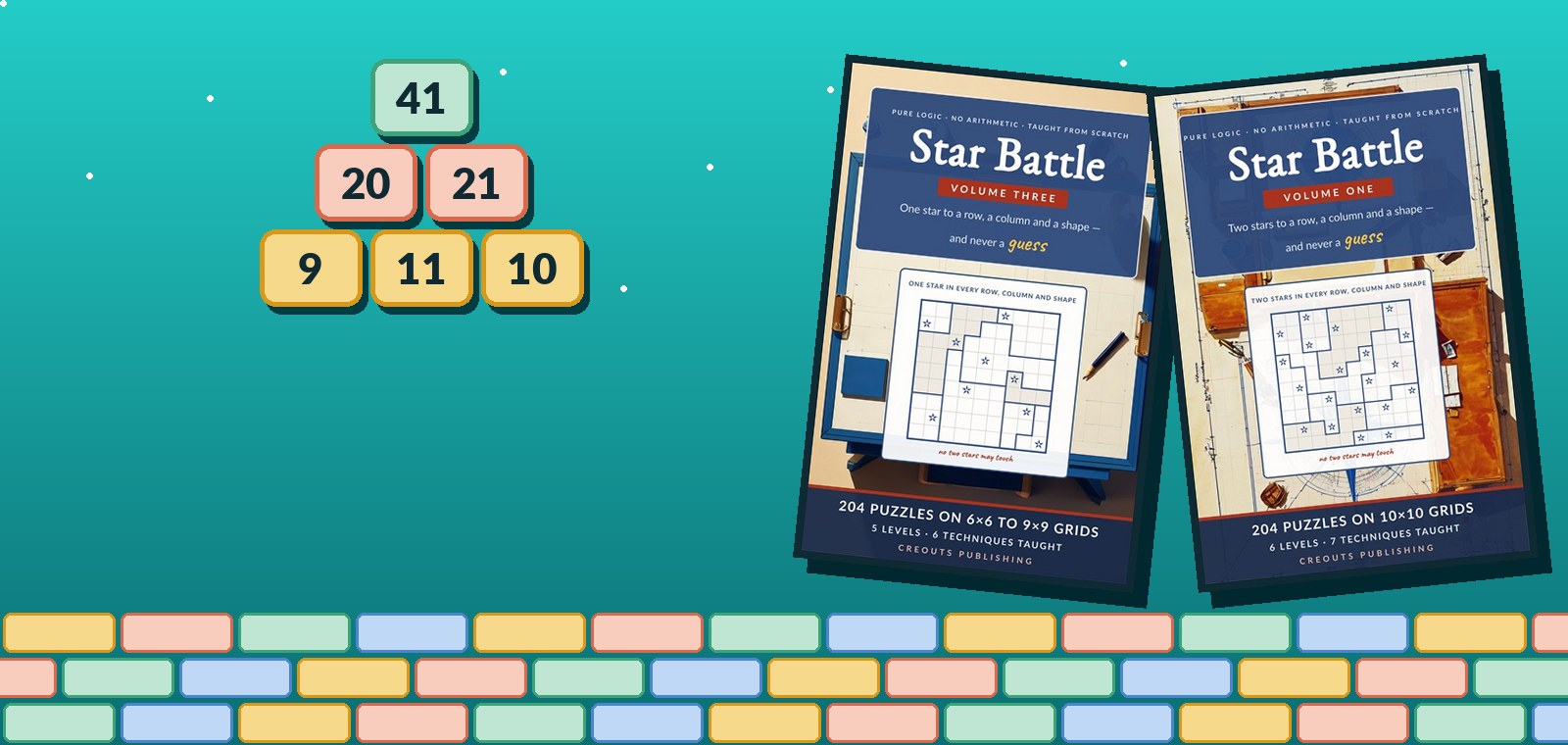
How to Solve a Star Battle Puzzle, One Star at a Time
Place stars so every row, column and region has one, and no two stars touch. A 5x5 puzzle solved in five moves, every move drawn.
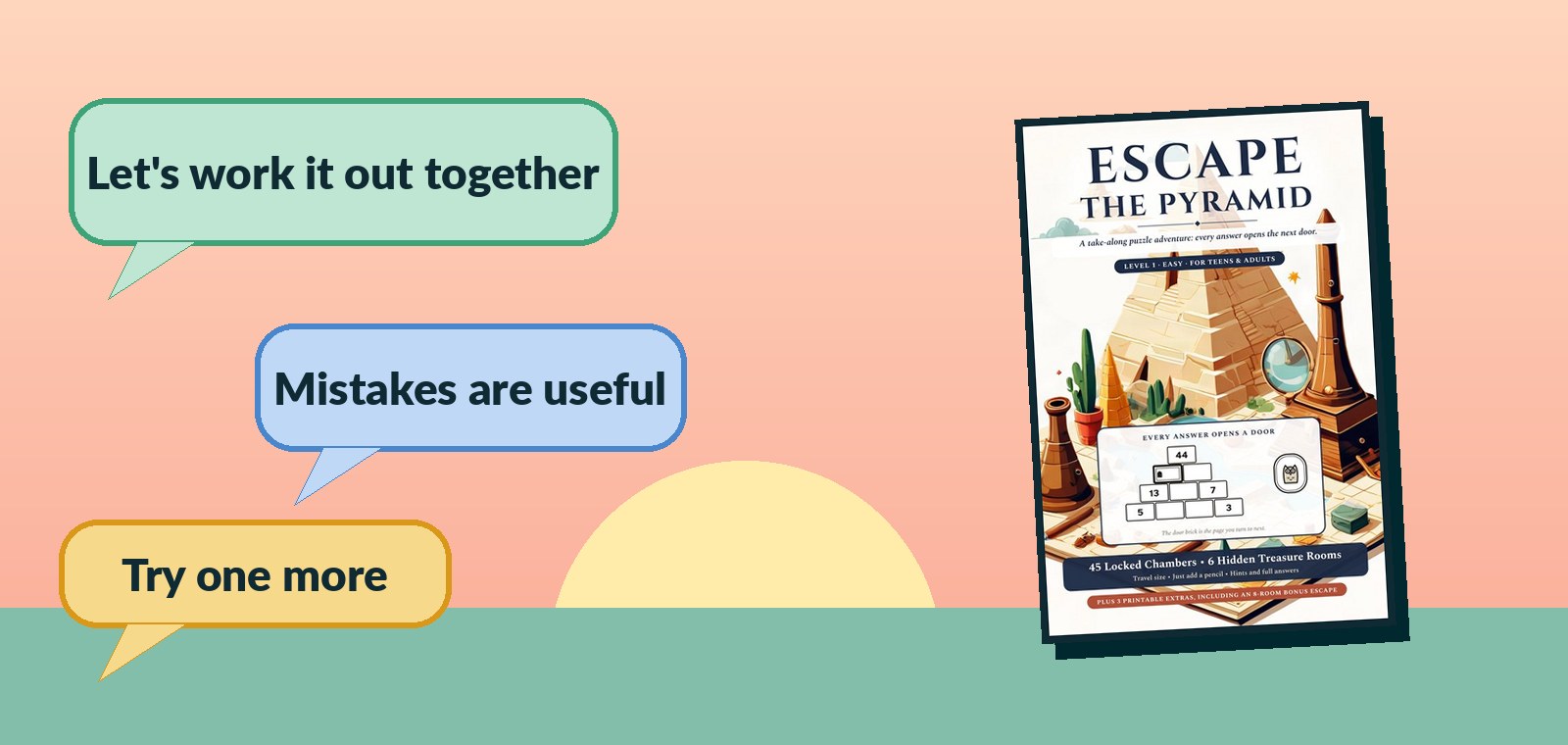
Maths Anxiety: How Parents Can Help (and What to Avoid)
What four studies found about parents, teachers and maths worries in young children, and some kind, practical things to try at home.
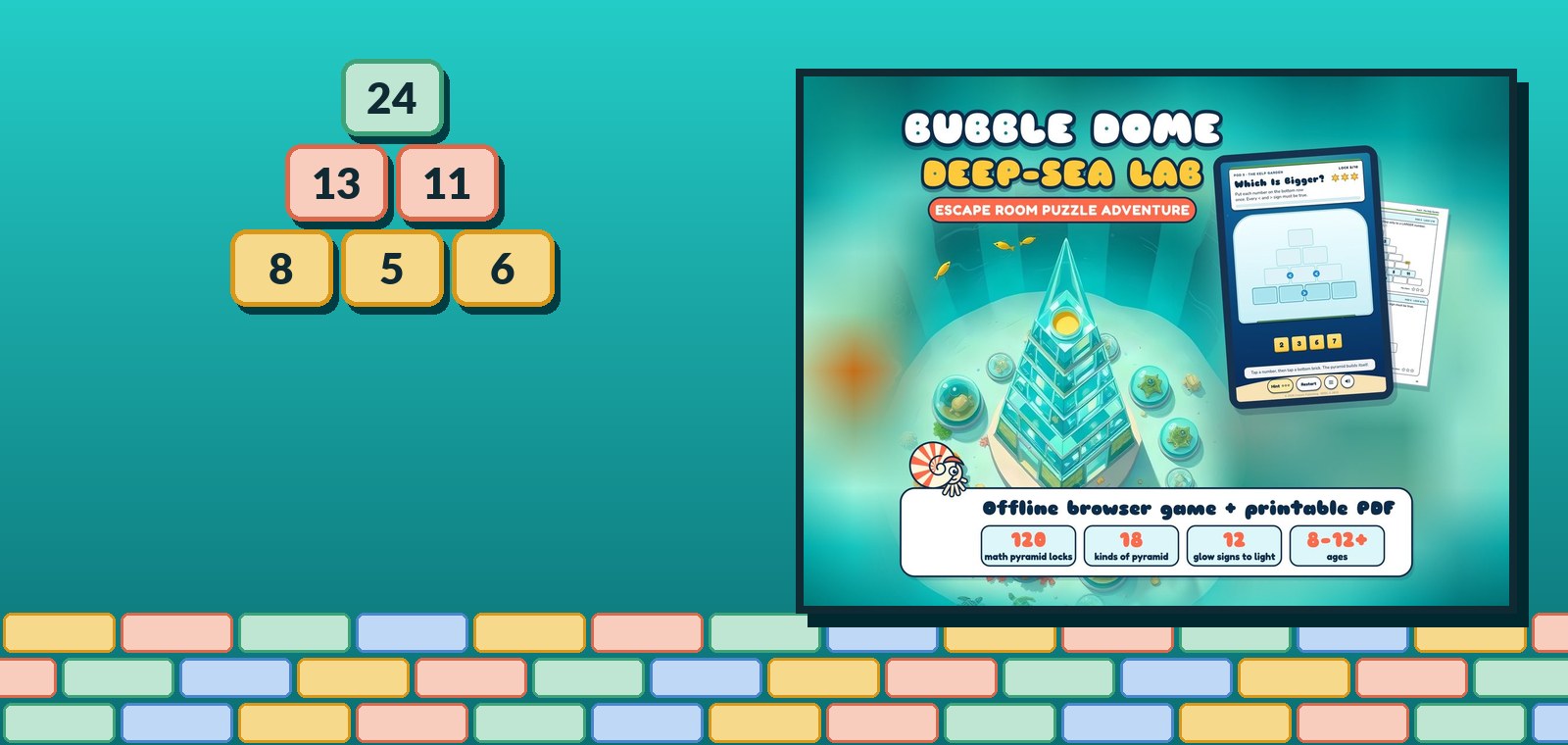
Bubble Dome Deep-Sea Lab: What It Can Do for Players
Bubble Dome Deep-Sea Lab (Ages 8 to 12): what is in it, what players can get out of it and how to run it.
Creouts Publishing
Puzzle books, printable games and, soon, games you can play here.
As an Amazon Associate we earn from qualifying purchases.
Amazon is a trademark of its owner. Creouts is not affiliated with Amazon.