
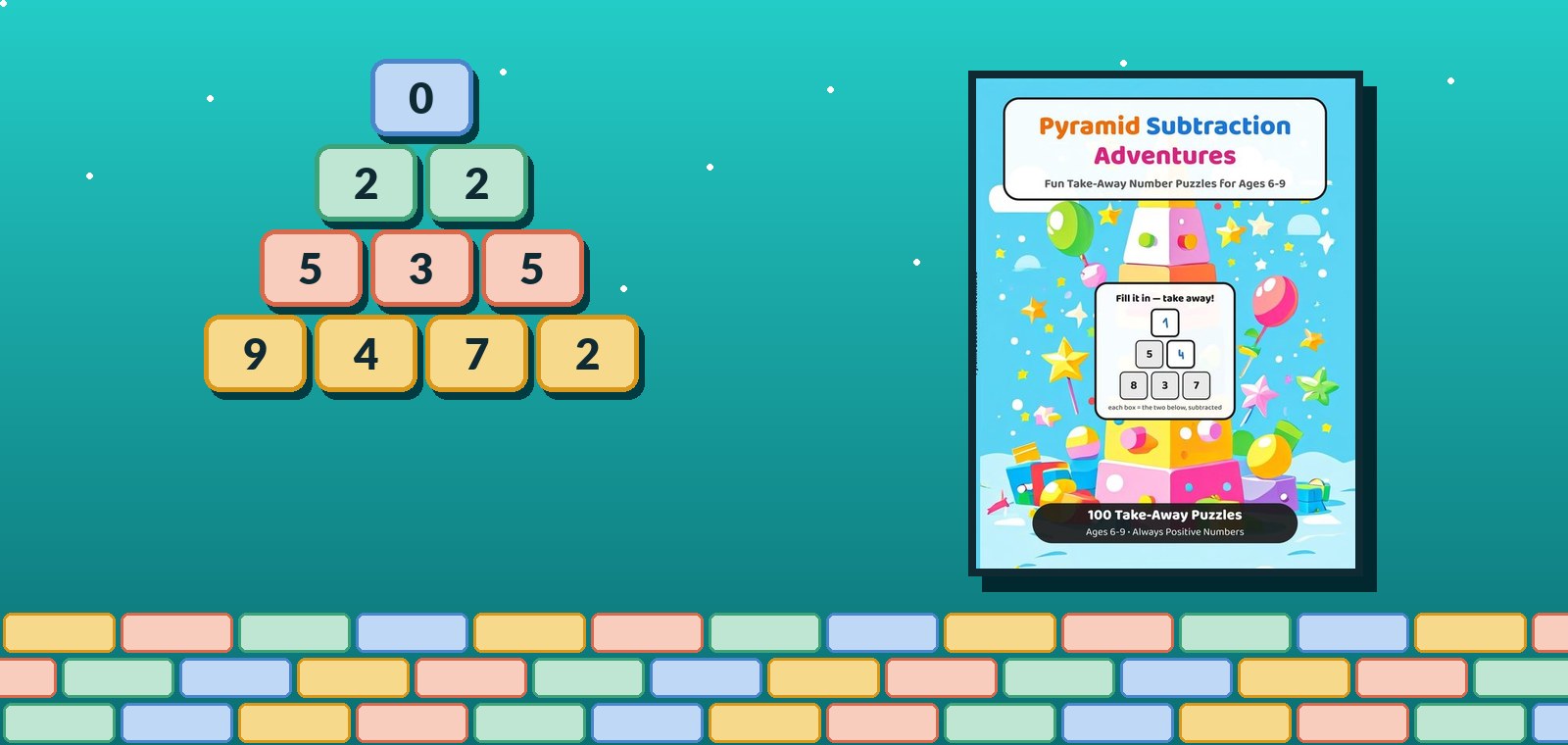
Subtraction Pyramids: Each brick is the difference of the two bricks under it, so nothing ever goes negative. This is one of the many kinds of math pyramid we make, and here is how it works, with a video, a worked sample and a pyramid you can try right on this page.
The rule
Each brick is the take-away of the two bricks below it: the bigger number minus the smaller one.
A worked sample
Take away along the base
Look at each pair under a brick and take the smaller from the bigger. 9 and 4: 9 − 4 = 5. 4 and 7: 7 − 4 = 3. 7 and 2: 7 − 2 = 5.
Take away again
Now 5 and 3: 5 − 3 = 2. And 3 and 5: 5 − 3 = 2.
The top
Two 2s: 2 − 2 = 0. The top brick is 0, and a 0 at the top is a perfectly good answer.
Your turn
Try it: take away your way up
Type the bigger-minus-smaller of each pair into the empty bricks, then press Check.
Why it is worth doing
Take-away practice stays gentle here: no brick is ever bigger than the biggest number in the base, so a child is never surprised by a huge number.
Books mentioned
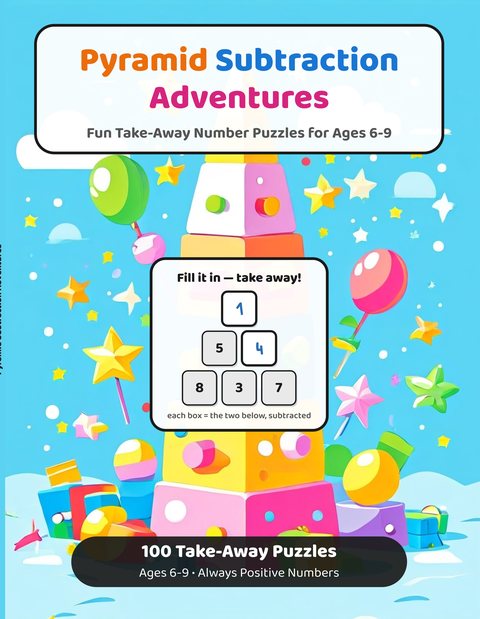
Pyramid Subtraction Adventures
A whole book of take-away pyramids for ages 6 to 9, with numbers kept small at first. Full answers are in the back.
View on AmazonAs an Amazon Associate we earn from qualifying purchases. Cover images are the ones we have on file; the book you receive may show a slightly different cover.
More field notes
Do Escape Rooms Help Students Learn? What the Research Says
A 2020 review of 39 studies found students loved educational escape rooms, but very few studies tested learning. What that means, plus practical tips for teachers and parents.
Escape the Wildlife Sanctuary After Dark: The Story and a Look Inside
Escape the Wildlife Sanctuary After Dark: the story, how a chamber plays and a look at a real page.
Frost Village Puzzle Hunt: A 24-Day Countdown, One Hidden Envelope a Day
24 letters, 48 puzzles and a Scarf Slider that decodes tomorrow's hiding place. A countdown that two children of different ages can play together.
Escape the Crystal Mine: The Story and a Look Inside
Escape the Crystal Mine: the story, how a chamber plays and a look at a real page.
Friendship Bracelet Puzzle Hunt: What It Can Do for Players
Friendship Bracelet Puzzle Hunt (Ages 6 to 10): what is in it, what players can get out of it and how to run it.
Four Operations Pyramids: Undo Times With Divide
Add, take away, times and divide, all in one pyramid. A worked sample, a 20-second video and a pyramid to try yourself, with the one rule you need to read the hidden digits.
Escape the Labyrinth: The Story and a Look Inside
Escape the Labyrinth: the story, how a chamber plays and a look at a real page.
Fossil Camp: The Cracking Dino Egg: What It Can Do for Players
Fossil Camp: The Cracking Dino Egg (Ages 6 to 9): what is in it, what players can get out of it and how to run it.
Twelve Isles, One Hunt: A Tour of The Grand Pyramid Hunt
Twelve isles in a ring, a new kind of lock on each, and a day that runs from 7 am to sunset. What a big puzzle hunt feels like, without spoilers.
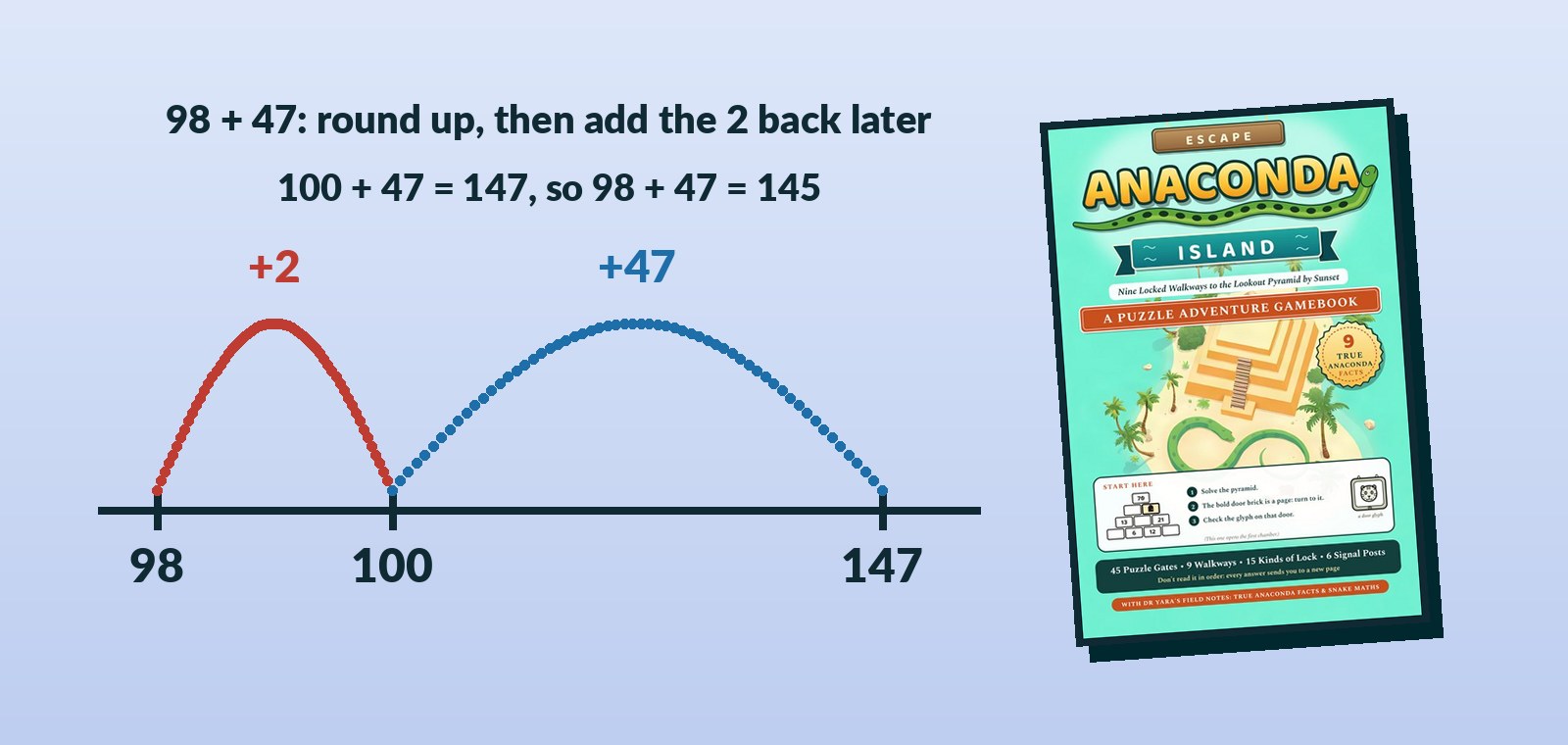
Mental Maths Strategies That Really Work: Round, Split and Compensate
Four ways to do sums in your head, each drawn step by step with the reason it works, plus what research says about choosing between methods.
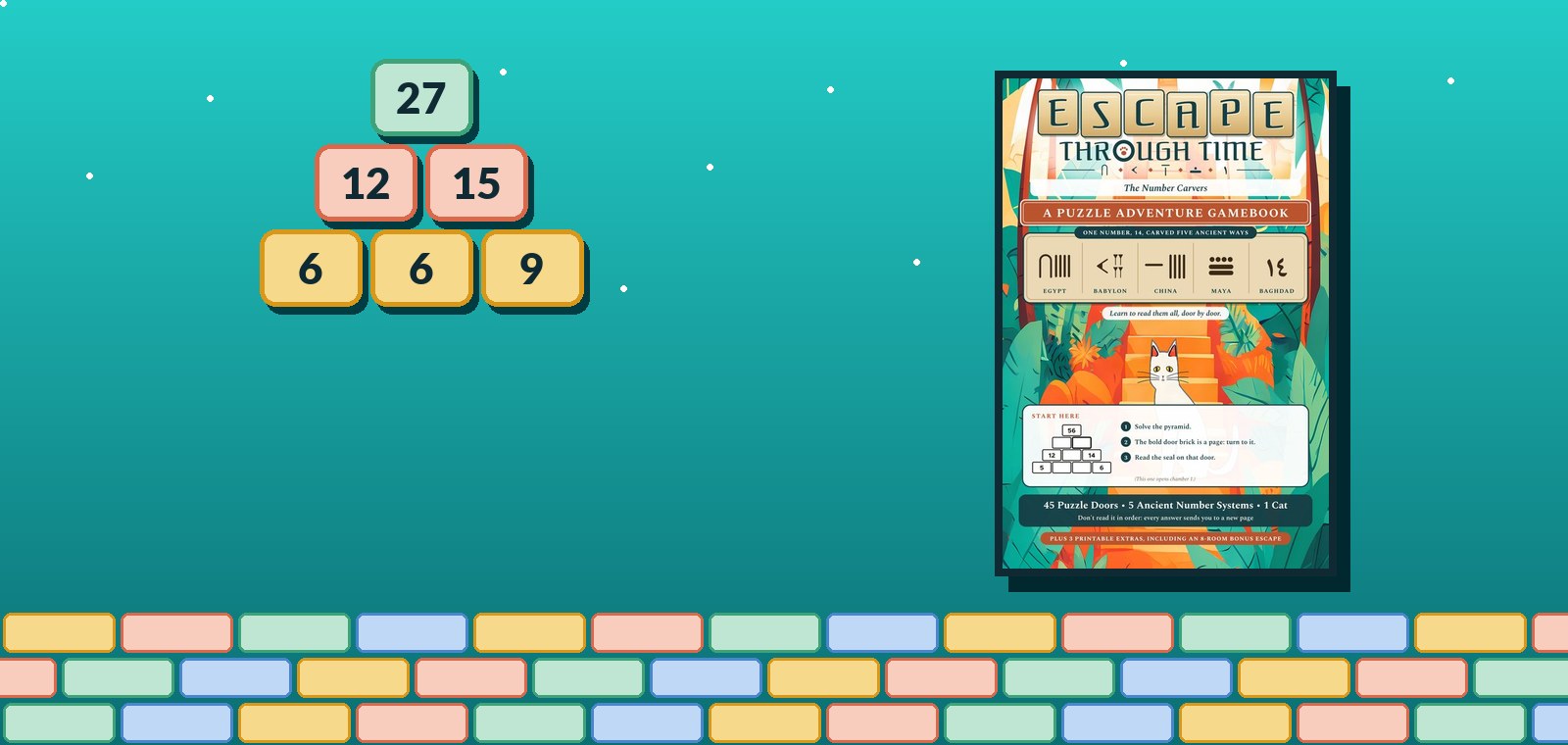
Escape Through Time: The Story and a Look Inside
Escape Through Time: the story, how a chamber plays and a look at a real page.
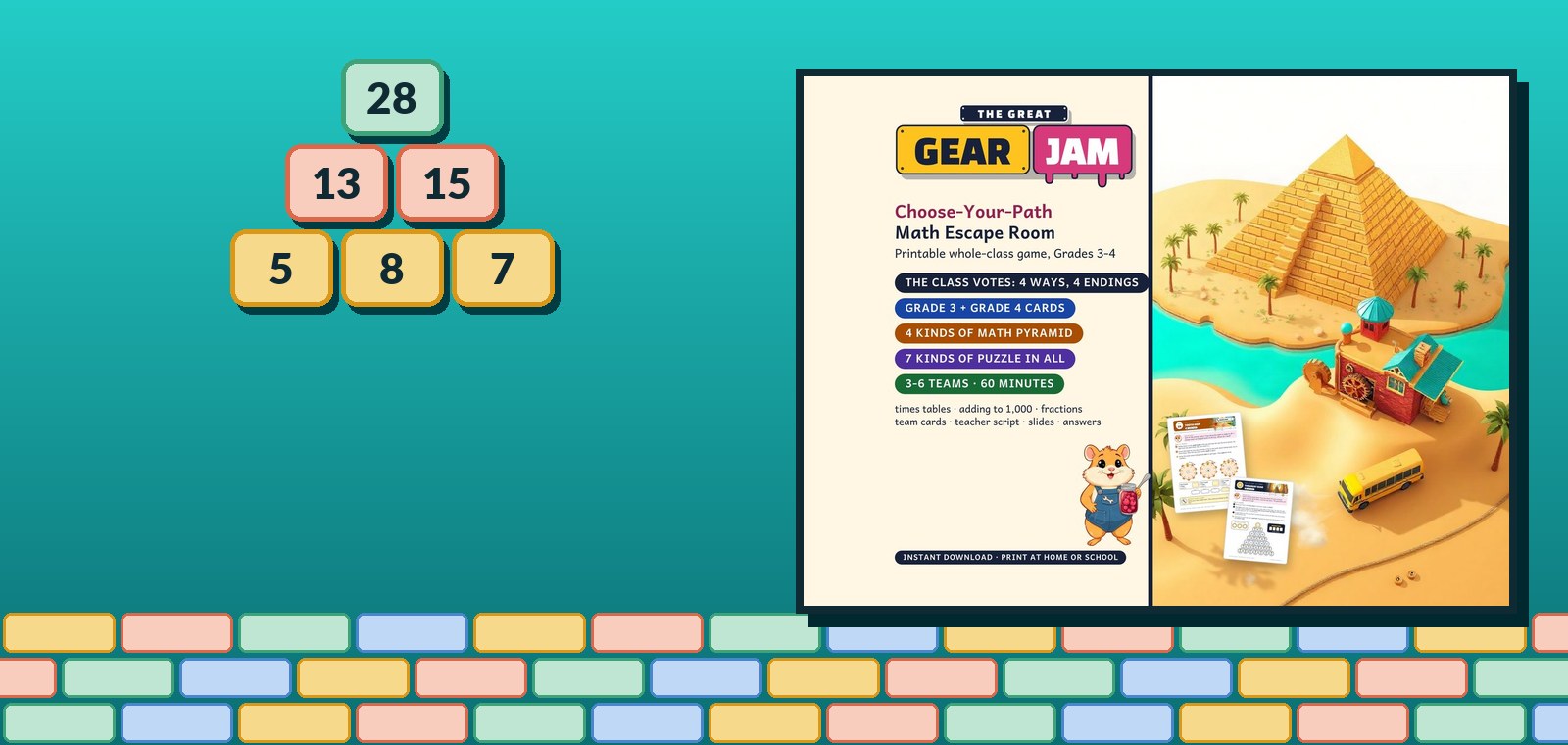
The Great Gear Jam: What It Can Do for Players
The Great Gear Jam (Grades 3 and 4): what is in it, what players can get out of it and how to run it.
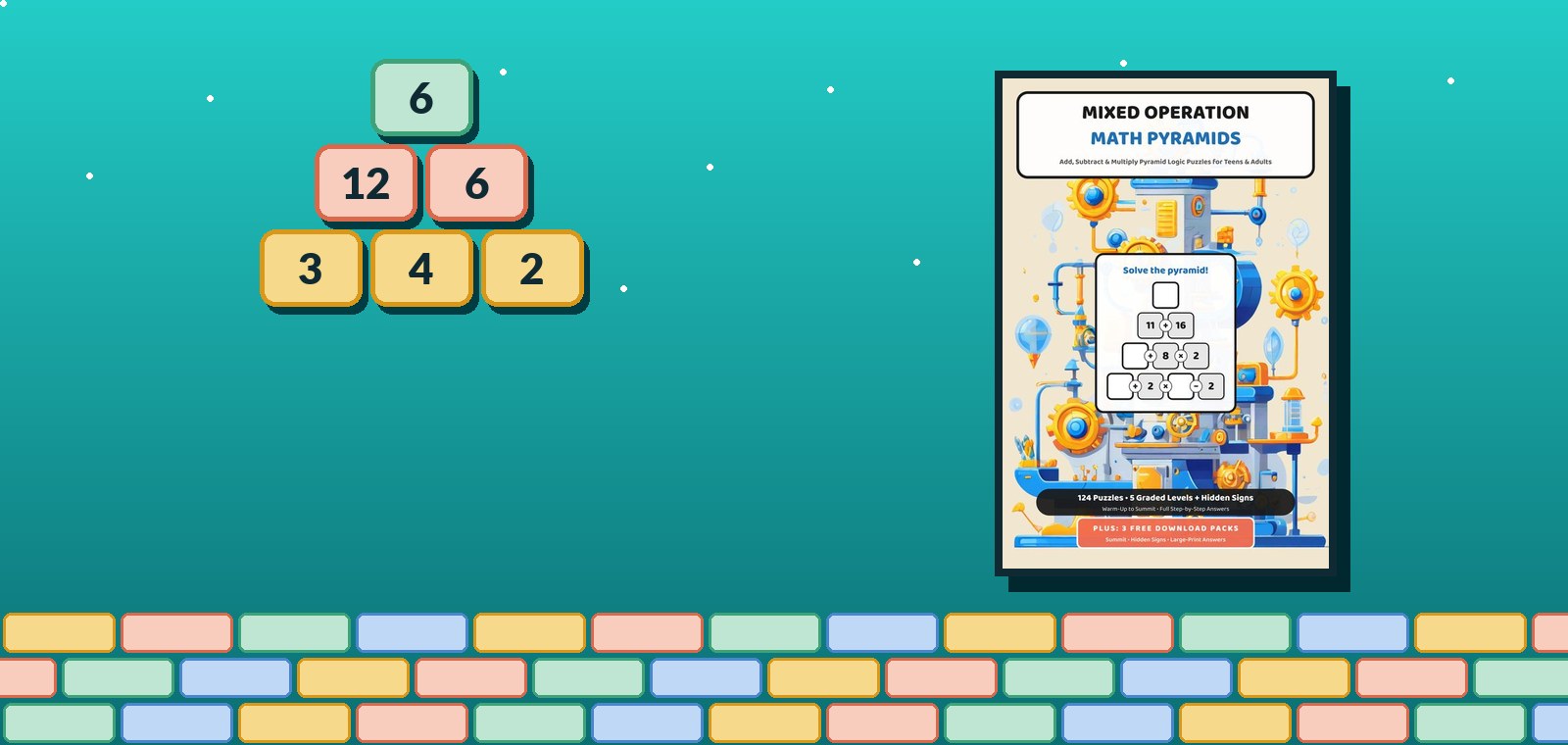
Mixed Operation Pyramids: Undo the Sign
Every brick has its own operation: add, subtract or multipl