
Escape rooms have walked into classrooms: locked boxes, codes, a ticking clock. Students seem to love them. The fair question is whether they also learn more. Here is what the biggest review so far found, and where it is honest about its limits.
What the review looked at
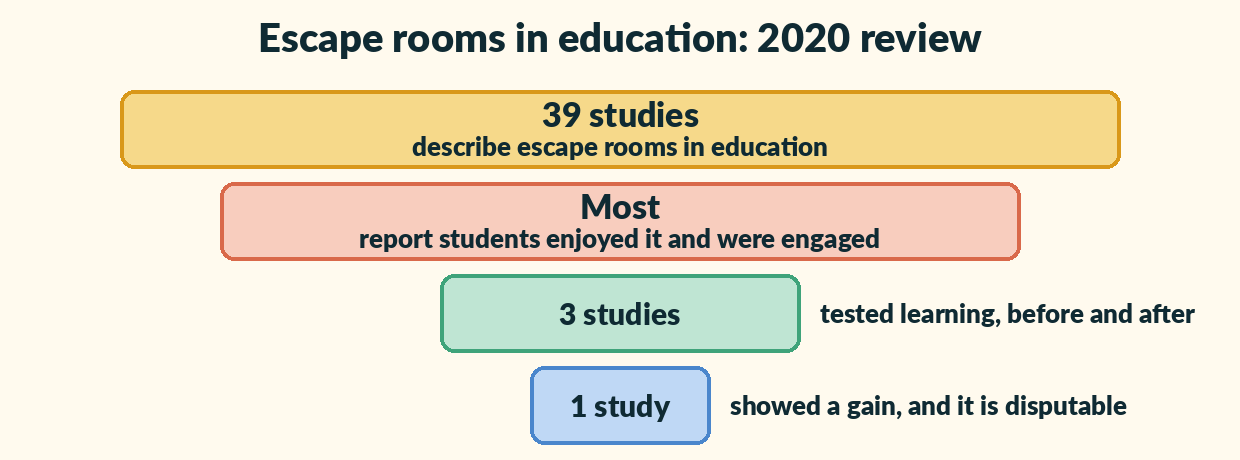
In 2020, a Dutch team published a systematic review of educational escape rooms in the journal Educational Research Review (Veldkamp, van de Grint, Knippels and van Joolingen, 2020). After searching and screening, they ended with 39 documents: research articles, conference papers and short reports. They studied how these escape rooms were designed (team size, puzzle order, playtime, the teacher's role) and what the students got out of them.
Good news: students enjoy them and teamwork shows up
Across the studies, a vast majority of students enjoyed the activity, and educators saw them as highly engaged. Twenty-one studies hoped to practise teamwork and communication; educators and students mostly agreed that it happened. Be careful with the evidence, though: nineteen of those studies judged this from teachers' informal observations or from what students said about themselves.
The catch: learning was rarely measured
Most studies asked students afterwards whether they felt they had learned. Only 3 of the 39 measured learning with a test before and after. The reviewers summarise the three:
- A study with 19 students found no knowledge gain or drop after the escape room, while a regular case activity showed a drop. Eighteen of the 19 preferred the escape room, but only 11 said they learned better from it.
- A study with 51 students found no significant result in its before-and-after test, even though 96 percent said the debrief helped.
- A study with 74 students found a higher post-test score (81 percent against 56 percent), but a week passed between the tests, and students may simply have studied in the meantime. The reviewers say the gain cannot be put down to the game alone.
So: one disputable improvement, and no clear proof either way. The review also notes a gap between what students felt they learned and what was measured, and it found no basis for claims in some studies that escape rooms make students intrinsically motivated to learn. Competition and time pressure were also at work.
What the review suggests for teachers and parents
These points come from the review's findings and recommendations. They are sensible practice, not guaranteed results.
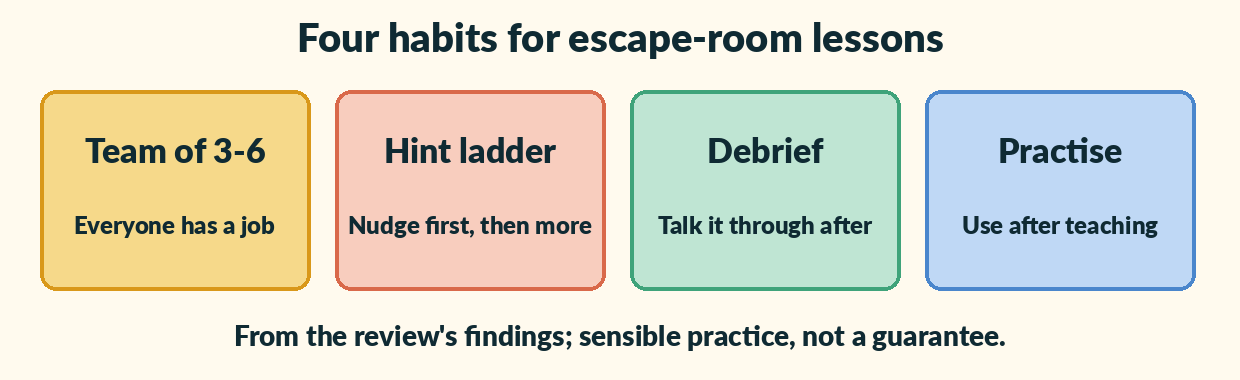
- Team size. In 24 of the 32 studies that gave a team size, teams had 3 to 6 players, chosen so that nobody is left out of the work. If you grade the play, the review recommends smaller teams of 4 to 5.
- Hint ladder. Put hints in steps, from a small nudge to a bigger one, and let teams ask. The review mentions pre-set hint cards for teams that are lagging behind.
- Debrief. The review calls a debrief after the game crucial: ask what the team did, which method opened which lock, and where else it would work. This is where the knowledge gets linked up. The review says a debrief links the knowledge up and helps it carry over to future situations.
- Practise, do not introduce. The review found escape rooms seem better for trying out knowledge and experiencing things than for learning something brand new. Use them after the topic has been taught.
What our products are, and are not
The Math Escape Room Bundle and the single rooms are printable classroom kits: a digital download you print yourself, with teams, stations, hints and answers for the teacher. They are for practising maths a class has already met. They are not a replacement for teaching, and we cannot promise higher test scores; the debrief questions above are yours to add.
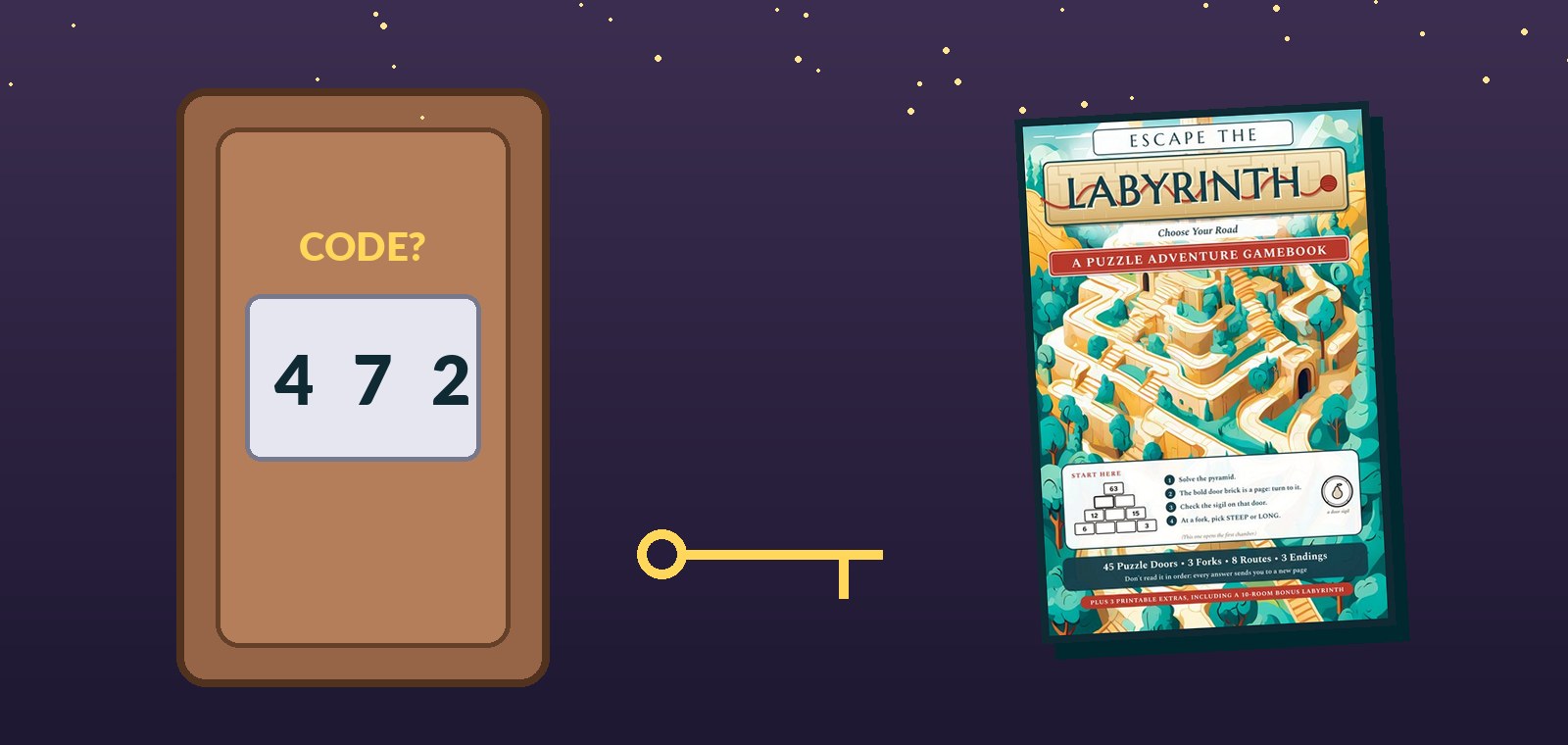
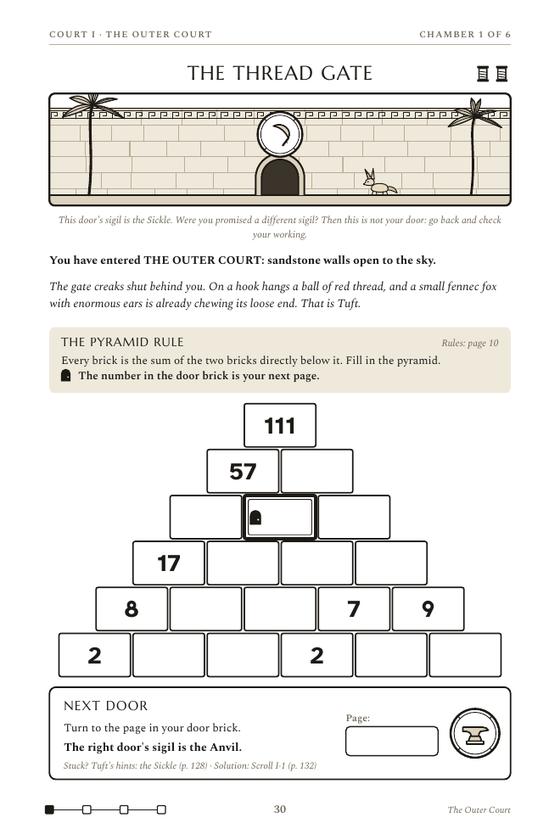
Escape the Labyrinth is a different thing: a puzzle adventure gamebook, so you do not read it in order. Each of its 45 locked chambers is a number-pyramid lock, and the puzzle kind changes from door to door. It is a book of puzzles, not a course.
Books mentioned
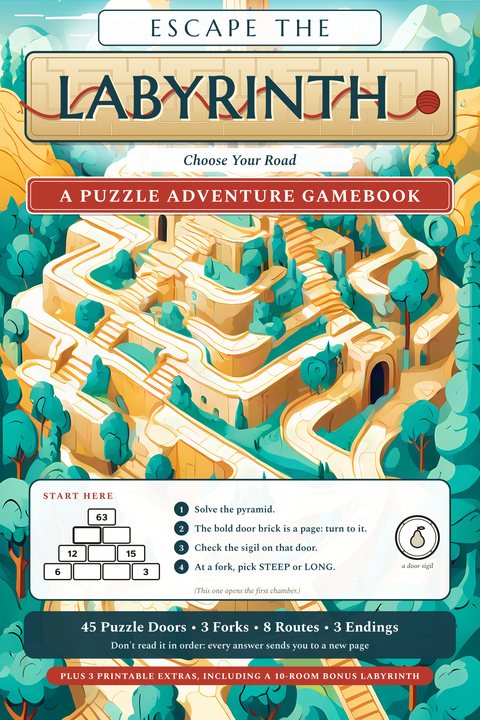
Escape the Labyrinth
A puzzle adventure gamebook with 45 locked chambers. You choose your road, and the puzzle kind changes from door to door.
View on AmazonGames mentioned
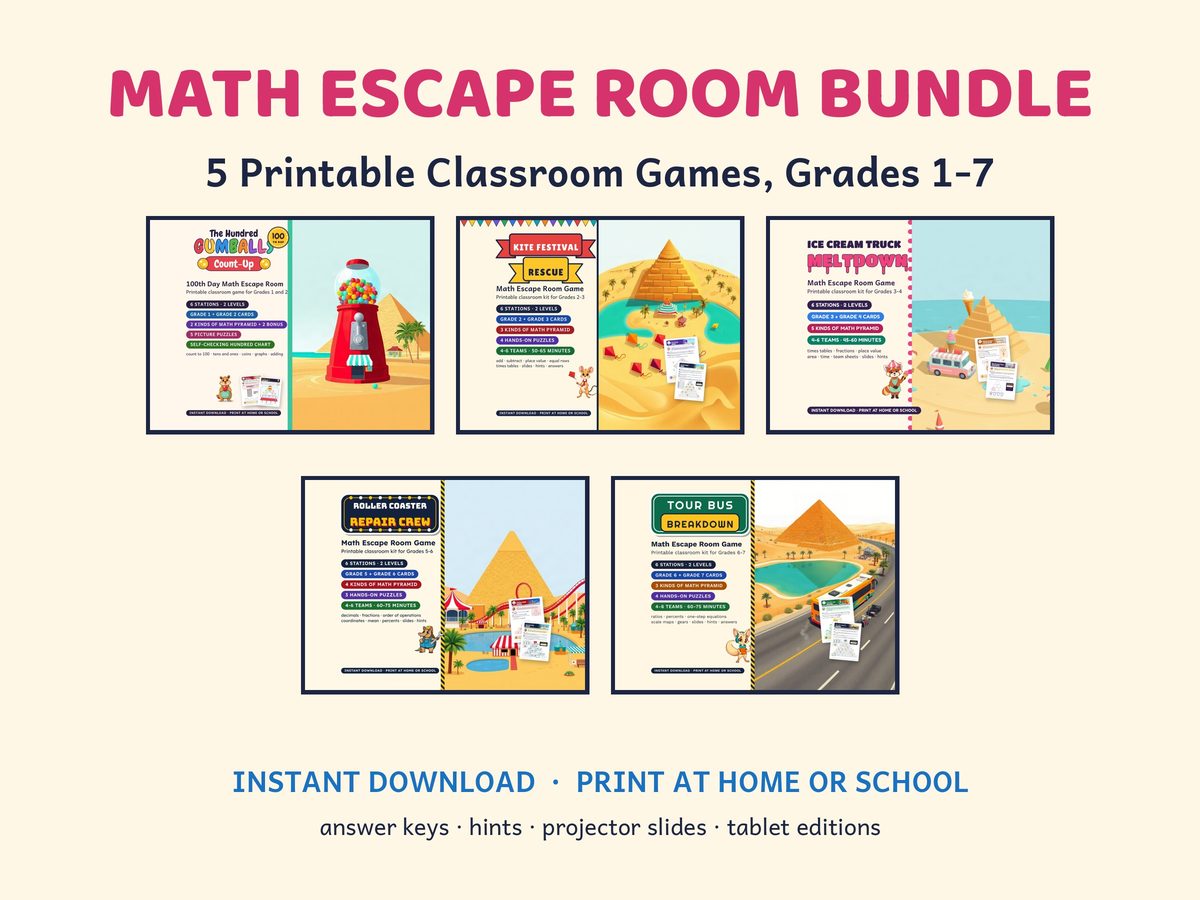
Math Escape Room Bundle, Grades 1 to 7
Five printable classroom math escape rooms in one download, from Grade 1 to Grade 7. Cheaper than buying them one by one.
See details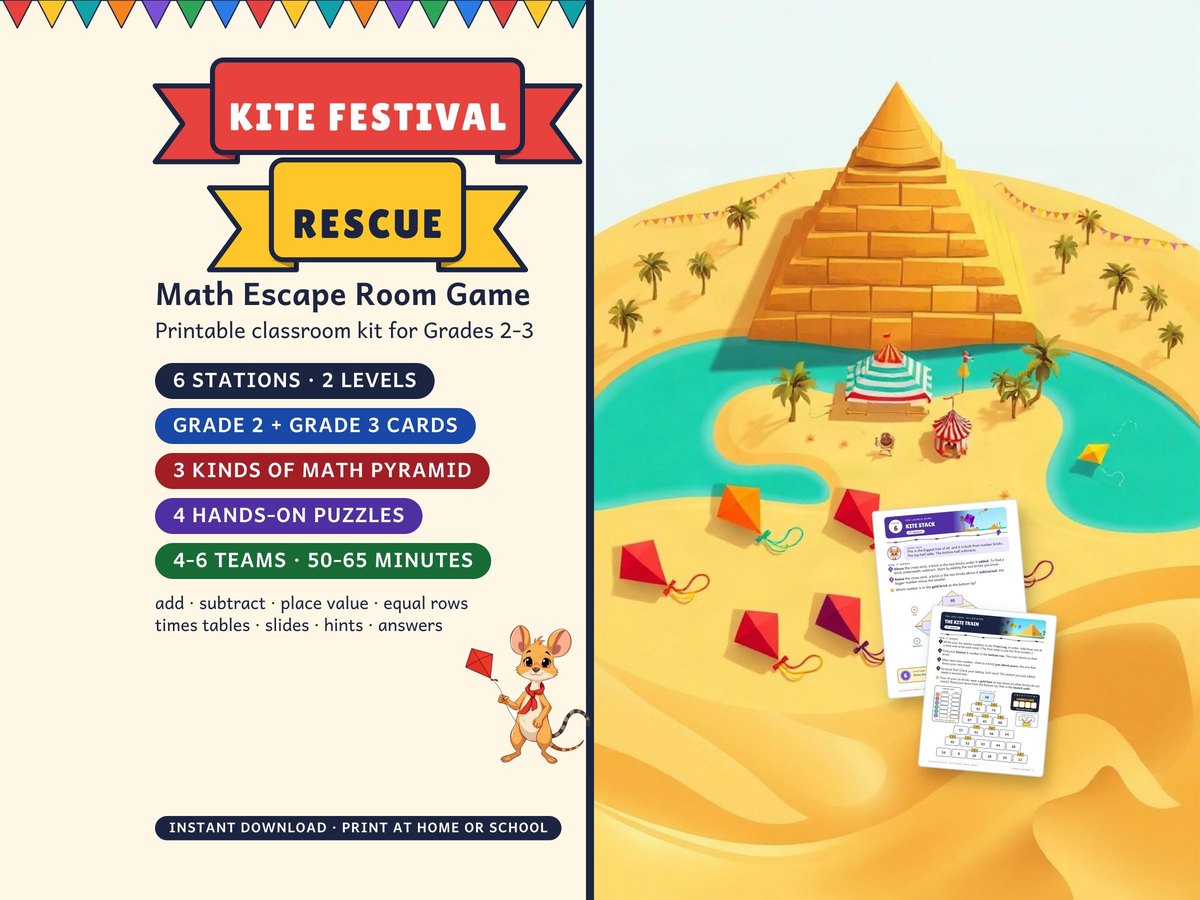
Kite Festival Rescue
A printable math escape room for Grades 2 and 3: six stations, two levels with one answer key, and the Kite Train finale.
See details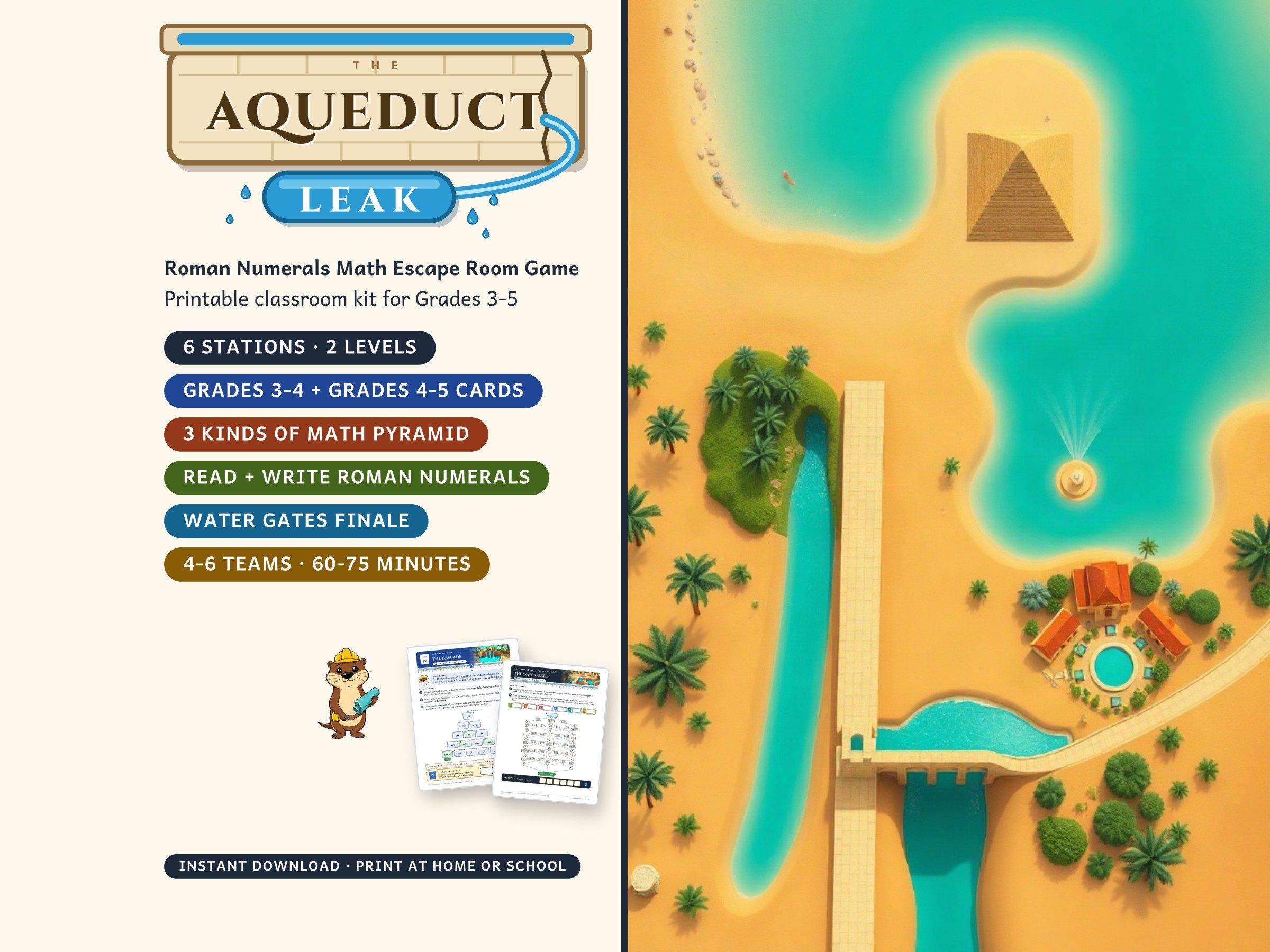
The Aqueduct Leak
A printable Roman numerals math escape room for a classroom of teams, or children at home. Six stations, each number written in digits and in Roman numerals, then one last lock to crack together.
See detailsAs an Amazon Associate we earn from qualifying purchases. Cover images are the ones we have on file; the book you receive may show a slightly different cover.
Digital download: nothing is shipped.
More field notes
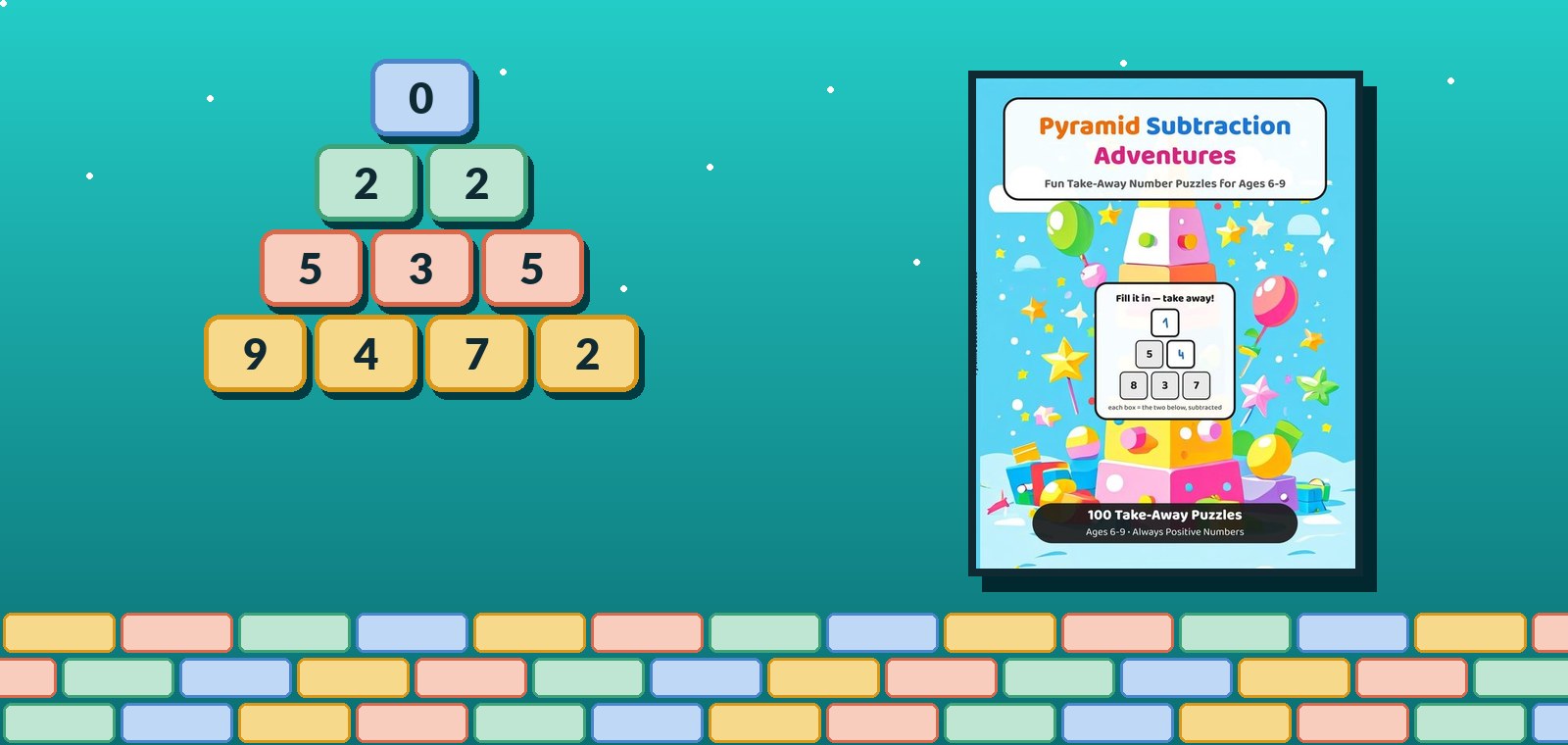
Subtraction Pyramids: Take Away Your Way to the Top
Each brick is the difference of the two bricks under it, so nothing ever goes negative. A worked sample, a 20-second video and a pyramid to try yourself, with the one rule you need to read the hidden digits.
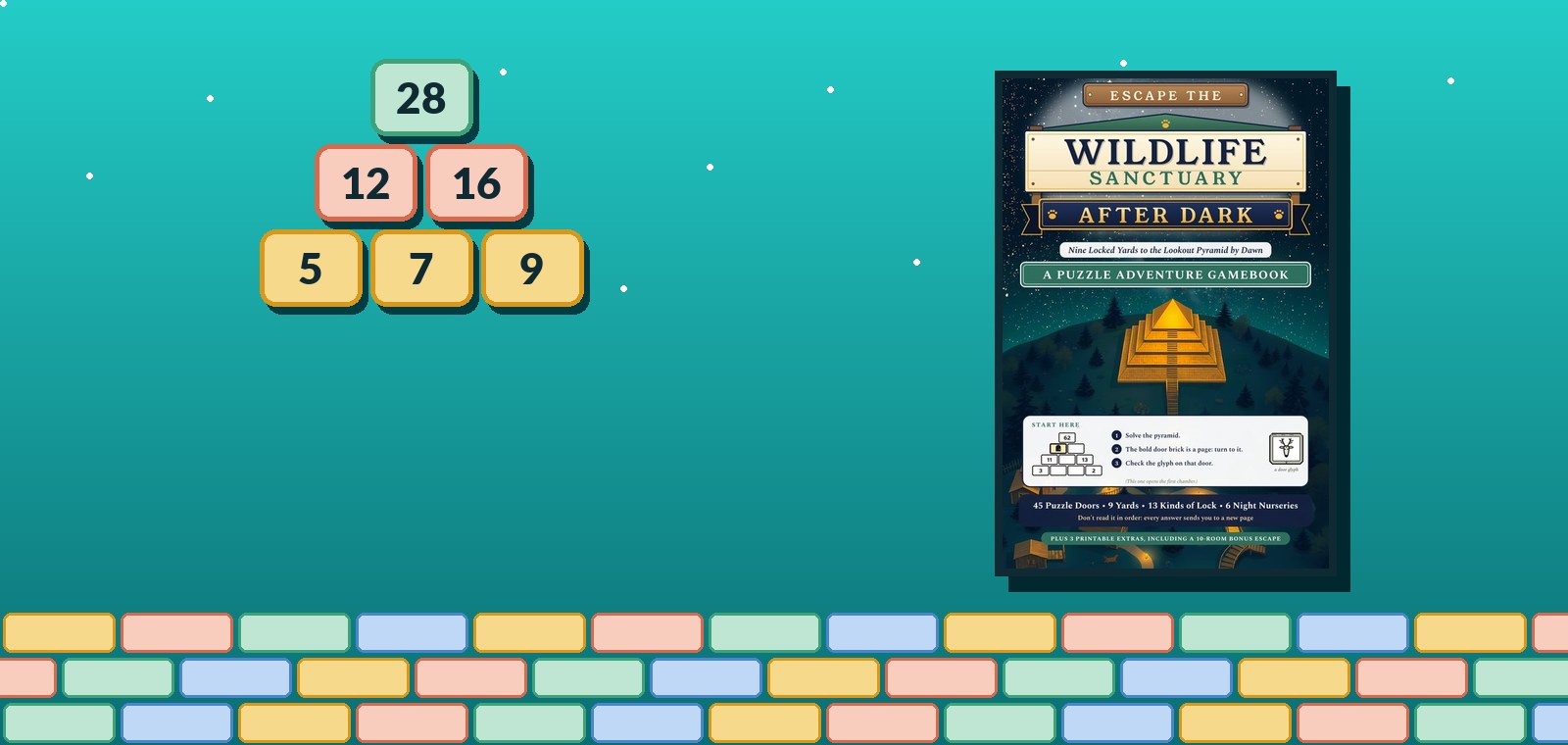
Escape the Wildlife Sanctuary After Dark: The Story and a Look Inside
Escape the Wildlife Sanctuary After Dark: the story, how a chamber plays and a look at a real page.
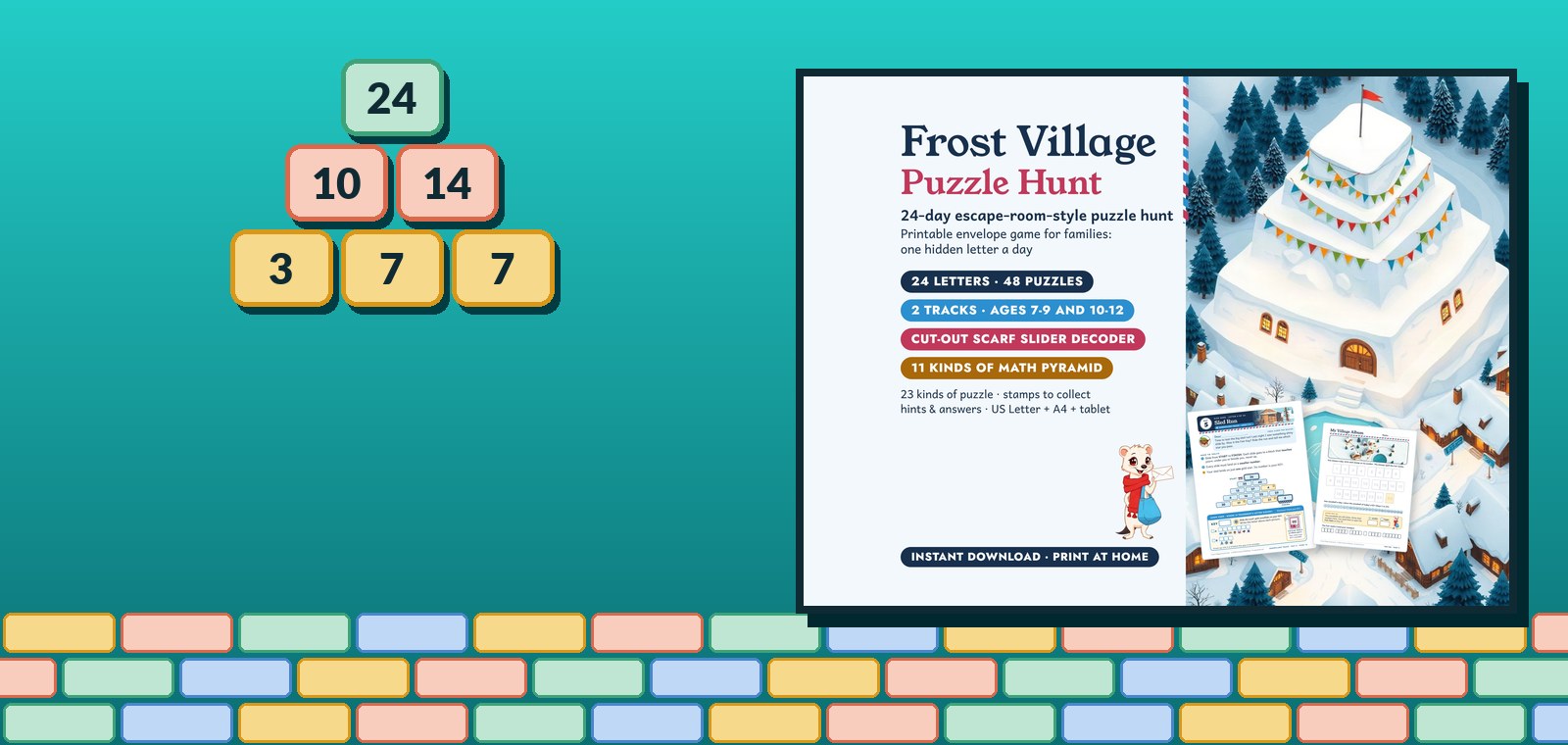
Frost Village Puzzle Hunt: A 24-Day Countdown, One Hidden Envelope a Day
24 letters, 48 puzzles and a Scarf Slider that decodes tomorrow's hiding place. A countdown that two children of different ages can play together.
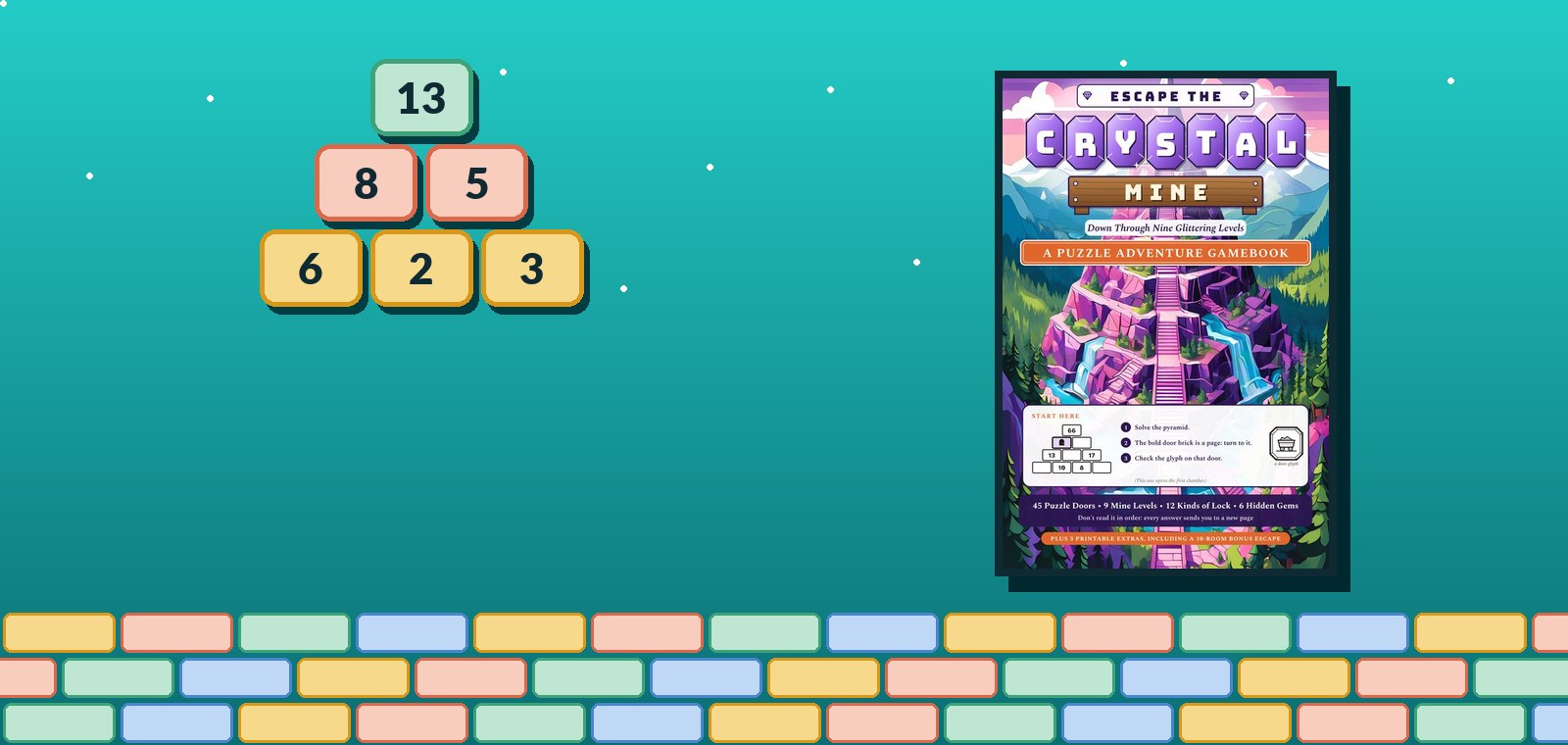
Escape the Crystal Mine: The Story and a Look Inside
Escape the Crystal Mine: the story, how a chamber plays and a look at a real page.
Friendship Bracelet Puzzle Hunt: What It Can Do for Players
Friendship Bracelet Puzzle Hunt (Ages 6 to 10): what is in it, what players can get out of it and how to run it.
Four Operations Pyramids: Undo Times With Divide
Add, take away, times and divide, all in one pyramid. A worked sample, a 20-second video and a pyramid to try yourself, with the one rule you need to read the hidden digits.
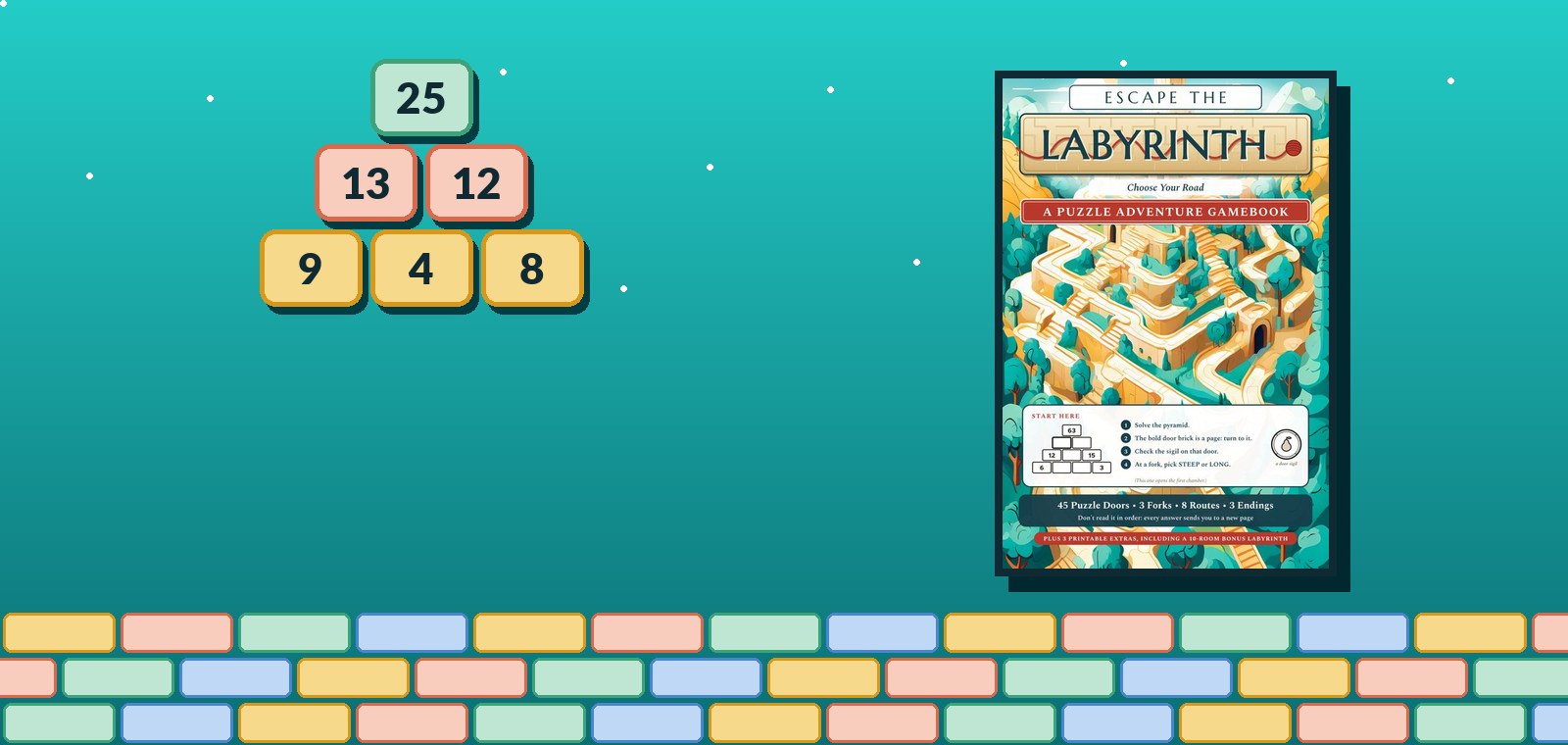
Escape the Labyrinth: The Story and a Look Inside
Escape the Labyrinth: the story, how a chamber plays and a look at a real page.
Fossil Camp: The Cracking Dino Egg: What It Can Do for Players
Fossil Camp: The Cracking Dino Egg (Ages 6 to 9): what is in it, what players can get out of it and how to run it.
Twelve Isles, One Hunt: A Tour of The Grand Pyramid Hunt
Twelve isles in a ring, a new kind of lock on each, and a day that runs from 7 am to sunset. What a big puzzle hunt feels like, without spoilers.
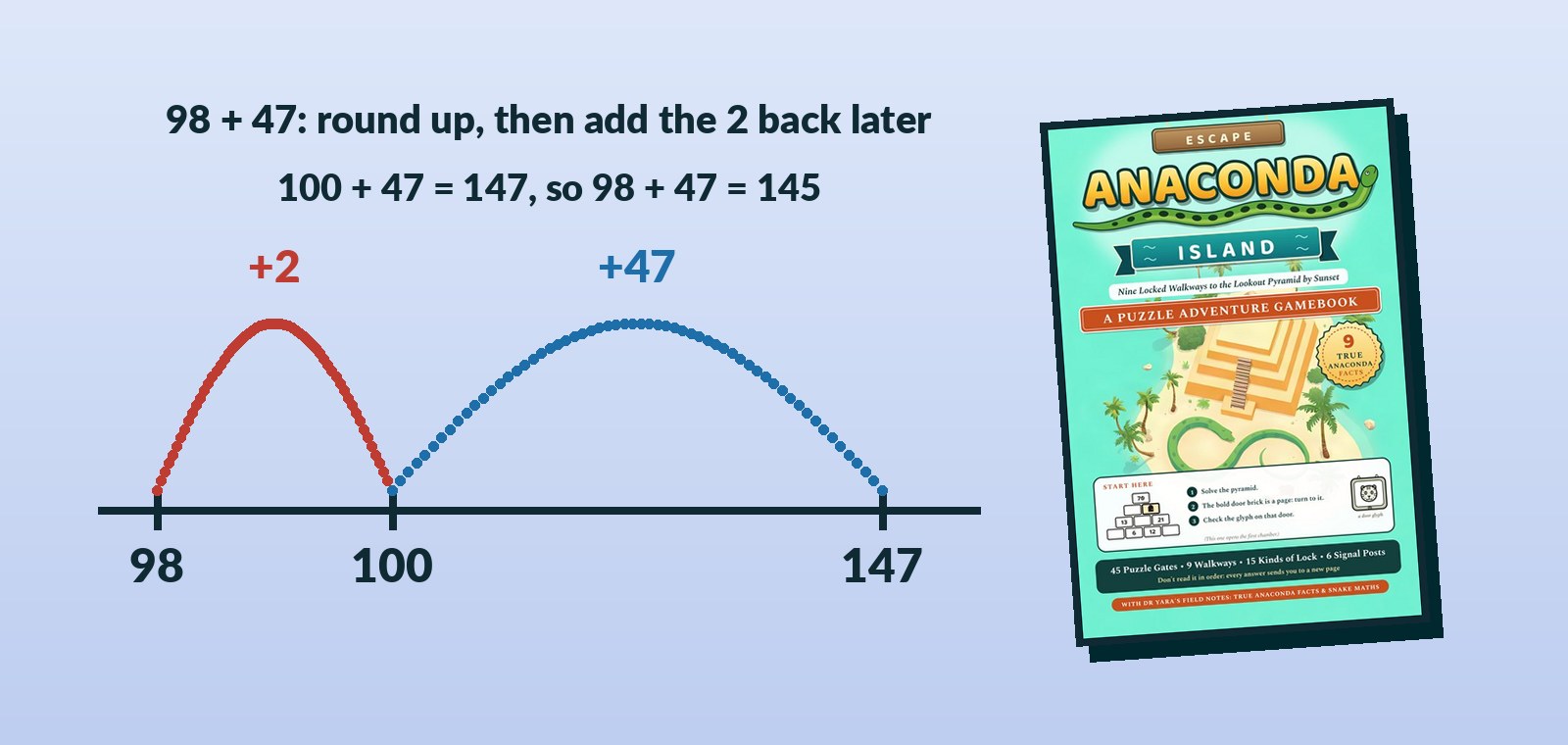
Mental Maths Strategies That Really Work: Round, Split and Compensate
Four ways to do sums in your head, each drawn step by step with the reason it works, plus what research says about choosing between methods.
Escape Through Time: The Story and a Look Inside
Escape Through Time: the story, how a chamber plays and a look at a real page.
The Great Gear Jam: What It Can Do for Players
The Great Gear Jam (Grades 3 and 4): what is in it, what players can get out of it and how to run it.
Mixed Operation Pyramids: Undo the Sign
Every brick has its own operation: add, subtract or multiply. Work ba